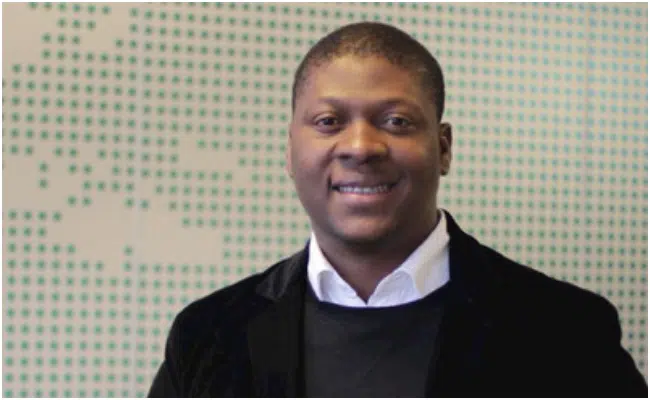

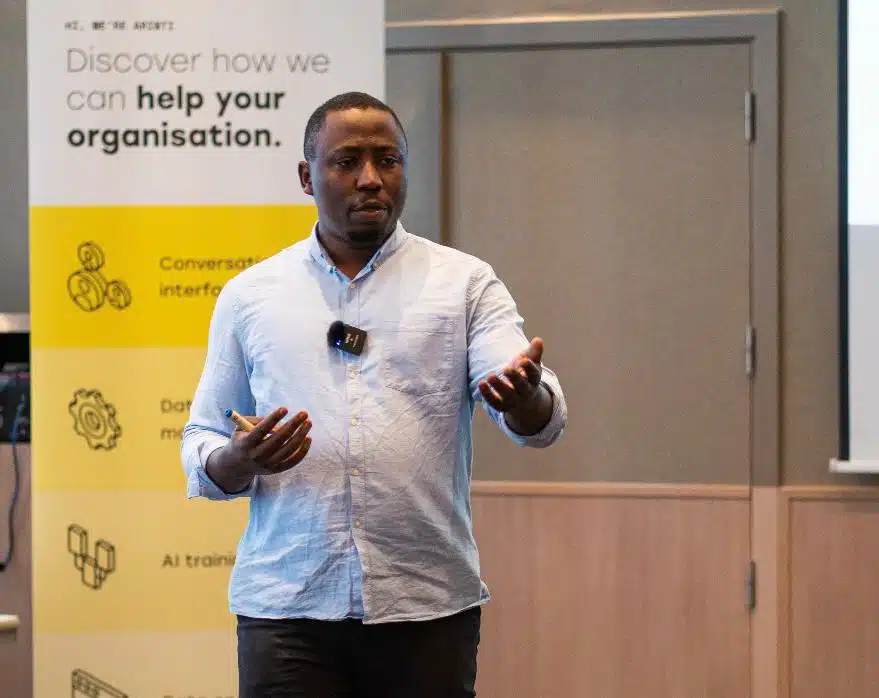

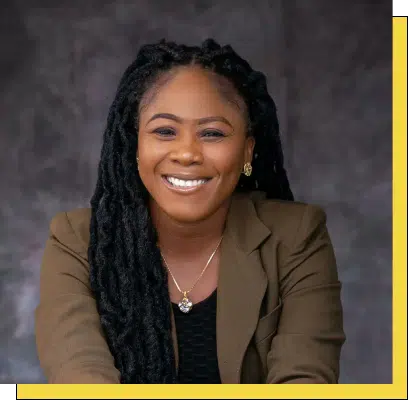
Growing up in Douala, Cameroon, Jehpte Ioudom’s first interaction with technology was simply having access to a computer at home. However, during an internship at Ericsson, he experienced how digital tools could simplify complex processes, organise information at scale, and influence real business decisions.
From discovering Google Forms while researching employee travel challenges to building AI and data systems across Europe and Africa years later, Ioudom has built a career spanning data engineering, AI consulting, and cloud systems through his consulting practice, Foubslabs.
In this edition of After Hours, he shares his experiences discovering data through market research and telecommunications projects, and how technology has transformed his work and personal life.
Early interactions with technology
I grew up in Douala, Cameroon, and my first real interaction with technology started at home when my mother bought a computer. At the time, it just felt exciting to have access to one, but I don’t think I fully understood what technology could actually do until much later.
That understanding came during an internship at Ericsson Cameroon. I was still a student then, trying to figure things out, and the company was facing challenges in corporate travel management. Employees who travelled frequently had to manually report receipts and expenses, and management wanted to better understand the problems workers faced with the process. I was asked to help conduct research internally.
At the time, I barely knew much about digital tools. One of my fellow interns, who had worked with a Google student programme, introduced me to tools like Google Forms and Google Sheets, and that changed a lot for me.
I remember creating a survey form because engineers were constantly travelling, and there was no practical way to hand out physical forms. What amazed me wasn’t just the form itself, but the fact that once people submitted responses, everything was automatically compiled behind the scenes.
For the first time, I could clearly see technology solving a real operational problem in a way that felt efficient and scalable. I could gather information across the company, analyse it quickly, and present the findings to management without spending weeks manually sorting through paperwork. That experience completely changed how I saw technology.
Studying business, discovering data, and transitioning into tech
My academic journey actually started in business, not engineering. I studied management at the university, and during that time, most of my early experiences focused on operations, research, and market analysis.

Victoria Fakiya – Senior Writer
Techpoint Digest
Stop struggling to find your tech career path
Discover in-demand tech skills and build a standout portfolio in this FREE 5-day email course
But the internship at Ericsson shaped my career in ways I didn’t expect. Beyond the internal research project, I also worked on the 3G deployment project Ericsson was handling for MTN. I worked with teams preparing 3G equipment, coordinating deployments, and supporting go-to-market activities.
Seeing how infrastructure, connectivity, and data were shaping communication across countries made me realise technology was going to fundamentally change how businesses operated.
After Ericsson, I worked with a hardware and software sales company in Cameroon before joining Kia Motors as a marketing and sales assistant. Even though my role sounded commercial, most of my work revolved around market intelligence.
I spent a lot of time collecting qualitative and quantitative data about competitors, customer preferences, vehicle trends, spare parts demand, and market behaviour. Through that process, I started noticing how deeply data influenced decision-making inside companies—from the types of vehicles being imported to the features businesses prioritised and even maintenance operations. And that curiosity eventually pushed me further into technology.
Following that, I moved to Portugal to pursue a master’s degree in information management at Nova Information Management School because, at the time, it had one of the strongest business intelligence programmes globally.
Interestingly, my arrival in Portugal coincided with the period when Web Summit moved from Ireland to Lisbon. Being surrounded by that kind of technology ecosystem reinforced the feeling that I was in the right place.
While studying, I interned at an AI startup called Define AI, where we crowdsourced datasets for companies building AI systems. Later, I joined Accenture, where I was introduced to technology consulting, cloud systems, and enterprise data projects.
It was also during the peak of COVID-19, when companies across Europe were rapidly migrating to the cloud. At that point, I realised I didn’t want to stay confined to a single industry or organisation. I wanted to work across sectors, solve diverse problems, and participate in the broader shift in data and cloud transformation.
That was how Foubslabs started. I officially registered Foubslabs in 2021 as a consulting practice focused on data platforms, cloud systems, analytics, and AI solutions. Since then, I’ve worked with organisations across Europe and Africa in sectors ranging from financial services and manufacturing to pharmaceuticals, energy, and public institutions.
One of the projects I’m particularly proud of involved working with the World Bank in the Republic of Benin on an AI-focused pilot initiative for mathematics teachers.
How technology shapes my everyday life
At this point, technology is deeply integrated into almost every part of my life. Professionally, I use it constantly for client management, business operations, prospecting, documentation, and communication. A lot of my workflows revolve around collaborative tools, cloud systems, and productivity suites that help me manage projects and relationships efficiently.
But the biggest shift in recent years has been AI. You can say, AI has fundamentally changed the way I work.
Today, instead of writing every line of code manually, my workflow has become more collaborative. It’s now roughly 50/50 between my own work and AI-assisted processes.
I use AI heavily during technical brainstorming sessions, architecture planning, client research, and coding. When clients describe business challenges, I often use AI tools to explore different approaches, test ideas, identify blind spots, and evaluate alternative solutions. That allows me to spend more time on strategy and problem-solving rather than on repetitive execution.
One platform I genuinely cannot do without right now is Anthropic’s Claude. The other is LinkedIn. It has been incredibly important for my career because most of my consulting opportunities, partnerships, and client relationships originate there.
Technology changes so quickly that staying updated almost becomes part of the job itself. For me, that process starts with curating the right information sources. I follow people deeply involved in data, AI, and cloud systems on LinkedIn, including both individuals and organisations. That helps me keep track of emerging tools, industry shifts, and new ways technologies are being applied.
I also regularly attend conferences and technology meetups, especially events like Web Summit, because they expose me to perspectives beyond my immediate field.
Another important source of learning is my professional network. I stay in touch with former colleagues and peers working across different domains because no single person can know everything in technology. Sometimes the fastest way to learn a new tool is simply having conversations with people already using it.
Aside from that, I also spend time on X because it creates opportunities for direct interactions that can sometimes feel harder to initiate elsewhere.
The best thing technology has given me is both knowledge and people. Almost every technical skill I’ve developed has been supported by online resources, whether through YouTube tutorials, documentation blogs, online courses, or platforms like Udemy.
Technology has also removed a lot of the barriers that previously existed between individuals across countries and industries. Through LinkedIn, X, video calls, and messaging platforms, I’ve been able to connect with people I otherwise would never have had access to.
One of the more unusual ways I use technology now is for investment and industry research. Before AI tools became mainstream, researching an industry meant manually reading reports, searching websites, and piecing together information independently. Now, I build AI agents using Claude to research industries for me.
Ironically, one of the biggest challenges I face with technology today is also AI itself. More specifically, the cost. Building AI systems and agents requires tokens, and those costs can scale very quickly, especially when working on advanced workflows or large research tasks.
That’s also why I try not to depend entirely on a single provider. I alternate between commercial platforms like Claude and OpenAI’s ChatGPT, and experiment with open-source alternatives where possible.
Interestingly, the tech product I most want improved isn’t some advanced AI system. It’s the iPhone alarm clock. As a consultant juggling multiple meetings and reminders throughout the day, I find it frustrating that setting recurring reminders on the same day often requires creating multiple separate alarms manually. To most people, it probably sounds minor, but for me, it’s one of those small friction points that repeatedly interrupt workflows.
What the next decade of African tech could look like
When I think about the future of technology in Africa, two things stand out immediately: democratised talent and AI acceleration.
The first is that talent is no longer concentrated in a few major cities. In the past, conversations about African tech talent often revolved around cities like Lagos, Nairobi, and Cape Town. But increasingly, technology is decentralising opportunity. Across countries like Nigeria, Ghana, and Cameroon, new hubs are emerging, and people can build globally relevant skills from more locations than ever before.
The second is AI. I believe AI will dramatically reduce learning barriers across industries. In the future, the time required for people to transition into technology careers or other specialised fields could shrink significantly because AI can accelerate both learning and execution. Tasks that once took months to understand can now be practised repeatedly with AI assistance at much faster speeds.
For me, that shift could become one of the most transformative developments for Africa’s technology ecosystem over the next decade.