




Ahmed Galadima is 30, single, and lives in Agege, on the outskirts of Lagos. Far enough from the commercial centre of Victoria Island that his daily commute is practically a second job.
As early as 5am every weekday morning, he is out of bed, chasing the traffic before the traffic catches him. By the time he gets home at night, he is too tired to cook and too hungry to wait.
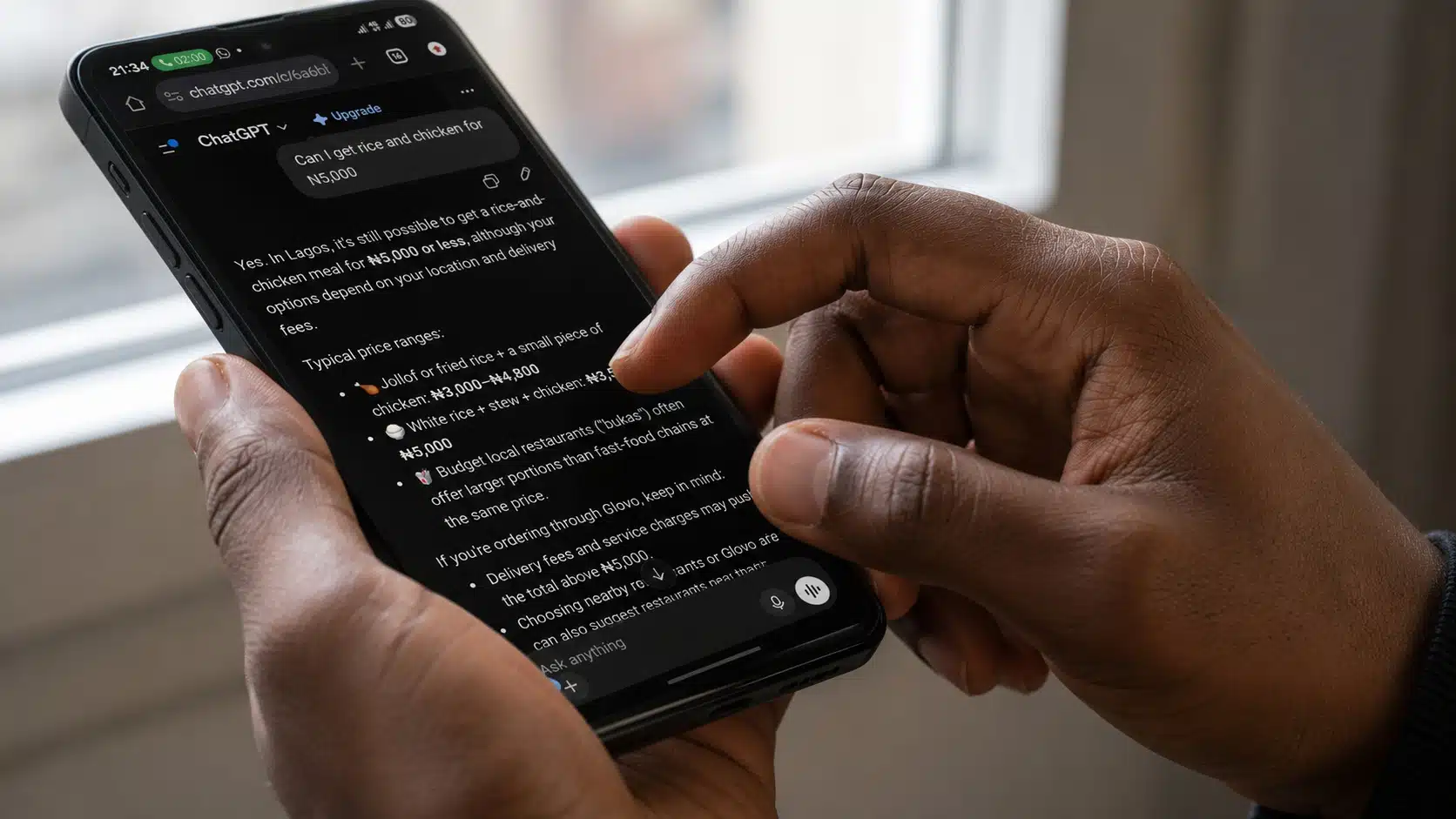
Respite came through a colleague, via a restaurant he would never have found on his own, buried inside a food delivery app. It sent him lunch at the office and dinner at the door. For months, it was the kind of arrangement that made a hard routine bearable.
Then one afternoon, the food arrived wrong. The packaging and taste were significantly different from what they used to be. He ate it anyway, but paid for that mistake with a night of food poisoning.
Galadima has not ordered food online since.
The restaurant lost a loyal customer. The platform lost one, too. And Galadima, for his part, lost the one convenience that made his long days a little shorter. This is what happens when trust is broken; all the parties involved lose something in the process.
A recent investigation by Techpoint Africa showed that Nigeria’s food delivery platforms have a loophole that impostors might have been exploiting. The team created a fictitious store on both Glovo and Chowdeck and successfully fulfilled an order without the platforms flagging it.
The apparent weak Know Your Business (KYB) checks on the platforms provide loopholes that fraudulent entities can exploit to impersonate credible restaurants, place orders, and have them delivered.
Safety and health concerns that need immediate attention
This identified gap raises numerous questions: what happens to the many credible businesses on the platforms? How are they sure their brand images aren’t being tarnished by impostors?
Also, there’s concern about the millions of Nigerians who rely on these food delivery platforms for their daily needs.
Food is an essential ingredient in Nigerian culture. Birthdays, weddings, parties, and other informal and formal gatherings are usually spiced by food. And often, some of these foods are ordered from food delivery platforms. Also, given that numerous academic publications have linked food consumption with health challenges, something needs to be done to maintain safety and high standards.
The concern is enormous, and it is not just about pointing accusing fingers at food delivery companies alone. Running a business in an environment like Nigeria is tough, and regulations must not always play catch-up to innovation, especially in a delicate industry like food.
Like fintechs, food delivery platforms need more scrutiny
Fintechs in Nigeria are heavily regulated and risk heavy sanctions from the Central Bank of Nigeria should they flout any compliance guidelines.
This has prompted strict implementation of Know Your Customer (KYC) procedure during onboarding. Individuals are also required to provide a Bank Verification Number (BVN) and home addresses, verified through a combination of utility bills and a physical inspection by officials.
Meanwhile, food delivery platforms have no clearly defined body responsible for monitoring and enforcing regulations.
There’s the Federal Competition and Consumer Protection Commission (FCCPC), which is responsible for consumer rights, including food safety, and the National Agency for Food and Drug Administration and Control (NAFDAC), which supervises food hygiene regulations and related establishments. However, neither regulator has clear oversight over food delivery platforms.
The result is glaring: a loophole that can erode the trust of millions of Nigerians who rely on these platforms to meet their culinary needs.
Both NAFDAC and FCCPC declined to comment for this article.
The big opportunity
In the wake of the investigation, there’s been a lot of debate over who should be held responsible. While food delivery companies can do better, the country’s weak infrastructure makes running a business challenging and cannot be excused.
Address verification still remains a fragmented process. Even though the FG launched a national proof-of-address verification portal in 2025 to replace the use of utility bills as proof of address, not much has changed since then.
Relying on external firms to verify addresses on behalf of others might not be sufficient; food delivery companies need to beef up their internal compliance teams and equip them with the right resources to conduct due diligence.
In contrast to China and India, where there’s strong regulatory oversight, regulation in Nigeria is fragmented: food safety falls under one agency, while consumer complaints are handled by another.
While it’s true that food delivery companies are required to scale fast and onboard more vendors than competitors, it’s important to do so the right way, without leaving loopholes. This way, all parties involved, including vendors, riders, and the entire economy, benefit as they scale.
Trust is the backbone on which Nigeria’s food delivery exponential growth is being built. And if vendor verification is continually treated as an afterthought, that trust becomes more fragile.