Dobar den,
Victoria from Techpoint here,
Here’s what I’ve got for you today:
- KOKO Networks’ collapse wipes out KSh6.4B
- When power bills eat your profit
- Starlink hits regulatory wall in Namibia
KOKO Networks’ collapse wipes out KSh6.4B

It’s not every day a company serving over a million households just collapses overnight, but that’s exactly what happened with KOKO Networks. Once seen as a poster child for Africa’s clean energy future, the company’s sudden shutdown is now sending shockwaves far beyond Kenya.
Here’s the news: KOKO Networks’ collapse has dealt a £36.85 million (about KSh6.4 billion) hit to its UK parent company, which is now also shutting down. The parent firm has already written off more than £35 million in loans after concluding the Kenyan business, its core operation, would not recover.
What this means is bigger than one startup failing. KOKO’s entire model depended on selling carbon credits, essentially getting paid for reducing emissions by replacing charcoal with cleaner bioethanol. But when the Kenyan government refused to approve those credits, the whole system fell apart. Without that revenue, the business couldn’t sustain itself.
Why this matters is the human and economic impact. KOKO had reached over 1.3 million households and provided a cheaper, cleaner alternative to charcoal. Its shutdown not only led to hundreds of job losses but also left many low-income families scrambling for cooking fuel again. It also raises serious questions about how Africa funds climate solutions, especially when they rely heavily on global carbon markets.
How we got here is a mix of ambition and regulatory friction. KOKO raised hundreds of millions of dollars and established a vast distribution network, placing a significant bet on carbon finance. But delays and refusals around government approvals, especially the all-important “letter of authorisation,” stalled its ability to sell credits internationally. That bottleneck eventually triggered insolvency in Kenya and a domino effect on its global operations.
Zoom out, and this is a cautionary tale for Africa’s tech and climate ecosystem. It highlights the risks of building businesses on policy-dependent revenue streams and the fragility of carbon markets. For investors, founders, and governments, KOKO’s collapse is a reminder: infrastructure matters, but so does alignment between innovation, regulation, and long-term sustainability.

Victoria Fakiya – Senior Writer
Techpoint Digest
Stop struggling to find your tech career path
Discover in-demand tech skills and build a standout portfolio in this FREE 5-day email course
When power bills eat your profit
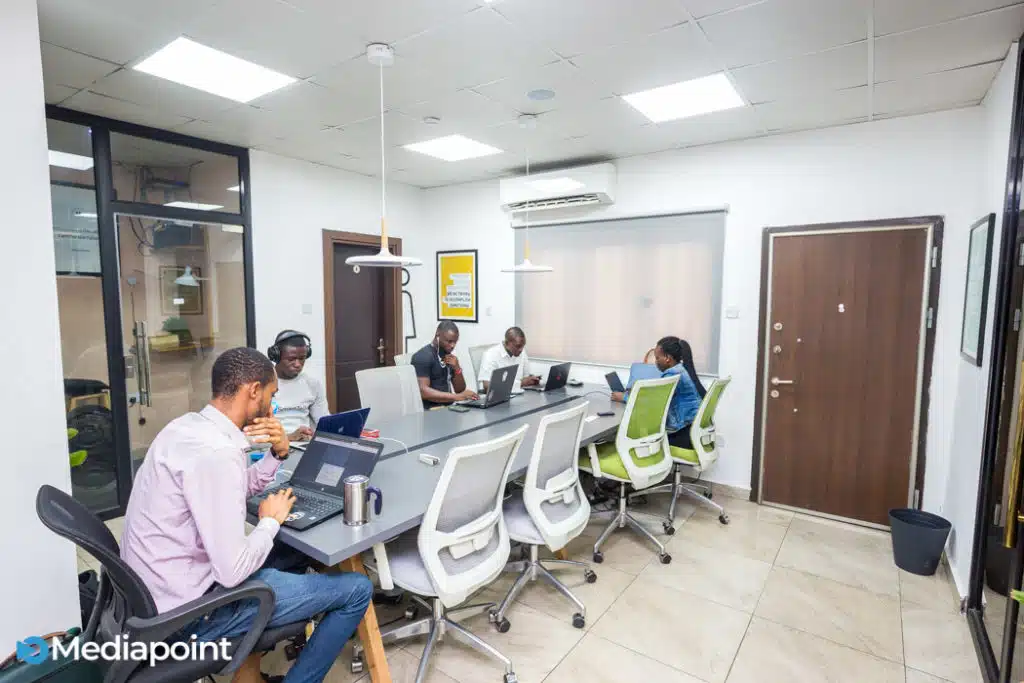
Running a co-working space in Lagos is starting to feel like running a power company. For Edward Esene, the breaking point wasn’t rent or demand, it was electricity. His hub in Alausa, a Band A area, should guarantee near-constant power, but the cost is brutal. Monthly bills swing between ₦200,000 and ₦400,000, and after doing the maths, he’s planning to move, not for growth, but survival.
Here’s the reality: Nigeria’s service-based tariff system, introduced by the Nigerian Electricity Regulatory Commission, means better power comes at a higher price. In theory, Band A users get up to 20 hours of electricity daily. In practice, that reliability is expensive, and not always consistent. Esene says ₦20,000 gets him about 88 units at his office, compared to 148 units at home in a cheaper Band B area. So he’s making a trade-off: less power, lower cost, and potentially ₦2.5 million in annual savings.
He’s not alone. Across Lagos, co-working operators are feeling the squeeze. At Rehdalia in Ikeja, founder Florence Chikezie says Band A hasn’t meant much lately; they sometimes get just three hours of power a day. That gap is filled with diesel, and the cost of that has surged sharply, pushing operating expenses up by as much as 60% in just two months. The problem? Customers, mostly freelancers and small businesses, can’t absorb higher prices, so operators are stuck.
Zoom out, and the model itself is under pressure. Electricity can account for 20–40% of operating costs, and even full occupancy doesn’t guarantee profitability. Some operators are getting creative — cross-subsidising with funded programmes or tiered pricing — but those fixes are temporary. For many, like Esene, the conclusion is simple: the numbers no longer add up. Want the full breakdown? Read more in Chimgozirim’s latest.
Starlink hits regulatory wall in Namibia

Namibia has blocked Starlink, the satellite Internet service backed by Elon Musk, from operating in the country. Regulators denied the company both a telecommunications licence and access to radio spectrum, effectively shutting the door on its entry for now.
This means that Starlink, despite its rapid expansion across Africa, still has to play by local rules, and sometimes, those rules are strict. Without a licence or spectrum approval, the company simply cannot operate legally, no matter the demand for faster Internet. For Namibians, it also means limited alternatives in a country where connectivity gaps still exist.
Here’s a backstory: In 2024, Namibia’s regulator, the Communications Regulatory Authority of Namibia (CRAN), had already ordered Starlink to stop operating for lacking proper approval and even confiscated equipment being used illegally. Now, with its formal application rejected and no clear reason given, the standoff is official, although there’s still a window for appeal.
This move highlights a growing tension across Africa: balancing the need for better Internet with protecting local telecom industries and enforcing ownership rules. Some reports suggest Namibia’s strict local ownership requirements may have played a role, reflecting a broader push for economic control and local participation in critical infrastructure.
Zoom out, and this fits a wider pattern. Starlink is already active in over 20 African countries, but it has faced resistance in places like South Africa, Zimbabwe, and Cameroon. The message is becoming clear: Africa wants connectivity, but not at any cost, especially when it comes to regulation, local ownership, and who ultimately controls the infrastructure.
In case you missed it
- MTN phases out Ayoba after 7 years as it prepares for a unified digital platform
What I’m watching
- Every Stock Market Term Explained for Beginners (Full Guide)
- 5 Things You Should Never Ask ChatGPT | Vantage with Palki Sharma
Opportunities
- Flutterwave is recruiting for several roles. Apply here.
- Briter is hiring a Commercial Director, a Senior Research Associate, and an Insights and Market Intelligence Associate. Apply here.
- Opay is currently recruiting for these roles: Partnership Manager (Fintech Experience), Junior Accountant, Junior Product Manager (Research), and IT Manager.
- Oyster is looking to hire a Risk Analyst. Apply here.
- Circle is looking to hire a Lead Product Designer (Remote). Apply here.
- SafetyWing (YC W18) is hiring a Product Manager Intern (fully remote). Apply here.
- Paystack is hiring a Performance Marketing Specialist. Apply here.
- VOYA (visa travel tech startup) is hiring an Operations and Admin Director (fully remote). Apply here.
- MTN MoMo TechSpark Graduate Programme is open. Apply here.
- MAX is looking for interns. Apply here.
- McKinsey is hiring for several roles, including Junior and Senior roles. Apply here.
- Paystack is hiring a Business Development Partner. Apply here.
- Zenith Bank is recruiting a Junior Software Tester Quality Control. Apply here.
- UNICEF Abuja is looking for a National Consultant (Immunization Programme Monitoring and Evaluation). Apply here.
- Standard Chartered Bank is hiring an Executive Research Partner. Apply here.
- e-Tranzact is looking to hire a product marketing officer. Apply here.
- Bumpa is hiring for several roles, including Bumpa Expert Lead (Account Management) – Customer Success; Product Designer; and Mid-level Motion/Graphic Designer, Mid-level Full-stack Engineer (Commerce), and Senior Fullstack Engineer (Commerce). Apply here.
- Tech Unite Africa returns on March 26, 2026, at Oriental Hotel, Lagos, bringing founders, investors, and industry leaders together for panels, exhibitions, and networking. Selected startups will compete in Startup World Cup Nigeria for a chance to reach the global finals and compete for a $1 million investment prize. Register or explore sponsorship opportunities here.
- ABDS 2026 will take place April 29–30, 2026, in Lagos, gathering founders, investors, developers, and policymakers shaping Africa’s blockchain and Web3 ecosystem. The summit focuses on industry insights, partnerships, and investment opportunities in one of the world’s fastest-growing crypto markets. Secure your pass or sponsorship here.
- Scrum Day Nigeria 2026 takes place on March 24 at the Lagos Oriental Hotel, bringing together product leaders, Scrum Masters, engineers, and executives passionate about building better products. The one-day conference features practical keynotes, hands-on workshops, coaching clinics, and real-world case studies focused on product leadership, agile ways of working, and modern engineering practices. If your organisation is considering accelerating delivery whilst improving business outcomes at the same time, this is the room to be in. Apply here.
- Paga is hiring a Sales Manager. Apply here.
- Paga is hiring senior sales executives. Apply here.
- Paga is looking for sales executives. Apply here.
- Paga is recruiting Senior Key Account Managers. Apply here.
- Paga is hiring Account Managers. Apply here.
- As one of Techpoint Africa’s most engaged readers, you have a direct hand in shaping what we publish next. Take our quick, 3-minute survey to tell us the stories and features you value most. Your responses are anonymous, and your feedback will help guide our editorial focus in the months ahead. Fill the survey here.
- Moniepoint is hiring for over 100 roles. Apply here.
- Building a startup can feel isolating, but with Equity Merchants CommunityConnect? You can network with fellow founders, experts, and investors, gaining valuable insights and exclusive resources to help you grow your business. Click here to join.
- To pitch your startup or product to a live audience, check out this link.
- Follow Techpoint Africa’s WhatsApp channel to stay on top of the latest trends and news in the African tech space here.
Have a wonderful Wednesday!
Victoria Fakiya for Techpoint Africa