

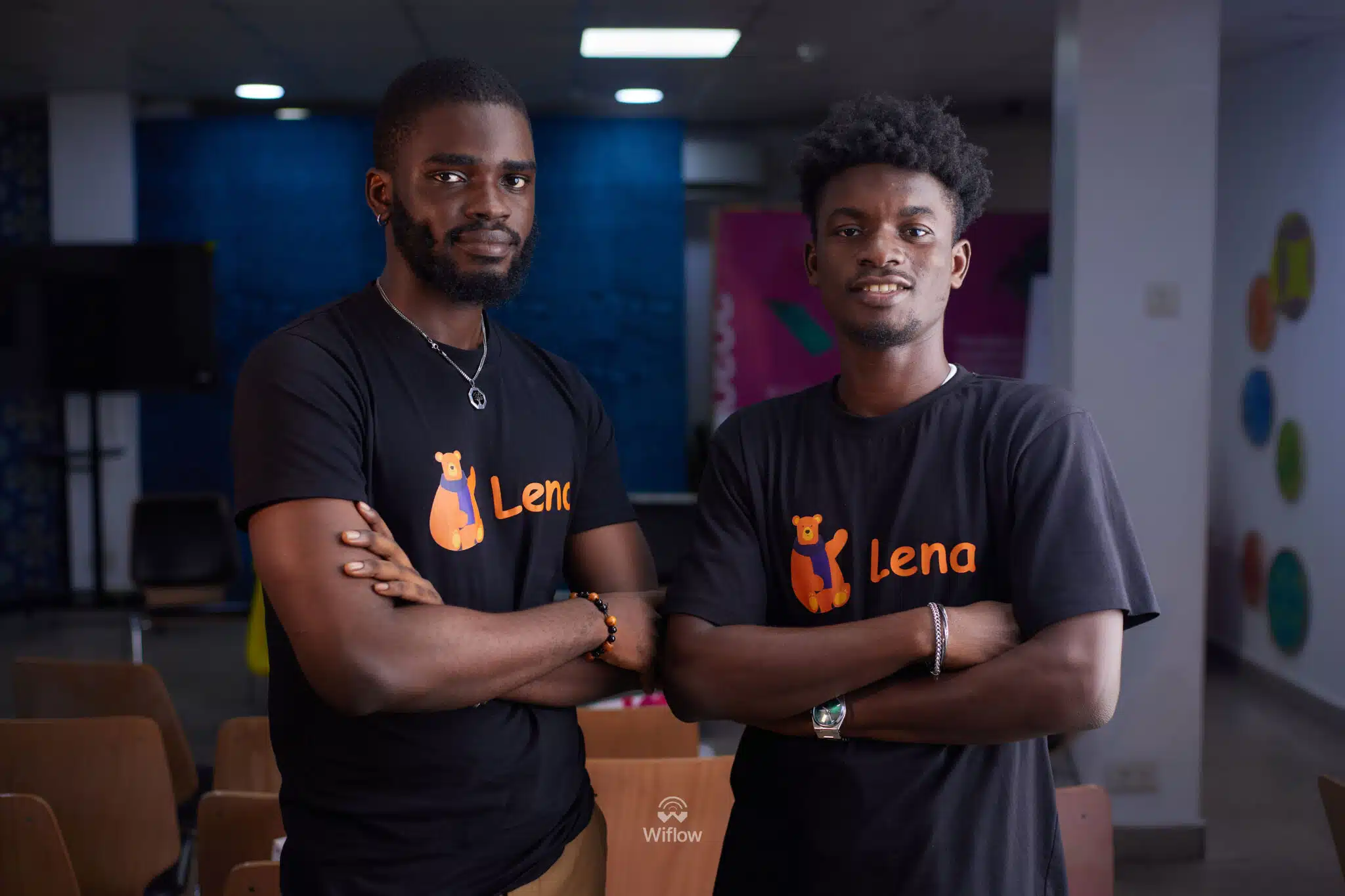


In the early days of COVID-19, as the world retreated indoors and work moved online, two young Nigerians began a partnership that would eventually lead them into one of the most challenging sectors in African tech: education.
Danny Ombeh and Faruk Bilesanmi did not set out to build an edtech company. Their journey began with freelance projects on Fiverr, the kind common among young builders testing their skills against real-world problems. But a mix of personal history, professional failure, and a shared desire to solve meaningful problems eventually crystallised into Lena, a curriculum-aligned gaming platform designed to help children master foundational subjects like maths, literacy, and science.
Today, their startup, Lena, is betting that the future of learning for African children does not lie in longer videos or more quizzes, but in games, so engaging that children forget they are studying.
What makes Lena different, the founders argue, is not just that it is “gamified,” but that it is built as a game from the ground up. In a market crowded with video lessons and quiz apps, Lena’s founders believe attention is the most valuable currency in education.
How the founders met
The partnership between Ombeh and Bilesanmi dates back to 2020. They met through mutual connections when Bilesanmi secured freelance work and needed a designer.
“Faruk and I have been building together since 2020 when we started working on freelance projects for clients in Nigeria and abroad,” Ombeh recalls. “And over time, we became a lot more interested in startups and actually solving real problems.”
That professional collaboration quickly turned into friendship and a shared ambition. Beyond work and solving problems, they realised they had a lot in common.
The idea for Lena came during a casual conversation about their mothers, when they realised that both were teachers. This shared background gave them a first-hand understanding of the limitations of current educational tools.
For Ombeh, the mission is deeply personal. Growing up with an intense imagination, he often struggled to pay attention in traditional classroom settings, preferring to read comic books rather than textbooks. This lack of foundational focus eventually hampered his studies in aerospace engineering.
He says Lena is built for children like his younger self, whose imaginations extend beyond the classroom and need a different entry point into learning.
“We felt it was important for us to solve for children like that because we were children like that. So we know the experience first-hand, and we’ve seen our mothers try and reach out to them, but the available tools fail to serve them,” Ombeh says.
What Lena does
At its core, Lena converts school curriculum into immersive digital games designed to hold children’s attention far longer than traditional edtech formats.
While many educational platforms claim to be gamified, they often amount to little more than digital quizzes with a points system attached. Lena takes a different approach by building actual games that integrate subjects like math, literacy, and science into the core mechanics of play.
The product serves a dual purpose: it keeps the child focused for extended periods while an underlying AI engine, trained on specific school curricula, monitors their progress. This AI identifies knowledge gaps in real-time. If a student struggles with a specific concept, the game pauses to provide a child-friendly explanation, ensuring the foundational learning is solidified before the fun continues.
“Children know when they are having fun. So we did some research and found out that in terms of content, gaming can grab children’s attention a lot longer than video or text, and that is what led us on the journey to turning curriculum into games that children actually love.”
For schools, Lena provides a comprehensive management dashboard that empowers teachers and administrators with built-in learning games and deep student performance analytics. The platform includes a Computer-Based Testing (CBT) tool that auto-marks assessments, effectively turning any school into a data-driven institution without the usual administrative overhead. Critically, these tools are designed to function with or without an internet connection, addressing a major infrastructure hurdle in the region.
Beyond the online experience, Lena is building offline AI infrastructure to address Nigeria’s connectivity gaps, especially for lower-middle-income households and communities.
“From our launch, we saw that there was a ton of demand, especially with schools, but some of them complained that they don’t have access to constant internet, and all the tools that exist currently need them to be connected,” Ombeh explains. “So we are currently building our offline AI systems. So even schools or students without Internet access can use the product.”
Furthermore, Lena is built with inclusivity in mind; for children with disabilities, the platform is accessibility-friendly, incorporating text-to-speech and other supporting tools to ensure no child is left behind.
The business model: A tiered subscription approach
Lena operates on a subscription-based business model, targeting both educational institutions and individual households.
For schools, the startup charges ₦20,000 per student per term. For parents looking to supplement their child’s education at home, the service costs ₦7,000 per month.
Recognising the economic diversity of the Nigerian market, the founders maintain flexibility, offering discretionary pricing for schools in lower-income areas that cannot afford the standard rate. Additionally, they are developing a WhatsApp-based AI tutor to reach families who may not have access to high-end gaming hardware or a consistent high-speed internet connection.
”Schools that cannot afford Lena at that price point can reach out to us, and we then use our discretion to charge them based on their specific condition. We are also looking at tiered pricing, so we can make our product available for more people.”
Traction and market realities
Since its launch in September 2025, Lena has shown promising early traction. The startup has successfully onboarded two schools, representing approximately 380 students, and has another seven schools in the sales pipeline.
On the direct-to-consumer side, they have attracted 228 individual parent users. While the B2B school side offers faster scaling, it comes with significant hurdles, including a high trust barrier with school administrators and the difficulty of reaching key decision-makers.
Despite these challenges and a cautious investment climate for edtech, Lena has secured $15,000 in grants and is currently closing an angel investment round.
“I think potentially, because of the number of students that come with onboarding schools, the B2B model is likely to scale faster. But we are actively onboarding both sides and receiving good feedback from them.”
Future outlook: From Lagos to the world
While currently focused on the Lagos market, Ombeh and Bilesanmi view Lena as a globally scalable product. They believe that the language of gaming is universal
“A game that engages a child in Nigeria is likely to resonate with a child in Tokyo or Accra,” Ombeh says.
The immediate roadmap includes expanding beyond Lagos and eventually entering other African markets, such as Ghana and Liberia.
“Nigeria is our starting market, and we hope to make as much impact as we can in Nigeria, but we’re also very aware of the limitations in scaling an edtech.”
A critical component of this expansion is developing offline AI infrastructure, which will enable the product to function in areas with poor internet connectivity, ensuring that Lena’s impact isn’t limited by a user’s geography or data plan.