



In survey after survey, most executives say innovation is existential, but fewer than 1 in 10 believe their companies are making something out of it.
Key takeaways
- Most corporate innovation programs fail less because of bad ideas and more because they’re structurally designed to avoid real risk.
- Corporate innovation programs that work share common traits, such as protected teams, clear metrics tied to shipped products, and insulation from internal politics.
- Incubators, venture studios, intrapreneurship programs, and open innovation can work when they’re designed to survive corporate resistance.
- Where failed programs treat innovation like a side project, the best ones treat it like a business unit.
I’ve noticed a credibility gap that keeps showing up whenever corporations talk about innovation. On one hand, 84% of executives say innovation is critical to growth. On the other hand, only 6% say they’re satisfied with their innovation outcomes, according to research from McKinsey & Company.
Those two numbers shouldn’t coexist, but they do.
The simple explanation is that most corporate innovation programs are performative. Yes, they may look impressive on LinkedIn and internal slide decks, but when it comes down to it, they rarely ship real products, spin out viable businesses, or move the revenue needle.
In this piece, I’m focusing on six corporate innovation programs that actually worked.
6 corporate innovation programs that actually ship
| S/N | Company | Program | Model type | What actually shipped |
| 1 | Area 120 | Internal incubator | Aloud, Tables, GameSnacks | |
| 2 | Amazon | Working Backwards | Product development system | AWS, Kindle, Prime |
| 3 | Microsoft | Microsoft Garage | Intrapreneurship lab | Seeing AI |
| 4 | Unilever | Unilever Foundry | Open innovation | 500+ startup pilots |
| 5 | Maersk | Maersk Growth | Venture studio | Captain Peter, Huboo, Baton |
| 6 | Mastercard | Start Path | Startup accelerator | 500+ startups scaled |
Every program here meets at least one of three hard criteria:
- It shipped a product used by real customers.
- It created a new business line or platform.
- Or it changed how the parent company builds products at scale.
1. Google’s Area 120 (internal startup incubator)
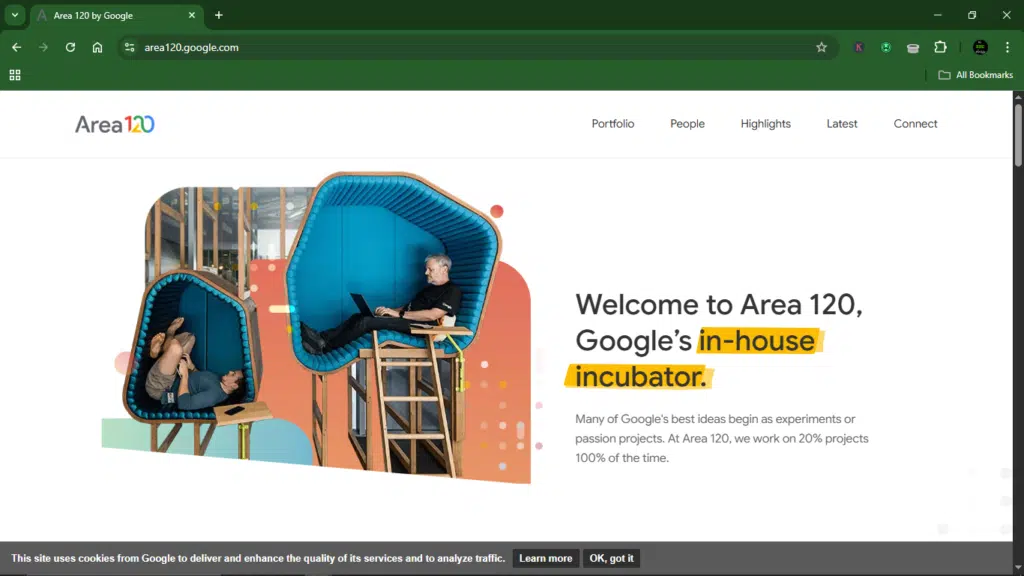
I feel like when businesses talk about corporate incubators, this is usually the example they’re reaching for, whether they realize it or not. Area 120, inside Google, works because it treats innovation less like a committee process and more like a startup experiment with a clock running.
Right now, Area 120 is no longer a standalone unit. In 2021, it was reorganized into the Google Labs division. And since late 2022, it has shifted its focus exclusively to AI-first projects in line with Google’s core priorities.
Innovation model
The premise was for employees to pitch startup ideas. If an idea is approved, the team gets time, budget, and autonomy to build it, without being dragged into the company’s normal roadmap politics.
How it was structured
Area 120 runs with deliberate constraints:
- Small teams of 3–5 people.
- Operate outside core business units.
- A 6–12 month build window.
- A midpoint decision to kill it or scale it. This matters more than most companies are willing to admit.
What success looked like
Away from slide decks or internal enthusiasm, projects were judged based on:
- Early user traction (often 10,000+ users).
- A market big enough to matter ($10 million+ TAM).
- Clear strategic alignment with Google’s long-term bets.
If a project didn’t hit those markers, it got cut.
What actually shipped
By design, roughly 60% of projects are killed.
- GameSnacks (now in Chrome).
- Tables (moved to Google Cloud).
- Aloud (AI dubbing for YouTube).
Why this model works
Area 120 succeeded because it shields teams from internal politics, normalizes failure, and forces speed. Teams iterate faster than traditional product groups because they’re optimizing for learning. Autonomy plus time-boxing beats endless executive reviews.
2. Amazon’s Working Backwards (customer-driven innovation system)
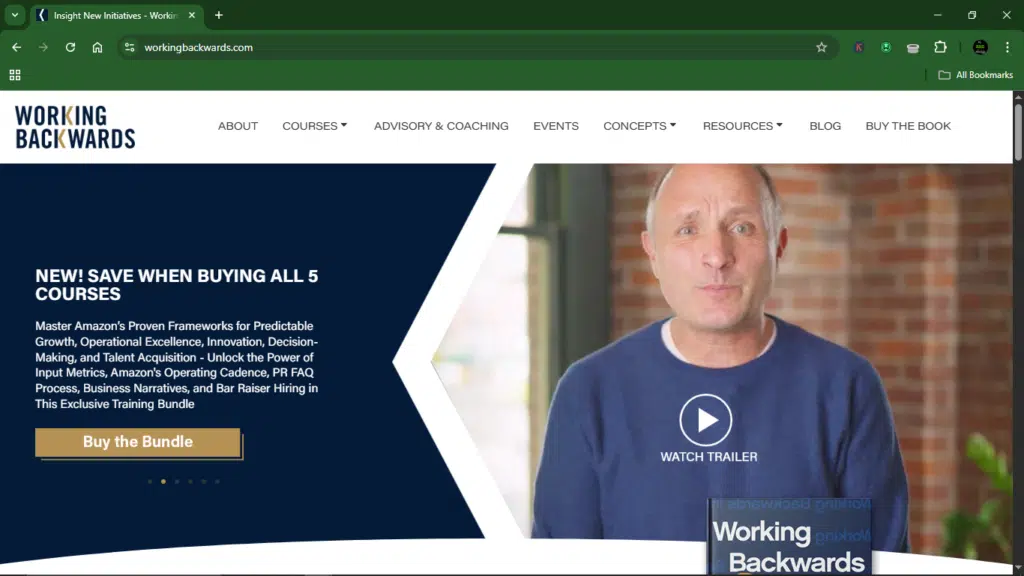
For many companies, innovation begins with brainstorming. Amazon approaches this the opposite way. Here, innovation starts with a document that assumes the product already exists and tasks the team to justify it.
Here’s how it works:
Every new product begins with a press release and FAQ, both written before a single line of code is touched.
- The press release describes the finished product, the customer problem it solves, and why anyone should care.
- The FAQ forces the team to answer hard questions early, such as pricing, trade-offs, risks, and edge cases.
The idea is that if the narrative doesn’t hold up, the idea doesn’t move forward.
How it works
Amazon’s system is intentionally hostile to vague thinking:
- Six-page narrative memos.
- Silent reading at the start of meetings.
- Debate happens only after everyone has read and understood the same context.
This structure removes presentation theatrics and centers clarity. You can’t hide behind good slides if your logic doesn’t survive the page.
What success looks like
Ideas are evaluated on three unforgiving criteria:
- A clear, well-articulated customer problem.
- Economic viability at scale.
- A single team with strong ownership from end to end (Single-Threaded Leadership or STL).
The idea doesn’t fly if any of the above is missing.
Products that have come out of this
- Amazon Web Services (AWS).
- Kindle.
- Amazon Prime.
Why this approach works
Writing is a forcing function. It exposes fuzzy thinking, kills weak ideas before they consume resources, and ensures customer value takes precedence over technical novelty. By the time a project gets funding, it has already survived intellectual stress-testing.
3. Microsoft Garage (grassroots intrapreneurship)
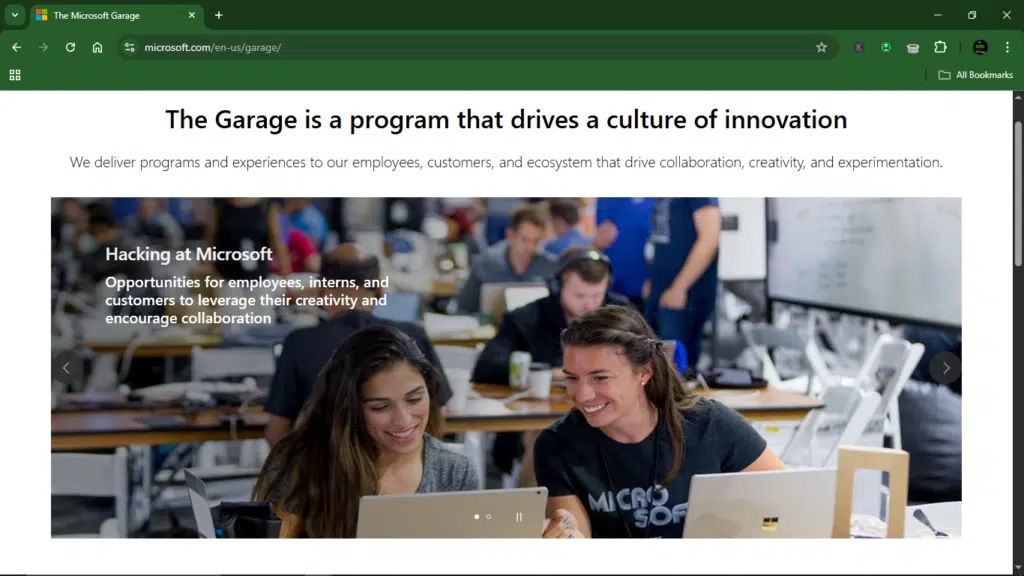
Microsoft Garage is what happens when companies truly trust their employees to innovate. The Garage runs on a simple principle: “Give people the freedom to build, and they will.” Ideas emerge organically with no approval needed to start, and passion drives participation.
How it’s run
Microsoft supports this with a mix of flexible tools and spaces:
- Hackathons and workshops.
- Maker spaces and labs.
- Microsoft made Garage its official outlet for experimental projects.
Teams begin small, self-organized, and self-funded initially, leaning on the company’s facilities rather than top-down budgets.
What success looks like
Evaluation is pragmatic:
- Internal adoption by employees or departments.
- External validation when the product reaches users.
- Strategic relevance to Microsoft’s broader goals.
What successfully shipped
Some projects grew into impactful products:
- Seeing AI (an app for visually impaired users).
- Soundscape (navigational audio for the blind.
- Microsoft Journal (a freeform personal journaling built for touch and pen).
Why this model works
Low barriers and employee autonomy generate massive participation. Passion projects often outperform mandated initiatives because creativity thrives when it isn’t micromanaged.
4. Unilever Foundry (open innovation at scale)
Some innovation needs come from inside the company. Unilever proves this with Unilever Foundry, a platform that taps external startups to accelerate product and process innovation.
Here, Unilever partners with startups. Brands post specific challenges, and startups propose solutions. Promising ideas enter 3–6-month pilot programs, and those that deliver results scale commercially.
Today, the Foundry has shifted its focus toward AI-driven R&D and supply chain resilience. It is increasingly integrated with Unilever Ventures, which handles actual equity investments if a Foundry pilot proves exceptionally strategic.
How it works:
- Brands define measurable challenges.
- Startups apply through the Foundry platform
- Pilots run with clear KPIs, minimal disruption to core operations
What success looks like
- Measurable ROI from pilot outcomes.
- Scalability across markets.
- Integration that doesn’t bog down existing teams.
What actually shipped
- 500+ startup pilots.
- Sustainable sourcing solutions.
- AI-driven personalization initiatives.
Why this model works
It’s faster than internal R&D, incentivizes startups with pay-for-performance, and provides a global testing ground before scaling.
5. Maersk Growth (corporate venture studio)
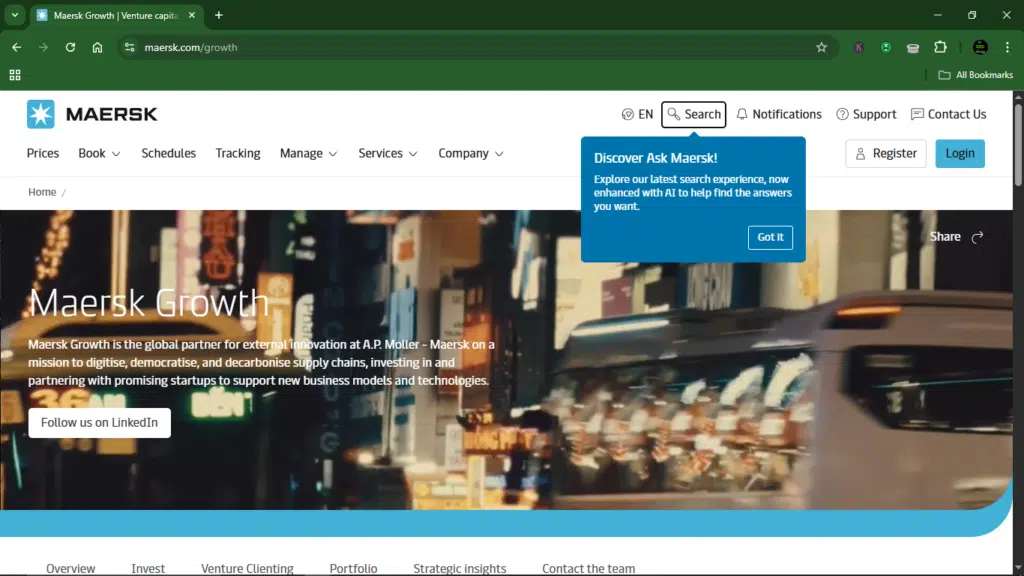
Maersk Growth is a venture studio that combines internal resources with external entrepreneurial talent. The goal is to create standalone businesses using corporate assets, such as data, customers, and logistics infrastructure, while keeping them operationally independent.
Startups spin out with Maersk as an anchor customer, giving them early traction that most new ventures struggle to achieve.
How it’s structured
- A dedicated venture team with global expertise oversees studio operations.
- External founders are paired with Maersk resources
- Startups are incubated with the expectation that some will fail
What success looks like
- Achieve product-market fit within 12–18 months.
- Generate revenue early.
- Maintain operational independence from Maersk’s core business.
What actually shipped
- Over 40 investments to date, including Captain Peter (last-mile delivery solutions), Huboo, and Baton.
Why this model works
By leveraging corporate unfair advantages and maintaining a portfolio mindset, Maersk avoids the corporate red tape that often kills internal startups.
6. Mastercard Start Path (partnership-first acceleration)
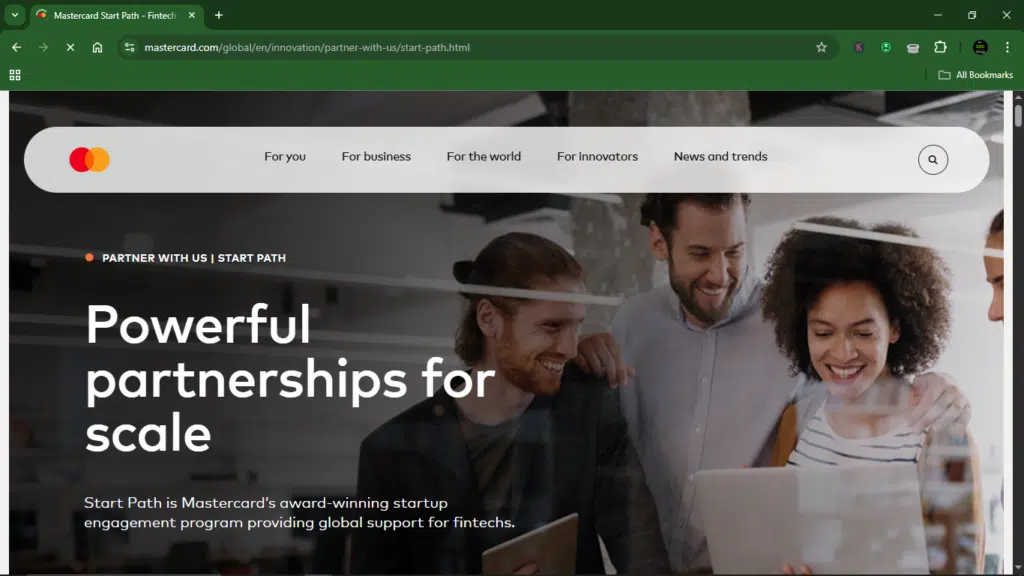
Mastercard Start Path is an equity-free accelerator built around partnerships rather than ownership.
Start Path focuses on strategic collaboration. Instead of taking equity, Mastercard gives startups access to its APIs, global network, and enterprise customers, then lets real market demand determine what scales.
How it’s structured
- Six-month cohorts.
- 10–15 startups per batch.
- Deep access to Mastercard’s platform, data rails, and client relationships.
The program is designed to test integration quickly without locking either side into premature commitments.
Traction
- 500+ startups supported across over 55 countries since launching in 2014.
- Alumni have raised more than $25 billion in estimated capital raised post-program.
- Reports over 15,000 brokered global connections between startups and its network of banks and merchants.
Why this model works
It’s low risk with high optionality. Mastercard gains early visibility into emerging trends while startups get distribution they couldn’t buy.
Why most corporate innovation programs fail
After looking at programs that actually ship, the pattern behind failure becomes hard to ignore.
1. Zero action innovation
We’ve all seen companies celebrate hackathons that end with applause but no budgets. Idea portals collect suggestions that no one responds to and innovation activity that looks impressive, with nothing getting built.
2. Core business red tape
Even promising pilots rarely survive contact with the core business. Legal shuts them down over risk. Finance demands immediate ROI. Business units see new ideas as threats to existing revenue. The system protects itself.
3. The wrong metrics
Everyone knows that counting ideas generated or participants engaged is meaningless, but businesses still do it. Innovation only creates value when products ship, and customers use them.
FAQs
What’s the typical success rate for corporate innovation programs?
In properly structured programs, about 30–40% of initiatives ship something real. Of those, only 10–15% become meaningful revenue drivers. That’s not a failure rate—that’s a portfolio. Expecting every idea to win is how companies end up killing the entire system instead.
Is it better to centralize or distribute innovation?
A hybrid model works best. Centralized funding and governance provide protection and continuity, while distributed execution within business units or venture teams keeps innovation close to real problems and customers. Too much of either may be too much for the system.
Conclusion
After looking across the programs that actually work, what’s clear is that successful corporate innovation is designed. The companies that ship rely on structure, protection, and patience.
What separates winners from the rest isn’t even the model they choose (e.g., incubator, venture studio, intrapreneurship, or open innovation), but whether leadership is willing to fund uncertainty, tolerate failure, and measure success by outcomes instead of activity.
Disclaimer!
This publication, review, or article (“Content”) is based on our independent evaluation and is subjective, reflecting our opinions, which may differ from others’ perspectives or experiences. We do not guarantee the accuracy or completeness of the Content and disclaim responsibility for any errors or omissions it may contain.
The information provided is not investment advice and should not be treated as such, as products or services may change after publication. By engaging with our Content, you acknowledge its subjective nature and agree not to hold us liable for any losses or damages arising from your reliance on the information provided.
Always conduct your research and consult professionals where necessary.