


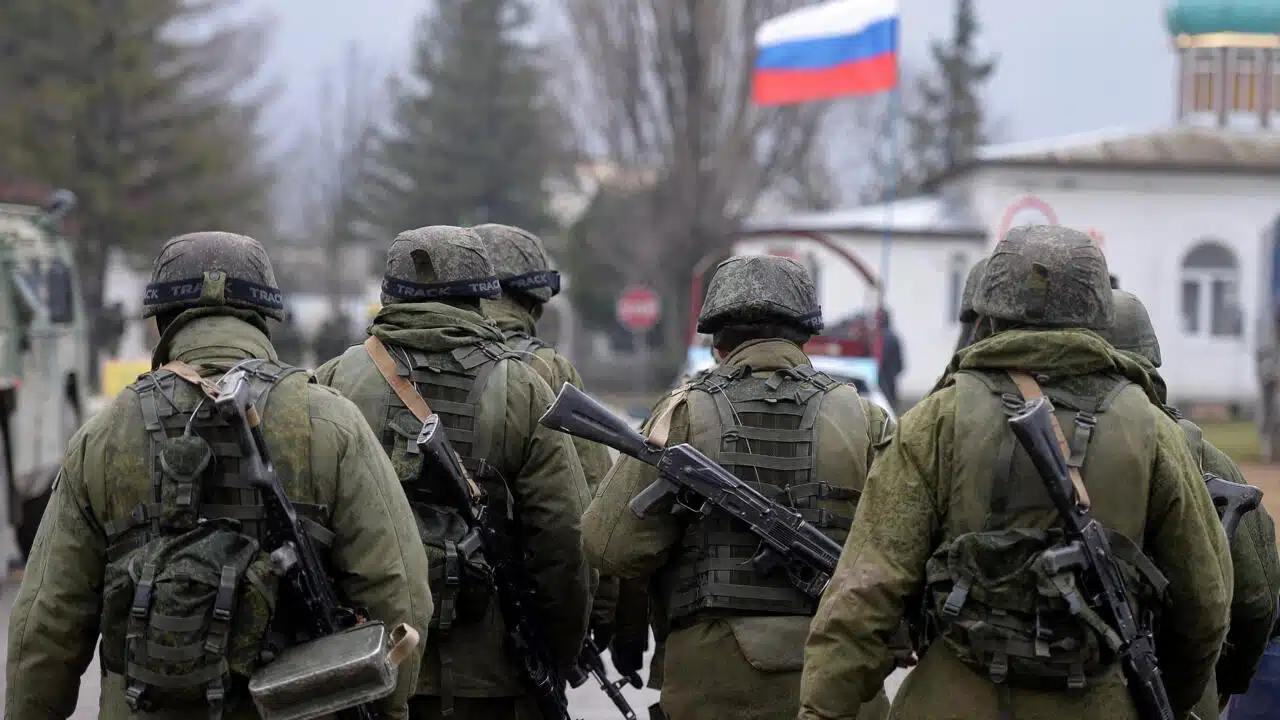


For months, reports have emerged of young Africans from countries like Nigeria, Kenya, South Africa, and Zimbabwe finding themselves on the front lines of wars in Ukraine, Russia, Israel, and across the Middle East. Over 1,400 Africans from 36 countries are reportedly active in the Russian-Ukrainian conflict alone.
While the implications of this are vast, the mechanics of this recruitment are strikingly modern, relying on marketing techniques and the viral nature of social media to lure vulnerable people to the battle frontlines.
These young individuals are being pulled into foreign conflicts through digital pathways that look almost identical to legitimate work opportunities. These pathways run through familiar platforms like Telegram, WhatsApp, Facebook, LinkedIn, and gig work sites, the same infrastructure that powers today’s global remote work economy.
This raises uncomfortable questions about the unintended role of the Internet in modern warfare. Here are six questions that break down how the internet is aiding this recruitment and what it means for the continent’s youth.
Why are African workers suddenly showing up in foreign wars?
In simple terms, because they’re being recruited as workers first, not soldiers.
The Washington Post found that many Africans who ended up in Ukraine entered Russia legally on student visas, work permits, or tourist visas after responding to online job advertisements.
Some were promised factory jobs, security work, construction roles or educational opportunities. Others were already working gig jobs online when they were approached with overseas offers, only to realise on arrival that the roles were connected to the military. Many have ended in combat roles, while women are often funnelled into drone assembly plants in regions like Tatarstan.
Israel has also been recruiting asylum seekers from Africa for the Gaza war.
Families across Kenya have reported relatives disappearing after accepting such offers, only to later discover they had been deployed to combat zones.

Victoria Fakiya – Senior Writer
Techpoint Digest
Stop struggling to find your tech career path
Discover in-demand tech skills and build a standout portfolio in this FREE 5-day email course
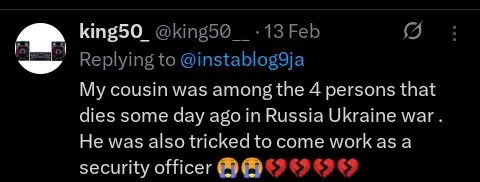
Some offers promise residency opportunities —powerful incentives that many Africans cannot turn down. Recruiters rarely present themselves as military agents. Instead, they appear as job recruiters, consultants or travel agents.
Upon arrival in the host country, recruits’ passports are often confiscated, and they are presented with contracts written in languages they don’t understand, with threats that if they refuse to sign, they will be deported or imprisoned for visa violations allegedly manufactured by the recruiters.
“My brother went through a genuine school application process and completed successfully,” Shafiu Mahama, who lost his brother to the Russia-Ukraine war, recalls. “I don’t know how he was recruited, but a friend of his said they made them sign for a purported sign-on bonus of about $13,000.”
The timing of this shift is crucial because the Internet has changed how labour moves globally. In the past, mercenary recruitment was largely limited to military circles. Today, anyone with a smartphone can access global job markets. This creates opportunity but also risk, as these digital platforms have removed traditional gatekeepers. Now, the same tools used to find remote work can also connect workers to military recruiters under employment scams.
Are recruiters deliberately targeting Africans?
Africa has become a major target due to high youth unemployment, a large population of migration-seeking workers, rapid Internet penetration, and expanding participation in the gig economy.
According to the International Organisation for Migration, economic migration remains one of the primary motivations for African workers leaving the continent. Recruiters exploit this vulnerability.
Promises of salaries ranging from $1,000 to $3,000 per month, far above average local earnings, can override concerns about risk. Some recruitment campaigns even tailor messages specifically for African audiences.
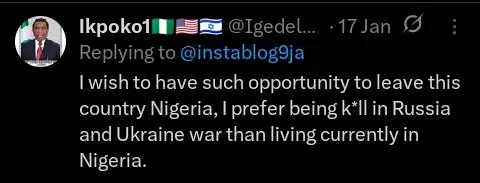
This reveals a hidden reality: Africa’s digital labour force is not just powering the global tech economy; it is also becoming entangled in global conflicts.
The recruitment of foreign workers into war serves strategic purposes beyond manpower. It helps countries reduce domestic political backlash from casualties, sustain prolonged wars and expand military capacity at lower cost.
For African countries, though, this creates diplomatic and security concerns. Citizens caught in foreign conflicts complicate international relations and consular responsibilities.
Which platforms are being used?
Multiple platforms are involved, each playing a different role in the recruitment funnel.
Telegram has emerged as one of the most important tools in this ecosystem. Its large broadcast channels, minimal moderation visibility and encrypted communication make it particularly useful for recruiters.
Recruiters post opportunities framed as overseas employment, sometimes specifically targeting African nationals. Once initial contact is made, conversations often move into private chats.
On social media platforms, recruitment spreads through social networks. Job offers circulate in migration groups, overseas job forums, or diaspora communities. Opportunities may appear as professional roles abroad, but initial contacts can lead to intermediaries who later introduce more opaque contracts.
In Kenya, the National Intelligence Service (NIS) identified over 600 recruitment agencies, many of which have no physical offices but maintain a massive presence on TikTok. They use social media to find recruits, then collude with rogue officials to facilitate travel via alternative routes through Uganda or the Democratic Republic of Congo to avoid detection at major airports. These agencies often provide falsified documents, visas, work permits, and employment contracts digitally.
To add an extra layer of deception, short-form videos featuring lifestyle content of people in Russia wearing luxury clothes or showcasing high-tech environments are promoted on social media to create an image of prosperity.
Influencers are also paid to promote these narratives. A notable example is South African influencer Cyan Boujee, who was reportedly paid to promote the Alabuga Start program (Russia job program). She later apologised, claiming she had unknowingly participated in the propaganda after discovering the program was linked to a drone manufacturing plant.
Gaming platforms have also emerged as another recruitment space. These recruiters target youth through gaming platforms like Discord and military simulator games like Arma 3, building rapport on virtual battlefields before offering real-world contracts.
Where do gig work platforms fit into this?
The connection between Africa’s gig economy and global military systems is already deeper than many realise. But, beyond physical jobs, these recruiters can target online gig jobs.
In February 2026, an investigation by The Bureau of Investigative Journalism found that African data workers hired through gig platform Appen had unknowingly contributed to AI systems linked to the US military. These workers were performing routine data-labelling tasks, a common entry point into the global AI economy. But the datasets were connected to military applications.
This shows how African digital labour is already embedded in global defence infrastructure, even without workers leaving their homes. In some cases, physical recruitment is an extension of this dynamic.
Is this recruitment always deceptive?
Not always, but it is often opaque. Some recruits reportedly knew they were signing military contracts. Others say they believed they were accepting civilian roles. The lack of transparency is central to the system.
In many cases, the full nature of the work becomes clear only after arrival, when quitting can be difficult.
How are African nations responding to this?
African governments began taking more aggressive stances. Nigeria’s Ministry of Foreign Affairs, while confirming that at least 36 Nigerians had been identified in the Russia-Ukraine war as of February 2026, issued a stern warning, stating that citizens participating in foreign conflicts “do so at their own risk.”
The Kenyan National Intelligence Service (NIS) recently identified over 600 “shadow agencies” operating online. The government is now cracking down on rogue travel agents who facilitate these trips under the guise of employment visas.
South Africa has reiterated that its Foreign Military Assistance Act makes it illegal for citizens to join foreign wars without state permission.
Although these governments have started issuing warnings, enforcement remains limited. The scale of recruitment networks spanning continents and involving private actors makes regulation difficult.
Some social media platforms, including TikTok and Meta, have stated they are actively banning accounts linked to the “Alabuga Start” scheme. However, recruiters simply rotate usernames or use decentralised networks of individual accounts that are harder to track than a single corporate page.