


At 85,000 users, Gebeya’s suite of AI products is growing fast, a feat achieved in just four months since launch. Out of the four AI products created, Gebeya Dala, or Dala for short, is the most popular.
Dala helps people build apps with natural language — no coding skills necessary. It is similar to Lovable, the $6.6 billion AI startup that inspired it. But rather than just being Lovable for Africa, Dala distinguishes itself by doing more.
Doing more means going beyond vibe coding, which may seem like one of the most popular use cases for AI currently, but Amadou Daffe, who founded Gebeya in 2016, says not many Africans are into it yet.
“I interviewed my nephews, who actually told me it would be cool if we integrated comic books. That way, you can create your own comic books and even sell them digitally. Turns out it is actually easier to do that than to create a vibe coding platform.”
Daffe is not new to building and iterating products. While Dala might just be four months old, Daffe has been building for 10 years. He founded Gebeya in 2016, and since then, the company has taken many forms.
“The first version of Gebeya (Gebeya 1.0) was actually a school, and the purpose was to train many high-end software engineers on the continent and eventually provide an outsourcing opportunity.”
The model was similar to Andela’s but focused on training talent across East Africa. It later evolved into a Pan-African talent marketplace, aspiring to become an “Upwork for Africa,” before pivoting again into a SaaS platform that allowed other entrepreneurs to run their own talent marketplaces.
Since then, Gebeya has shifted once more. This time into agentic AI products. According to Daffe, he is running a technological company, so it only made sense that he was keeping up with the times.
But the decision to build Dala came when a non-technical staff member built a working product with Lovable. While Lovable inspired it, Dala isn’t just another vibe-coding platform; it is a platform where you can vibe anything.
Gebeya Dala’s growth
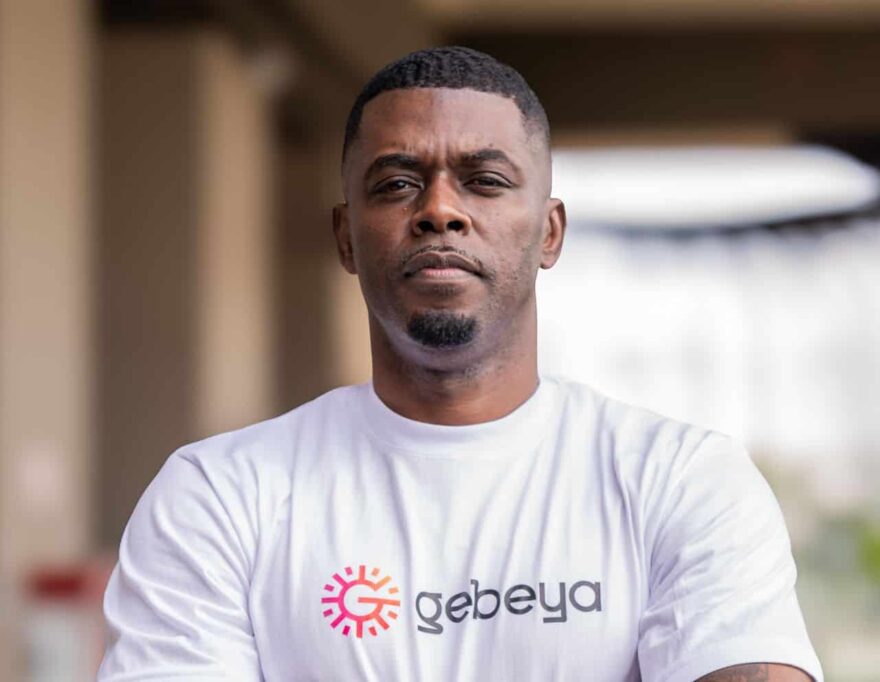
When it comes to funding or startup presence in Africa, Ethiopia, Daffe’s home country, is rarely discussed. Africa’s big four — Egypt, South Africa, Kenya, and Nigeria — are usually the top contenders.
But despite this, Daffe has raised funding from VCs such as Partech Africa and Orange Digital Ventures. This is possible because of the Pan-African structure he gave the company.
“By default, Gebeya was built in Africa. if I just stayed in Ethiopia and created a company in Ethiopia, it would have been impossible to raise money.”
Building talents as far back as 2016 has its perks. According to Daffe, his team is one of the best engineering teams in the world. Mark Essien, another African tech entrepreneur, has been training tech talents through his HNG internship for years. This talent came in handy while building his new product, Tripdesk, which already crossed $2.3 million in revenue in four months.
Similarly, Dala was launched four months ago, and not only does it have thousands of users, but 8% of them are paying customers, something uncommon among AI products today.
“It is very high if you look at it in comparison to the industry rate, which is around 3%.”
Daffe says the high conversion rate is due to people being able to pay in their local currency and even use popular payment methods like mobile money.
However, Daffe admits that Dala’s growth is still dwarfed in comparison to global AI platforms. For example, Lovable grew to 300,000 monthly active users in two months and 8 million users in one year, the kind of growth Daffe says requires a lot of money, referencing Lovable’s $500 million round.
While Gebeya has gotten funding for its previous iterations, it has yet to raise funding for its AI ambitions. But beyond raising funds, Daffe has several competitive advantages unique to Africa.
Dala is built for a mobile-first continent, integrated with WhatsApp and Telegram, and designed to support multiple African languages because, in Daffe’s words:
“Those big companies don’t have time to solve what I just described.”
Daffe also believes there are still people on the continent without access to AI tools, and Dala is well-positioned to be their first point of contact with the technology.
Building AI for Africa
Like many AI startups, Dala relies on existing foundational models by massive AI labs. However, it added a unique twist through something Daffe calls an orchestrator.
An orchestrator is a system layer that intelligently routes each user prompt to the most suitable underlying AI model.
“Gemini may not be the right tool, OpenAI may not be the right tool. The orchestrator picks which one it wants.”
The orchestrator is only one layer of what Gebeya is building. While Dala currently routes prompts across existing foundational models, Amadou Daffe says the bigger ambition is to move beyond depending entirely on external providers and eventually develop a context-specific language model of its own.
“But we have an appetite right now to build our own models because what we are doing is so specific.”
Rather than competing with massive, general-purpose systems, Gebeya is aiming for a smaller, focused model trained on its own user behaviour and use cases across products like Dala and Jetume.
“I’m not aspiring to build a large language model. I’m aspiring to either build a context language model — meaning very specific to an area — or a small language model.”
That ambition is where its relationship with Cassava Technologies comes in. Cassava operates data centres and fibre infrastructure across Africa, and as Gebeya gathers more user data and prepares to train its own models, it will need GPU-ready infrastructure on the continent — especially in markets where governments may require local data residency.
“If I wanted to launch the language model, or even an agent that’s very specific to data control in a given country, I’ll sign a lease with them to run my application and my language model there.”
In other words, Cassava provides the physical infrastructure layer — data centres and GPUs — that would allow Gebeya to train and deploy its own contextual model within Africa rather than relying entirely on foreign cloud environments.
Challenges of building AI in Africa
Because Dala relies on foundational models from companies like OpenAI and Google, Gebeya must constantly manage issues such as hallucinations, shifting APIs, and cost per prompt.
“Some of my engineers are stuck because this is something new. We could have moved much faster if I were able to unlock these issues that this agentic thing does.”
Beyond technical bottlenecks lies the harder problem of scale. Dala has grown quickly, but Daffe knows that in AI, speed determines survival. For him, the race is not just about product quality but about distribution, working capital, and becoming the loudest voice explaining AI’s possibilities to an African audience.
Yet, Daffe frames the moment less as a threat and more as an inflexion point. He believes Africa’s young, mobile-first population gives it an opportunity to leapfrog — not just in coding, but in what he calls “vibing everything,” from music to games to full digital products.