




Sveiki,
Victoria from Techpoint here,
Here’s what I’ve got for you today:
- DRC accuses MTN of illegal operations
- Gebeya’s AI hits 80K users in four months
- Terra lands $22M after raising $11.75M
DRC accuses MTN of illegal operations

The Democratic Republic of Congo has picked a fight with one of Africa’s biggest telecom giants. The country’s regulator, Autorité de Régulation de la Poste et des Télécommunications du Congo (ARPTC), has accused MTN Group of illegally providing mobile and internet services inside the DRC without a licence, including in rebel-held areas like Goma and Rutshuru.
In a strongly worded statement, the regulator said it has “well-documented” evidence and has referred the matter to unnamed national and international bodies. It warned that the alleged unauthorised operations violate Congolese law and could expose the company to prosecution. The statement followed a meeting convened by Prime Minister Judith Suminwa Tuluka, who reportedly addressed what she described as digital intrusions and the unlawful use of Congolese frequencies by a foreign operator.
MTN, however, is pushing back. The South Africa-based telco says it does not operate a mobile network in the DRC and respects the country’s sovereignty. In a statement to Connecting Africa, MTN said it continues to engage stakeholders through the appropriate channels but firmly denied running services in the country.
So what’s really going on? One likely explanation is cross-border signal spillover. MTN operates in several countries bordering the DRC, including Rwanda, Uganda, Zambia, South Sudan, and the Republic of Congo. Radio waves don’t stop neatly at national borders, and signals from neighbouring networks can bleed into frontier towns. According to the International Telecommunication Union, this kind of frequency overlap is a common global challenge.
Still, spillover can create messy realities on the ground. Residents near borders sometimes latch onto stronger foreign signals, and informal vendors may even sell SIM cards from operators that aren’t officially licensed in the country. Whether this case is about technical interference or something more deliberate, it puts cross-border spectrum management back in the spotlight and shows how sensitive digital sovereignty has become across Africa.
Gebeya’s AI hits 80K users in four months
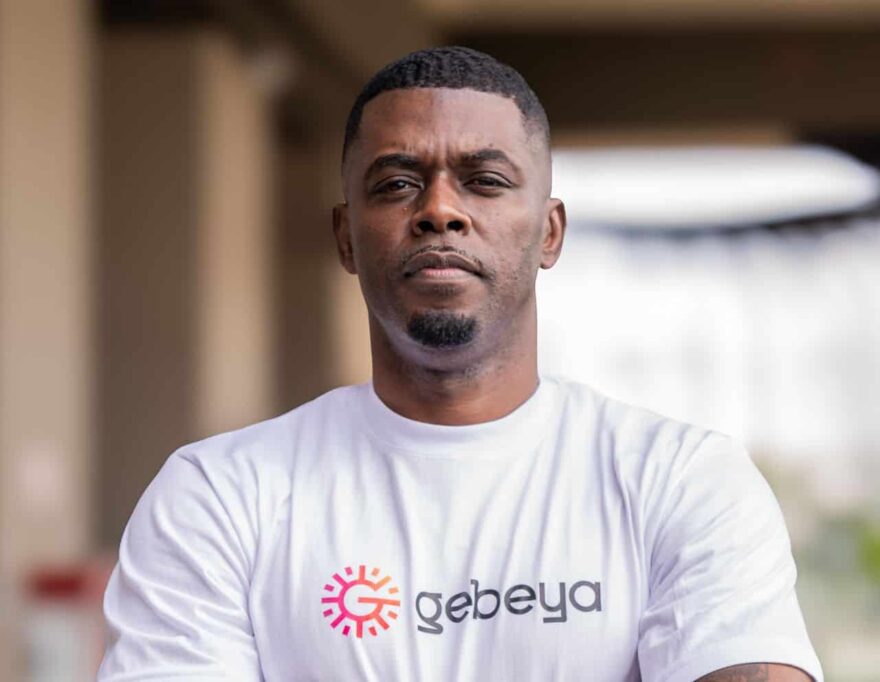
Four months. That’s all it took for Gebeya to rack up 80,000 users across its new suite of AI products. The standout? Dala — short for Gebeya Dala — a tool that lets anyone build apps using natural language, no coding required. Think of it as Africa’s answer to Lovable, the buzzy AI startup that recently hit a $6.6 billion valuation, but with a local twist.

Victoria Fakiya – Senior Writer
Techpoint Digest
Stop struggling to find your tech career path
Discover in-demand tech skills and build a standout portfolio in this FREE 5-day email course
Dala didn’t just copy the “vibe coding” wave. Founder Amadou Daffe says most Africans aren’t necessarily trying to spin up SaaS tools with prompts, at least not yet. So the team expanded the idea. After chatting with younger users (including his nephews), Daffe realised people were more excited about creating comic books they could publish and sell digitally. From there, Dala evolved to include modules for music, games, and other creative formats. In his words, it became less about vibe coding and more about “vibe creating anything.”
Daffe isn’t new to building. He founded Gebeya back in 2016, and the company has gone through several iterations since then, including building out a talent pipeline across Africa. That long-term investment in engineering talent is now paying off. Dala, launched just four months ago, already has thousands of users, and about 8% of them are paying customers, which is no small feat in today’s crowded AI market. Like most AI startups, Dala sits on top of existing foundational models rather than building from scratch, a practical move given the cost of training large models, even in the era of cheaper alternatives like DeepSeek.
The bigger story here is speed. In less than half a year, Gebeya has gone from experimenting with AI to building a product with traction and revenue. For a company that’s spent nearly a decade investing in African tech talent, Dala feels like the payoff moment. For more on how Daffe is thinking about AI, talent, and what’s next for Gebeya, check out Bolu’s latest.
Terra lands $22M after raising $11.75M
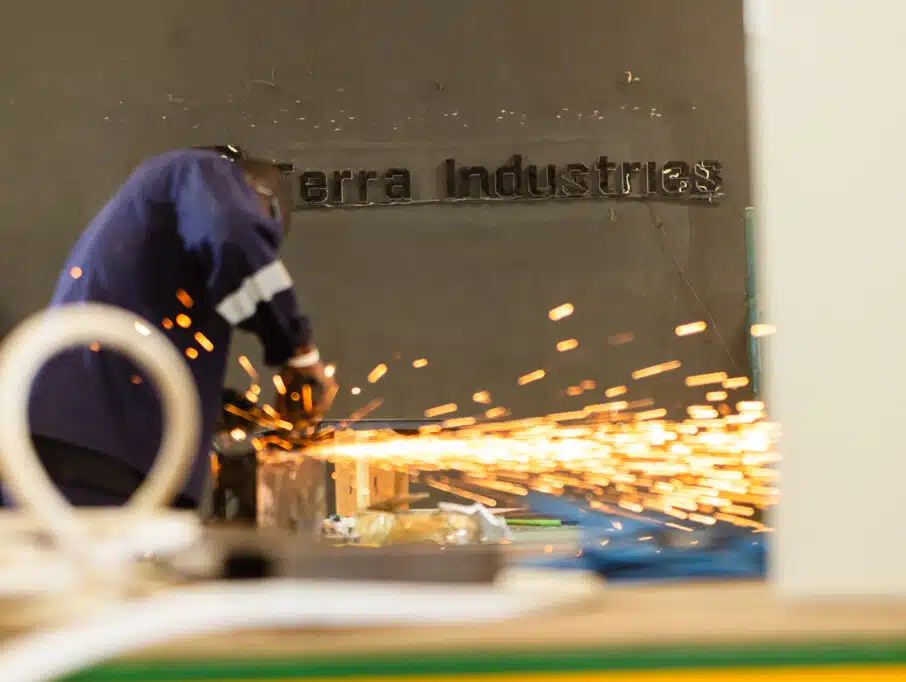
African defence tech startup Terra Industries is moving fast, and investors are clearly paying attention. Just weeks after announcing an $11.75 million raise, the company has extended its round, pulling in an additional $22 million and pushing its total funding to $34 million. That fresh capital now places Terra’s valuation comfortably in the nine-figure range, which is not bad for a young company building autonomous security systems on the continent.
The extension happened in under two weeks, which says a lot about investor appetite. The round was led by Lux Capital, with participation from existing backers like 8VC and Resilience17 Capital, founded by Olugbenga Agboola. New angels include actor Jared Leto. CEO Nathan Nwachuku says the initial raise created serious momentum, helping Terra close the extension quickly while also bringing on investors with deep experience in hard tech and defence.
Beyond the headline number, this signals something bigger: defence and infrastructure security in Africa are starting to attract serious capital. Terra says it has already recorded $2 million in total orders within a year of launch and is handling high-profile contracts, though details remain under wraps. The new funding will go toward expanding manufacturing capacity, accelerating deployments across Nigeria and allied African countries, and hiring across engineering, software, and business development.
There’s also an international angle. Earlier this month, Terra announced a partnership with Saudi industrial giant AIC Steel to set up a manufacturing hub in Saudi Arabia focused on infrastructure security systems. The company also plans to unveil a “mega factory” in the coming weeks, a move that reflects both ambition and the kind of scale it believes the market demands.
Why should we care? Because as African countries invest heavily in energy, mining, and large-scale infrastructure, protecting those assets becomes critical. Terra is betting that locally built autonomous defence systems can fill that gap, and investors seem to agree. With fresh capital and a growing footprint, the startup is positioning itself as one of the continent’s boldest bets in defence tech.
In case you missed it
- From rap to digital marketing and product management: How Joyce Imiegha founded a tech PR agency
What I’m watching
- The AI Safety Expert: These Are The Only 5 Jobs That Will Remain In 2030! – Dr. Roman Yampolskiy
- Blood Pressure Isn’t a Salt Problem
Opportunities
- Terra, the startup that just announced a $22M additional funding, is looking for machinists and electrical, mechanical, and mechatronics engineers. To apply, send an email to this email address now.
- Fincra is looking for talented people in several departments, including Compliance, Finance, Account Management, and Engineering. Apply here.
- Mission44 is hiring a Digital Communications Officer and an Executive Assistant to the CEO. Apply here.
- Are you a foreign or diaspora founder looking to establish and expand your business into Africa? Join our virtual office hours to get practical, actionable guidance on setting up and scaling your business in Africa, starting with Nigeria, today. Register here.
- Are you in camp, about to be deployed, or a fresh graduate looking for hands-on experience? The TIC Internship Program (GIP) is hiring fully remote roles. Apply here.
- Gamma Mobility is looking for an Associate Product Manager. Apply here.
- Adjoe is hiring for several roles, including engineering, design, and marketing. Apply here.
- Carrot Credit is looking for a social media/content creator to join their team. Apply here.
- OPay is looking for a data analyst and operation support. Apply here.
- Briter is hiring for several roles in many countries, including Kenya and Nigeria. Apply here.
- Amazon is recruiting a Partner Development Manager, Africa. Apply here.
- Korapay is looking for Head of Growth and Partnerships (The Curve Africa by Kora). Apply here.
- Misan by Bamboo is hiring a Community and Social Media Manager. Apply here,
- Don’t miss the Cavista Technologies Hackathon happening between February 21 and 22. Register your team and go home with cash prizes here.
- Moniepoint is hiring for over 100 roles. Apply here.
- Building a startup can feel isolating, but with Equity Merchants CommunityConnect? You can network with fellow founders, experts, and investors, gaining valuable insights and exclusive resources to help you grow your business. Click here to join.
- To pitch your startup or product to a live audience, check out this link.
- Have any fresh products you’d like us to start selling? Check out this link here.
- Follow Techpoint Africa’s WhatsApp channel to stay on top of the latest trends and news in the African tech space here.
Have a lovely Tuesday!
Victoria Fakiya for Techpoint Africa