
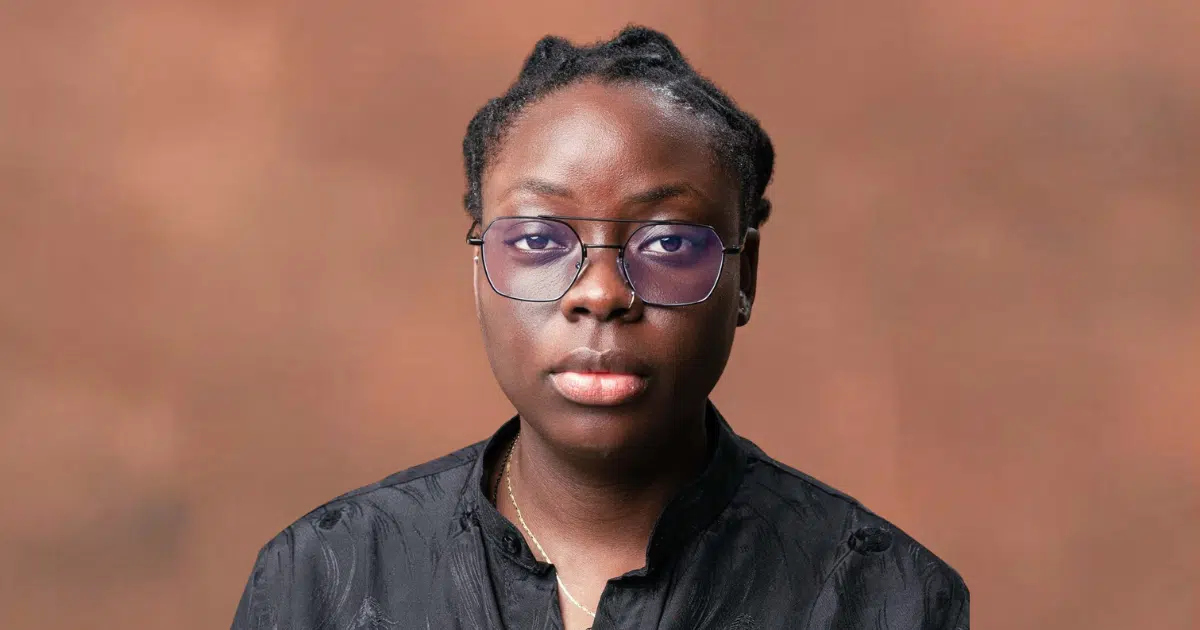

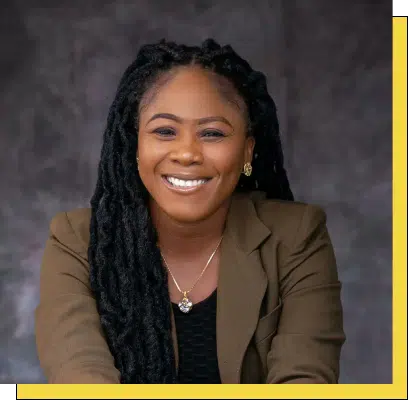
Joyce Imiegha’s relationship with technology began in the late 90’s with a family computer that sparked a curiosity she carried into adulthood. Although she chose to study Theatre Arts rather than Accounting, that curiosity kept pulling her beyond the classroom into creative and digital spaces.
After stepping away from rap and music production, Imiegha began teaching herself new skills, experimenting with event management, artiste promotion, and digital marketing before eventually finding her footing in tech public relations.
In this edition of After Hours, we follow Imiegha and how technology shaped her path from working with artistes like Patoranking, Terry tha Rapman, and Cynthia Morgan to founding her own PR agency.
Early interactions with technology
My first interaction with technology was when my dad brought home a desktop computer. I was about seven or eight years old, and I was completely amazed by it and what I thought I could do with it.
At first, there were rules. He told us we could only use the computer when he was home, and he guided us through the basics. Most of it started with learning how to type using the Mavis Beacon application. We also had an encyclopedia application that felt like modern-day Wikipedia. It contained so much information about the world.
I would spend hours on that computer, browsing pictures and videos of different cities. One of my favourite features was being able to explore places like Rome in a 360-degree view.
Within a year, I had made it a habit to type my homework and assignments instead of writing them in my notebook. My dad would print them, and I would take them to school. Honestly, part of it was to show off that I could type.
Over time, I started doing more. I played games. I exchanged discs with my friends in primary and secondary school. Then, about one or two years later, I installed Fruity Loops and started learning beat production. I would watch YouTube videos and teach myself how to make beats. I also downloaded Photoshop, which, at the time, meant secretly using my dad’s Glo dongle at night and exhausting his data just to learn design.
I was curious about everything. I just wanted to understand what a computer could do and learn as much as possible.
Victoria Fakiya – Senior Writer
Techpoint Digest
Stop struggling to find your tech career path
Discover in-demand tech skills and build a standout portfolio in this FREE 5-day email course
From making music to communications
Interestingly, even with all that exposure to technology, I initially planned to study accounting because that was what my dad wanted. But when it was time for university, I started having second thoughts. Accounting didn’t make much sense to me, so I ended up studying Theatre Arts at Delta State University instead.
That was where I fell deeply into music.
I set up a music studio with a friend. And because I already understood computers, it was easy for me to install software, download plugins, and research what producers were using. I even started rapping and producing my own music.
At some point, I released my first single on platforms like 4shared and promoted it across Facebook groups. It got over 4,000 streams, which was a big deal for someone just starting out. But, more importantly, I learned how to promote.
I reached out to artists like Mode9, Terry tha Rapman, and others, introducing myself and asking them to listen to my music. At some point, I realised music itself might not be realistic for me long term. But, even if music wasn’t going to be my main career, I could support artistes through promotion.
That was how I entered music PR. I started by helping my friends. Then I began working with record labels. While I was still at university, I booked artistes for club performances, managed logistics, edited magazines, and even contributed to design work. I remember working with artists like Cynthia Morgan.
Eventually, I transferred to Novena University after my dad found out I had lied about studying accounting. There, I studied Business Administration because I was also passionate about businesses. By the time I graduated in 2015, I had already racked up years of experience in music promotion.
Digital marketing and building my first agency
While working in music PR, a feature on radio and top music blogs was the zenith, but I kept asking myself one question: what more could I do beyond radio and blogs? That led me to digital marketing.
I reached out to Peace Itimi after seeing her work online and asked her to teach me digital marketing. After a difficult period in my life, including losing my mum, I returned and committed myself to learning. We took courses, including Google’s digital marketing programmes, and immersed ourselves in them.
By 2016, we started a digital marketing agency called Rene Digital Hub. I led business development, while Peace handled marketing.
I combined marketing skills with music PR, helping clients promote their work more effectively across platforms like YouTube and other digital channels.
I had worked briefly as a digital marketing executive after NYSC, but quit within months because I didn’t like being micromanaged. So, I returned to freelancing. I worked with record labels, managed talent, organised events, and eventually moved into film production.
At one point, I was working on a concert with Patoranking while also developing project management skills and supporting creative projects. I said yes to everything because I wanted to learn.
But after a few years, I began to feel restless again. Marketing felt like it focused too much on vanity metrics. I became more interested in communications — in shaping stories, not just chasing numbers. That sort of pushed me deeper into PR.
But by 2020, the COVID-19 pandemic forced many things to stop. For the first time in years, I slowed down. I was burnt out and exhausted, and the lockdown gave me space to reflect on where I was going. That was when I decided to focus fully on PR and communications.
My transition into tech PR happened almost accidentally. I started working with a tech founder and realised how much I enjoyed it.
At the same time, I was producing the Founders Connect show and researching founders across Africa. I noticed that many founders had no digital footprint. You couldn’t find anything about them online. That was when the idea for my tech PR agency began to take shape.
I also became interested in product management and even interned at a fintech startup to deepen my understanding of technology products.
Eventually, I launched my PR agency, Reneé PR. It was one of the biggest risks I had ever taken. At the same time, I was studying psychology and working in product management. The startup I worked at eventually shut down, but by then, I knew where my future was.
How technology shapes my everyday life
Technology plays a role in almost everything I do. From the moment I wake up, technology helps me plan my day. It reminds me to read, pray, work out, and complete tasks. I spend most of my day on my phone, laptop, or iPad. Even at the gym, I rely on my watch to track my workouts.
One of the tools I depend on the most is the Notes app on my phone. I’ve been using it since 2012. Every idea, task, or thought goes into it.
I also use AI tools to process my thoughts. Sometimes, when I’m overwhelmed, I talk through my ideas and use ChatGPT to help structure them. Technology has become deeply integrated into how I think, work, and live.
One thing that has been constant for me is curiosity. I’ve taught myself beat production, design, marketing, PR, and product management. Even now, I’m building a new website for my agency because I learned web development years ago.
I’ve always believed in learning enough to understand how things work. That mindset helps me better support the founders I work with. Sometimes, I ask them technical questions, and they’re surprised I understand their products. But for me, it’s simple. I want to know what I’m talking about.
My biggest concern when using technology is how fast it is moving. Things are evolving at a pace that many people cannot keep up with. This sort of creates a divide between people who understand technology and those who don’t.
I also worry about how dependent we are becoming. Sometimes, I deliberately step away from my laptop and phone just to disconnect. Technology is powerful, but we need to maintain balance.
In the next few years, I believe Africa will continue to adopt technology rapidly because people here are curious and eager to learn.
The bigger challenge will be helping businesses and underserved communities keep up. We need to ensure that technology doesn’t leave people behind. That includes teachers, small businesses, and people in rural areas.