



If you’ve been following the types of startups dominating Africa’s tech scene in the last few years, you’ll realize that the story doesn’t quite fit into Silicon Valley-shaped boxes.
Africa raised $2.2 billion in startup funding in 2024, $ 500 million less than in 2023. But when you look closely, the money didn’t flow into one trendy category. It didn’t cluster neatly around AI or Web3. It spread across fintech, logistics, climate, health, commerce infrastructure, all businesses solving very different, very local problems.
And that’s the part outsiders often miss.
Copying Silicon Valley’s categories doesn’t work here because Africa’s challenges differ. In many markets across the continent, the problems are foundational. Payments don’t flow easily. Logistics are fragmented. Power isn’t reliable. Credit is invisible. Identity systems are incomplete.
The most successful African tech startups solve painful local problems at scale.
In this guide, I’ll walk you through the 10 startup types shaping Africa’s tech ecosystem, how each model works, why investors care, and how to spot which one aligns with your skills or capital.
The 10 types of startups in Africa
| Startup type | What problem does it solves | Standout African example | Core business model |
| Fintech | Limited access to banking, payments, credit, and cross-border transactions | Flutterwave (Nigeria), M-Pesa (Kenya) | Transaction fees, interchange revenue, lending margins, B2B payment infrastructure |
| Healthtech | Poor access to quality healthcare, fragmented records, and high diagnostic costs | 54gene (Nigeria), mPharma (Ghana) | Telemedicine fees, pharmacy networks, health data services |
| Agritech | Low farm productivity, poor market access, lack of financing for farmers | Twiga Foods (Kenya), ThriveAgric (Nigeria) | Marketplace commissions, input financing, supply chain optimization |
| Edtech | Skill gaps, limited access to quality education, and unemployment | uLesson (Nigeria), Andela (Pan-African roots) | Subscription learning platforms, talent placement, and enterprise training |
| E-commerce & Social Commerce | Informal retail systems, trust gaps, and fragmented supply chains | Jumia (Pan-Africa), Wasoko (Kenya) | Marketplace commissions, inventory margins, and B2B distribution |
| Logistics & Mobility | Poor infrastructure, last-mile delivery inefficiencies | Kobo360 (Nigeria), Sendy (Kenya) | Freight commissions, fleet management fees, and delivery margins |
| Climate & Clean Energy | Unreliable grid power, energy poverty, and rising fuel costs | M-KOPA (Kenya), Daystar Power (Nigeria) | Pay-as-you-go solar, energy-as-a-service, carbon credits |
| Proptech | Informal property markets, opaque pricing, and rental inefficiencies | Spleet (Nigeria), BuyRentKenya | Rental guarantees, listing fees, and property management tech |
| Creator Economy Startups | Limited monetization tools for African creators | Selar (Nigeria), Bumpa (Nigeria) | Digital product sales commissions, platform fees, revenue share |
| AI & Data Infrastructure | Poor data systems, limited automation, and enterprise inefficiencies | InstaDeep (Tunisia), DataProphet (South Africa) | Enterprise AI contracts, SaaS subscriptions, optimization services |
As we break down each type next, you’ll see why some of these categories attract serious capital, while others quietly build durable, long-term value without the hype.
1. Fintech startups
Fintech startups in Africa build digital systems for payments, lending, savings, remittances, and financial infrastructure. If they’re not improving traditional banking, they’re reinventing it entirely.
Instead of brick-and-mortar branches, you get mobile wallets. There’s algorithm-driven credit scoring instead of paperwork-heavy loans.
Why it works in Africa
Africa has one of the largest unbanked populations in the world, with massive mobile penetration. That combination created the perfect launchpad for fintech innovation.
Add to that expensive and slow cross-border payments, limited access to SME credit, and fragmented banking systems across countries.
Common revenue models
- Transaction fees (payment processing, transfers).
- FX margins on cross-border payments.
- Merchant service fees.
- Lending interest spreads.
Success story
Flutterwave built payment rails that enable businesses to collect payments across dozens of African markets, serving as infrastructure.
Funding trend
Fintech consistently attracts the largest share of African venture capital. When investors bet on Africa, they usually start with money movement.
2. Healthtech startups
Healthtech startups in Africa focus on improving access to medicine, diagnostics, insurance, and care delivery. They fix broken supply chains, digitizing prescriptions, connecting pharmacies, and making healthcare more affordable and predictable.
Many of these companies operate behind the scenes, building infrastructure that patients may never see directly but benefit from daily.
Why it works in Africa
The major roadblock in African healthcare is distribution and affordability. Weak drug supply chains, counterfeit medication risks, high out-of-pocket costs, and limited insurance penetration compound the problem.
Healthtech startups are streamlining procurement, reducing waste, and improving price transparency.
Revenue models
- B2B contracts with hospitals and pharmacies.
- Drug procurement margins.
- Subscription-based health plans.
- Embedded financing for medication.
Success story
mPharma built a network that connects pharmacies and manages prescription inventory at scale, reducing costs while improving availability.
Funding trend
Healthtech funding has grown steadily, with strong backing from global health-focused investors who see both impact and long-term returns.
3. Agritech startups
Agritech startups use technology to improve farm inputs, crop yields, logistics, financing, and access to buyers. Some focus on helping farmers get better seeds and fertilizer. Others fix the chaos between harvest and market, including storage, transport, pricing, and distribution.
Why it works in Africa
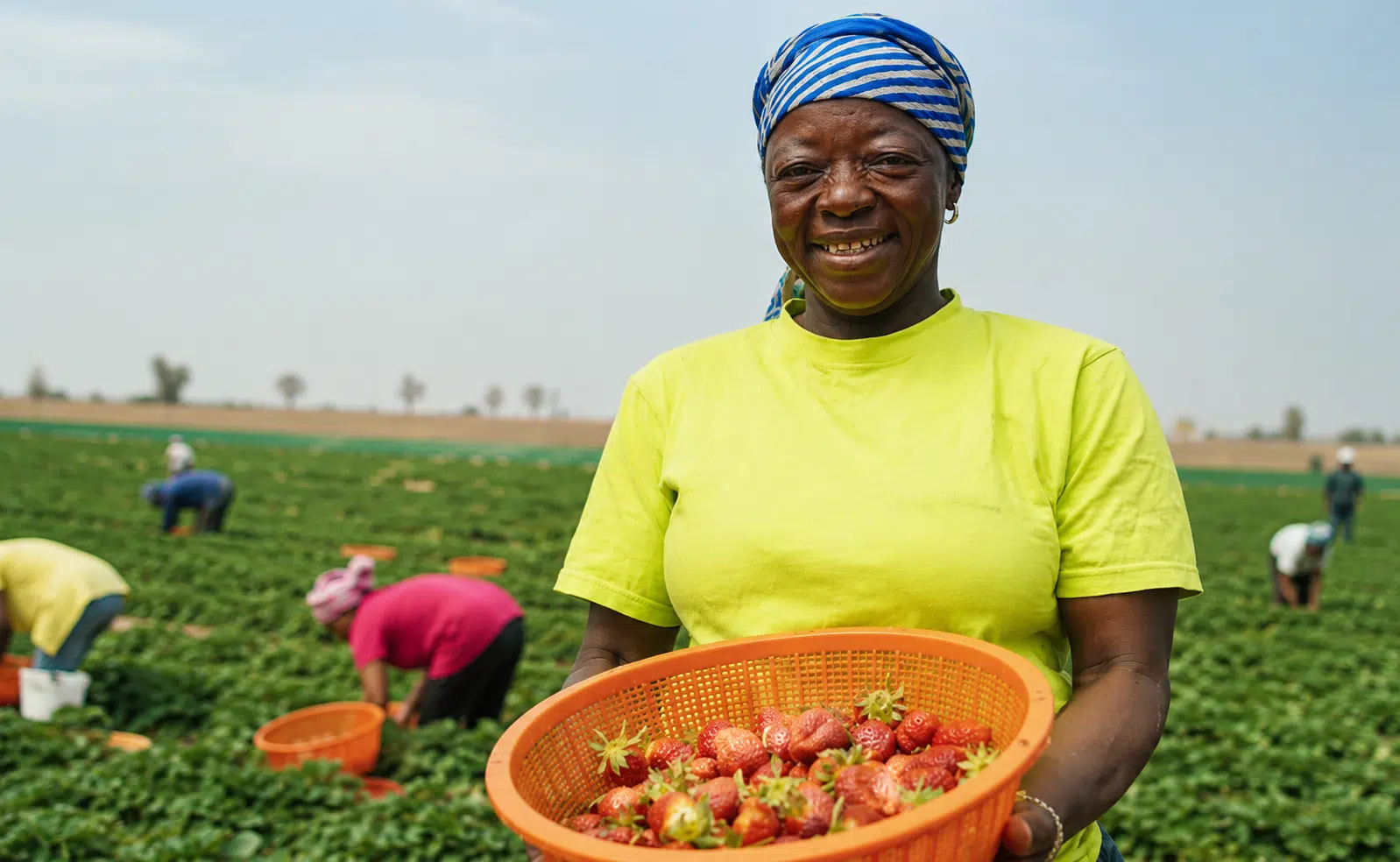
Agriculture employs a huge percentage of the population across the continent. Yet supply chains remain fragmented and informal. Farmers often lack price transparency, reliable buyers, and access to working capital.
This often results in post-harvest losses, middlemen-driven pricing, and income instability for farmers.
Agritech startups aim to create structures that link farmers directly to retailers, provide financing, and digitize transactions.
Revenue models
- Commission on marketplace transactions.
- Margin on input sales (seeds, fertilizer, equipment).
- SaaS subscriptions for farm management tools.
- Embedded lending products.
Success story
Twiga Foods built structured produce distribution networks that connect farmers directly to urban retailers, thereby reducing waste and improving price consistency.
Funding trend
Agritech attracts strong backing from impact-driven and climate-focused investors who recognize that food security and economic growth are closely linked.
4. Edtech startups
Edtech startups build mobile-first learning platforms to help students who may not have access to consistent classroom instruction. These apps offer video lessons, practice questions, mock exams, and, in some cases, live tutoring, all optimized for low-bandwidth environments. In many cases, the smartphone becomes the classroom.
Why it works in Africa
Across the continent, schools are often overcrowded and under-resourced. In exam-driven systems, a student’s future can hinge on standardized test performance, yet access to quality preparation is uneven.
Edtech fills that gap. It gives students structured learning outside school hours, often at a fraction of the cost of private tutoring.
Revenue models
- Monthly or annual subscriptions.
- Freemium access with paid upgrades.
- Licensing deals with schools or institutions.
Success story
uLesson scaled by offering curriculum-aligned video lessons and exam prep content, reaching hundreds of thousands of learners across multiple countries.
Funding trend
Edtech funding is moderate compared to fintech, but it remains resilient.
5. E-commerce startups
E-commerce startups in Africa operate online marketplaces or direct-to-consumer platforms. Instead of mindlessly copying and pasting Western models, they adapt to informal supply chains, cash-heavy economies, and trust gaps between buyers and sellers.
Why it works in Africa
Smartphone adoption keeps climbing. More people are comfortable shopping online. At the same time, informal retail still dominates many markets, which creates inefficiencies in pricing, inventory, and distribution. E-commerce platforms try to organize that chaos.
Revenue models
- Seller commissions.
- Sponsored listings and advertising.
- Logistics and fulfillment margins.
Success story
Jumia built a multi-country footprint, proving that large-scale online retail is possible, even in fragmented markets.
Funding trend
Investor enthusiasm has cooled after early hype cycles, but lean, locally grounded models continue to attract capital, especially those that control logistics.
6. Logistics startups
Logistics startups use technology to optimize freight matching, last-mile delivery, warehousing, and fleet management. They connect shippers with transport providers, track cargo in real time, and reduce idle capacity. In many ways, they’re the invisible backbone of Africa’s digital economy.
Why it works in Africa
Infrastructure gaps and fragmented transport networks create massive inefficiencies. Trucks return empty. Routes aren’t optimized. Pricing lacks transparency. Tech platforms try to right that disorder.
Revenue models
- Per-delivery or per-trip fees.
- Subscription plans for fleet operators.
- Value-added services like tracking and insurance.
Success story
Kobo360 aggregated freight demand and supply across markets, helping businesses move goods more predictably.
Funding trend
Logistics is capital-intensive, but strategically critical. Investors see it as foundational to growth in trade, manufacturing, and e-commerce across the continent.
7. Cleantech startups
Cleantech startups focus on renewable energy generation, storage, and financing, usually off-grid and mini-grid solutions. These companies don’t wait for national utilities to fix infrastructure; they build parallel systems. Solar home systems, battery storage, and distributed power models dominate this category.
Why it works in Africa
Millions still lack reliable electricity. Even in major cities, outages are common. Generators fill the gap, but they’re expensive, noisy, and environmentally harmful.
Revenue models
- Pay-as-you-go (PAYG) financing.
- Hardware + long-term service bundles.
- Energy subscriptions.
Success story
M-KOPA deployed solar home systems across East Africa via mobile money payments, demonstrating that distributed energy can be commercially viable at scale.
Funding trend
Climate-focused funds and development finance institutions continue to aggressively back cleantech. It’s one of the strongest long-term structural bets on the continent.
8. Proptech startups
Proptech startups digitize property listings, ownership records, valuations, and transaction processes. They bring structure and transparency to markets traditionally dominated by word-of-mouth and paper documentation.
Why it works in Africa
Land ownership can be opaque. Records are often fragmented or poorly maintained. Pricing lacks reliable benchmarks.
Revenue models
- Subscription access to property intelligence.
- Transaction commissions.
- Data licensing to developers, banks, and investors.
Funding trend
Still early-stage compared to fintech or energy, but steadily growing as institutional real estate investment increases across major African cities.
9. Creator economy startups
Creator economy startups build tools that help individuals and micro-businesses sell through social channels. Think inventory tools, payment links, mini storefronts, automated order tracking, all layered on top of WhatsApp, Instagram, and Facebook. They formalize informal commerce without killing its flexibility.
Why it works in Africa
The informal economy is massive. Millions of sellers operate without physical stores or formal e-commerce websites. Social-first selling feels natural, fast, and low-cost. These startups meet sellers exactly where they already are.
Revenue models
- SaaS subscriptions.
- Transaction fees.
- Value-added services like payments or logistics.
Success story
Bumpa has enabled thousands of small merchants to manage orders, inventory, and payments seamlessly from their phones.
Funding trend
Investor interest is rising as SMEs digitize and social commerce becomes more structured and scalable.
10. AI and data infrastructure
AI and data infrastructure startups provide the backend intelligence powering other businesses. This includes data labeling, analytics platforms, fraud detection systems, machine learning APIs, and AI-powered automation tools.
Why it works in Africa
African markets generate massive, underutilized datasets, from financial transactions and mobility patterns to agricultural output and climate data. As digitization expands, so does the need to process and interpret this information. Of course, local context matters.
Revenue models
- B2B SaaS subscriptions.
- API usage pricing.
- Enterprise contracts.
- Data services and analytics consulting.
Funding trend
It’s still early days here.
What all successful African startups have in common
Across these 10 startup types dominating Africa’s tech scene, a pattern emerges. They are solving problems practically.
- They build mobile-first by default because that’s where the users are.
- They deeply understand local payment behavior (e.g., cash, mobile money, USSD, installment payments) and design accordingly.
- They partner with banks, regulators, telcos, and government agencies.
- Pricing is realistic.
- They’re patient. These startups operate with the understanding that infrastructure gaps exist, including power outages, logistics delays, and policy shifts. In turn, they design resilience into the model.
FAQs about startup types in Africa
Which startup type gets the most funding in Africa?
Fintech consistently attracts the largest share of venture capital, driven by the continent’s large unbanked population and cross-border payment needs.
Can these models work outside Africa?
Some can, but success often relies on solving pressing local problems. Copying the model without context usually fails.
What’s the failure rate for African startups?
Roughly 70% of early-stage startups don’t survive past five years, often due to scaling challenges, capital constraints, or infrastructure limitations. Those that succeed typically combine local insights with scalable tech.
Conclusion
Africa’s tech scene is about solving local problems at scale with creative, resilient approaches. They adapt to reality, partner strategically with banks, telcos, and regulators, and design solutions that are affordable, accessible, and scalable.
For investors, entrepreneurs, or aspiring founders, the key takeaway is to look for real pain points, build for local contexts, and think long-term.
Disclaimer!
This publication, review, or article (“Content”) is based on our independent evaluation and is subjective, reflecting our opinions, which may differ from others’ perspectives or experiences. We do not guarantee the accuracy or completeness of the Content and disclaim responsibility for any errors or omissions it may contain.
The information provided is not investment advice and should not be treated as such, as products or services may change after publication. By engaging with our Content, you acknowledge its subjective nature and agree not to hold us liable for any losses or damages arising from your reliance on the information provided.
Always conduct your research and consult professionals where necessary.