


Xin chào,
Victoria from Techpoint here,
Here’s what I’ve got for you today:
- NCC licenses seven new ISPs in Nigeria
- When oil and gas ruled, she chose tech
- Nigeria is leading the world in AI use
NCC licenses seven new ISPs in Nigeria
Nigeria’s Internet market just got a little more crowded, and that’s not a bad thing. The Nigerian Communications Commission (NCC) has licensed seven new Internet Service Providers (ISPs), pushing the total number of authorised ISPs in the country from 224 in December 2025 to 231. Each of the new operators has been granted a five-year licence, running from January 1, 2026, to December 31, 2030, according to updated data from the regulator.
Most of the new entrants are clustered where business activity is highest. Five are based in Lagos, while Abuja and Imo State picked up one each. The newly licensed companies include Amazon Kuiper Nigeria Limited, Boost ISP, Dasol Solutions Services, Fibre Sonic, Intellivision Technologies, Wetom Technologies, and Granet Technologies — another reminder of how Lagos and the FCT continue to dominate Nigeria’s broadband landscape.
What this means, at least on paper, is more competition at a time when telecom operators are battling hard for users. Nigeria had 144.7 million Internet subscribers as of November 2025, with data consumption hitting a record 1.236 million terabytes in that month alone. As more ISPs enter the scene, expectations around service quality, pricing, and reliability are likely to rise.
Why it matters is that ISPs still play a relatively small role in Nigeria’s connectivity story. While players like Spectranet, Starlink, FibreOne, Tizeti, and ipNX dominate the fixed and satellite ISP space, they collectively serve just a fraction of users. As of Q2 2025, the top three ISPs accounted for about 65% of the roughly 314,000 active ISP subscribers nationwide, tiny when compared to mobile broadband.
That context is key. Nigeria’s four mobile network operators — MTN, Airtel, Globacom, and 9mobile — still account for 99.5% of all Internet subscribers. Even so, the NCC’s continued licensing push, including recent approvals for satellite providers like Amazon’s Project Kuiper, signals a long-term bet on diversifying how Nigerians get online, especially as demand for faster and more reliable connectivity keeps growing.
When oil and gas ruled, she chose tech

For decades, Jane Egerton-Idehen has quietly broken barriers in an industry where women were rarely in the room, let alone leading it. Trained as an electronics engineer at the University of Nigeria, Nsukka, she has spent her entire career navigating satellites, telecoms, and global tech firms, long before “tech careers” became fashionable in Nigeria.

Victoria Fakiya – Senior Writer
Techpoint Digest
Stop struggling to find your tech career path
Discover in-demand tech skills and build a standout portfolio in this FREE 5-day email course
Her journey started with satellite integration at Spar Aerospace during her industrial training, before stints at Ericsson, Nokia Siemens Networks, Avanti, and Meta. Today, she sits at the helm of Nigerian Communications Satellite Limited (NIGCOMSAT) as MD/CEO, leading Nigeria’s national satellite operator with decades of hard-won experience behind her.
Money wasn’t what drew her into tech, but it showed up early. As a corps member in 2001, Egerton-Idehen earned about ₦36,000 monthly, already well above the ₦11,000 government allowance at the time. Working 24/7 satellite operations came with shift allowances, and on busy months, her pay climbed close to ₦80,000. For a young engineer, that was a big deal.
Still, getting into tech back then wasn’t easy. Oil and gas and banking were the real magnets for engineers, while tech roles were scarce, competitive, and riddled with age limits and unrealistic requirements. Telecoms only began opening up when operators started rolling out infrastructure and suddenly needed engineers with satellite experience.
That timing worked in her favour. As telecom companies scrambled for talent, satellite engineers like Egerton-Idehen were pulled into the fast-growing sector, and the rest is history. For more insights on building a long-term career in tech, check out Sarah’s latest for Techpoint Africa.
Nigeria is leading the world in AI use

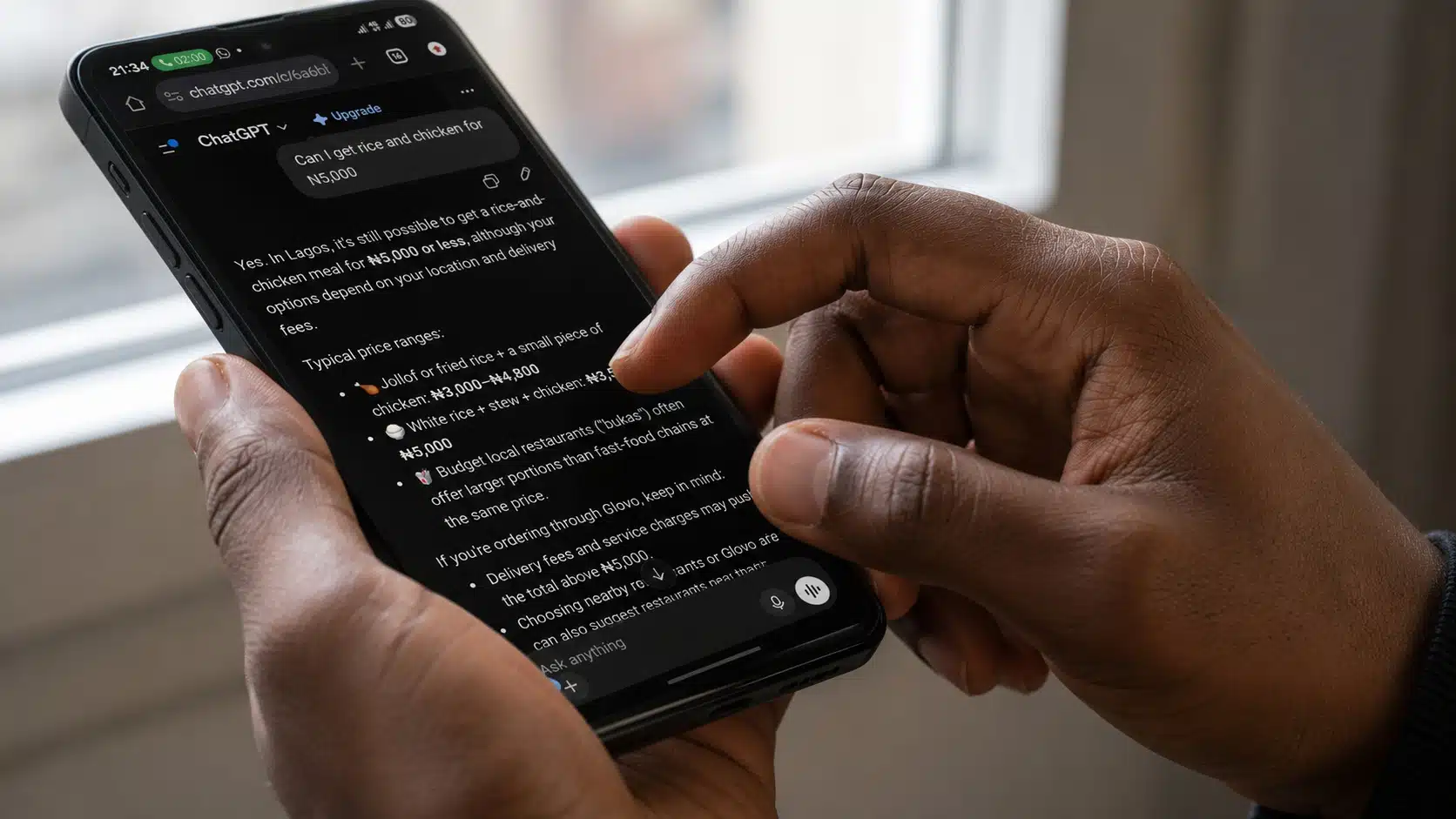
Nigeria’s love affair with AI is getting serious, and the numbers now back it up. A new global report shows that Nigerians are not just experimenting with AI tools; they’re using them more than almost anyone else in the world, especially for learning, work, and entrepreneurship.
According to the Our Life with AI 2025 report by Google and Ipsos, Nigeria ranks as the leading country globally for AI use tied to education and business. The study surveyed adults across multiple countries between September and October 2025, and 88% of Nigerian adults said they use AI chatbots, an 18% jump from last year.
Learning sits at the centre of that adoption. An eye-catching 93% of Nigerians use AI to understand complex topics, far above the global average of 74%. AI is also becoming a workplace staple, with 91% using it to support their jobs, while 80% say they rely on AI to explore new businesses or career paths, nearly double the global figure.
There’s also little fear about AI’s impact on education. Over 90% of Nigerians believe AI is improving how they learn and access information, and almost everyone agrees that university students and educators stand to benefit. That optimism extends to the future, too: 80% of Nigerians say they’re more excited than concerned about AI, a gap that widens even further among heavy users.
Dig a bit deeper, and the pattern is clear. Gen Z and millennials are leading adoption, people with higher education use AI more, and employment status plays a big role. As Google’s Taiwo Kola-Ogunlade puts it, this isn’t just about high usage; it’s about Nigerians actively shaping their future with technology.
In case you missed it
- Do African VCs really lack conviction, or are they playing a different game?
What I’m watching
- How diabetes destroys the human body
- Why Relationships Require Self-Love
Opportunities
- MTN Nigeria is hiring a Specialist – International Remittance (Product Manager). Apply here.
- Bamboo is hiring a quality assurance manager. Apply here.
- Paystack MFB is hiring for a few roles. Apply here.
- Attend your first tech event in January! Tech Revolution Conference, a two-day event to discuss everything tech, takes place at Landmark Event Centre, Lagos on January 30 and 31, 2026. Get your tickets here.
- Don’t miss the Cavista Technologies Hackathon happening between February 21 and 22. Register your team and go home with cash prizes here.
- Kuda is recruiting a Head of Product (Credit). Apply here.
- Jumia is looking for a Senior Key Account Manager. Apply here.
- MTN is hiring a Specialist, International Remittance (Product Manager). Apply here.
- Don’t Miss the Africa Business Convention (ABC) 2026. It’s Africa’s #1 Business Conference & Investment Expo. It’s between February 3 and 4. Book your seat today here.
- Moniepoint is hiring for over 100 roles. Apply here.
- We’re hosting a debate on AI in daily life. Join us to share your insights and perspectives.
- Techpoint Africa is creating a video series where people discuss and debate policies and current events. If you enjoy thoughtful conversations, fill out this form. Apply here.
- Are you building a startup can feel isolating, but with Equity Merchants CommunityConnect? You can network with fellow founders, experts, and investors, gaining valuable insights and exclusive resources to help you grow your business. Click here to join.
- Help us make Techpoint better for you! Your feedback shapes what comes next (your responses may potentially save my job. A bit dramatic, but still). It will only take 30 seconds to tell us what works and what doesn’t. Fill it here.
- To pitch your startup or product to a live audience, check out this link.
- Have any fresh products you’d like us to start selling? Check out this link here.
- Follow Techpoint Africa’s WhatsApp channel to stay on top of the latest trends and news in the African tech space here.
Have a superb Thursday!
Victoria Fakiya for Techpoint Africa