



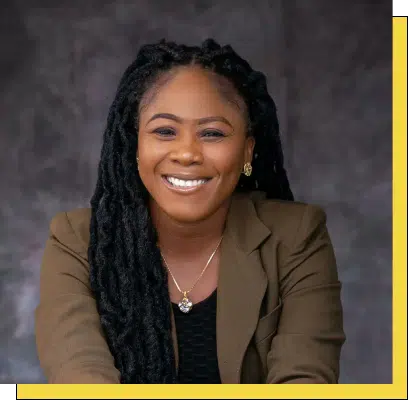
From a chance encounter with a Google Cardboard VR headset in a university lab to helping shape how large organisations adopt emerging technologies, Babatunde Fatai’s journey has been driven by curiosity, community, and careful experimentation.
In this edition of After Hours, he recounts how competitions and community led him from university labs to PwC’s Experience Center and later to leading emerging technologies at MTN.
Early interactions with technology
If I had to pick a moment that truly changed how I saw technology, it would be my first experience with a Google Cardboard VR headset.
This incident occurred during my first or second year at the University of Ilorin, where I was studying mechanical engineering. I remember walking into a laboratory on campus and seeing a group of students gathered around a system, visibly excited about what they were doing. Naturally, I was curious. When I approached them, I realised they weren’t just playing a game; they were building simple 3D scenes and uploading them to their phones.
With the Google Cardboard headset, they inserted their phones and stepped into these basic virtual environments. It wasn’t sophisticated by today’s standards, though, but for me, it was eye-opening. That moment completely reframed what I thought was possible with a mobile phone. It stopped being just a device for calls or casual games and became a tool for building experiences.
That was my introduction to virtual reality, and it stuck with me. I became excited by the idea that technology, especially something as accessible as a phone, could be used to create immersive, meaningful experiences. That experience was the foundation for my interest in virtual reality.
Before all of this, the first tech products I owned were basic. It was a mobile phone and later a laptop. At the time, they were primarily used for schoolwork, making calls, and casual purposes. It wasn’t until I started downloading tools like Unity and Blender that those devices truly came alive for me as creative instruments.
Studying mechanical engineering, exploring emerging tech
From a Nigerian perspective, studying mechanical engineering didn’t really support my exploration of emerging technologies. The course was mostly theoretical, with minimal practical application, and it didn’t intersect with fields such as virtual reality (VR), augmented reality (AR), immersive computing, or game development.
So my journey into emerging technologies was deeply personal. It wasn’t driven by school; it was driven by the ecosystem. Everything I learnt came from personal curiosity, student communities, and the people around me. Outside the classroom, I was experimenting with game development and VR tools.
Looking back, I genuinely believe that if I had focused solely on mechanical engineering, I would have ended up pursuing professional certifications in a field with limited opportunities and very little excitement for me. Discovering VR and game development opened a completely different path, one that felt more aligned with my interests and the future I wanted to build.
One thing that really stood out for me was how strongly I wanted other people to experience what I had just discovered. Within weeks of my first VR exposure, I began organising tutorials with friends. We started entering competitions within our school, across institutions, and even internationally.
And if I’m being honest, YouTube played a massive role in that. At the time, and even now, it remains one of the most important learning platforms available.
I didn’t have the best equipment. My system could barely handle what I wanted to build, and sometimes it would crash every ten minutes. But I worked with what I had. Beyond YouTube, I learned a great deal from my friends. That’s exactly what happened after my first VR experience. I stayed close to the people who were already building, learned from them, collected resources, followed tutorials, and practised relentlessly.
The early call from PwC
Competing regularly helped me build confidence and credibility. I wasn’t just experimenting privately; I was creating tangible projects and putting them out into the world. I shared my work on LinkedIn and online platforms, documenting what I was building and what I was learning.
In my final year at university, PwC Nigeria launched its Experience Center, an innovation hub focused on emerging technologies like AR, VR, Blockchain, and AI. At the time, these skills were extremely rare in Nigeria, and PwC was actively searching for people who had practical experience in these areas.
Through my published work and competition projects, they found me.
A few months before I graduated, I got a call inviting me to interview for a role at the PwC Experience Center. I went through the assessments and started working there before I even finished school. In fact, I don’t think I attended my convocation because I was already fully immersed at work.
At the Experience Center, I worked within the disruption and innovation team, a space that blended consulting with hands-on product development. It was exactly where my skills were a good fit. We built solutions for multinationals, collaborated with large clients, and worked on projects such as immersive training solutions for industries like refineries.
From consulting to helping MTN’s transformation journey
My move from PwC to MTN happened naturally. While at PwC, I had already been consulting for MTN on different projects. Around that time, MTN was entering a pivotal phase: transforming from a traditional telecom company into a full-fledged technology company.
This shift became especially pronounced with the launch of 5G, which meant building real, tangible experiences that demonstrated what 5G could enable.
I was invited to join the emerging technology team, particularly within the metaverse and immersive technology space, which was a major focus at the time.
One of my core projects involved creating 5G-powered experiences for major launch events, including those attended by top government officials and industry leaders. We built immersive demos that showcased the practical possibilities of next-generation connectivity.
How technology shapes my work and daily life
For work, technology goes beyond efficiency or automation. It fundamentally shapes how people think. In organisations undergoing transformation, it’s not enough to announce a new direction; you have to demonstrate it.
At MTN, immersive technologies enabled staff across various departments to see new possibilities. Whether it was hosting meetings in metaverse environments instead of Zoom or enhancing event booths with VR experiences, technology became a tool for opening minds and encouraging innovation.
Personally, AI has become one of the most influential technologies in my daily routine. I use it carefully and intentionally, never blindly. I believe that applying AI indiscriminately is dangerous. Instead, I use it to improve specific aspects of my work, like refining ideas, thinking through problems, or collaborating more effectively.
One tool I particularly like is Claude. It helps me reason through projects, debug code, and think more clearly. Not because I can’t work without it, but because it enhances how I work.
Outside of work, wearable technology, such as my Apple Watch, has become essential. Health and sleep tracking are things I didn’t think I needed until I had them. Now, they’re part of my everyday awareness, and they’ve made me far more conscious of my fitness and wellbeing.
A technology I would like to bring to life would be a trust infrastructure for low-trust environments. It’ll be a system that helps people and institutions verify behaviour over time, not just identity.
Using technology creatively
One of the most creative applications of technology I’ve worked on involved using digital avatars to improve networking at a conference.
Instead of forcing people to network the usual way, my team and I designed an avatar system. Attendees logged into an app, scanned their faces, and created digital avatars of themselves. Throughout the event, people could scan each other’s QR codes to “collect” avatars.
By the end of the conference, participants had avatar images with everyone they connected with, along with a group avatar photo. Networking became playful, intentional, and engaging, and people ended up speaking to far more attendees than they normally would.
It was a simple but powerful example of how digital twins and metaverse concepts can be applied in real-world contexts.
Staying current with technology
I stay updated with new technologies by reading extensively, but more importantly, by staying deeply involved in the ecosystem. I founded the African XR Community while I was still in school, and it’s still active today. Through this community, we bring developers and beginners together, host multiple training sessions each year, and create spaces where people can learn 3D modelling, immersive development, and emerging tech skills. Teaching others and collaborating with experts are among the best ways I stay current.
The biggest challenge with technology isn’t access, it’s knowing where to draw the line.
Whether it’s AI or VR, people need to understand both the benefits and the risks associated with these technologies. AI shouldn’t replace human creativity or be used for things like medical advice. VR shouldn’t be used endlessly without breaks, especially by children.
The same applies to social media. Just because a tool exists doesn’t mean you must use it constantly. I deliberately limit my availability on platforms like WhatsApp and take breaks from technology when I notice I’m becoming over-dependent.
If dropping your phone for an hour makes you uncomfortable, that’s usually a sign you need to step back for longer.
The future of work and community with technology
In the next five to ten years, I believe AI will have the biggest impact on the future of work and communities. But another emerging force people aren’t paying enough attention to is prediction markets.
They’re already growing rapidly in the West, and if they enter Africa without proper guardrails, they could create challenges even bigger than what we’re seeing with betting today. The technology itself isn’t the problem; rather, it’s the lack of regulation and education.
Ultimately, the future will belong to those who can adopt technology thoughtfully, ethically, and with clear boundaries in place. That’s the philosophy that has guided my journey so far, and it’s what continues to shape how I work with emerging technologies today.