

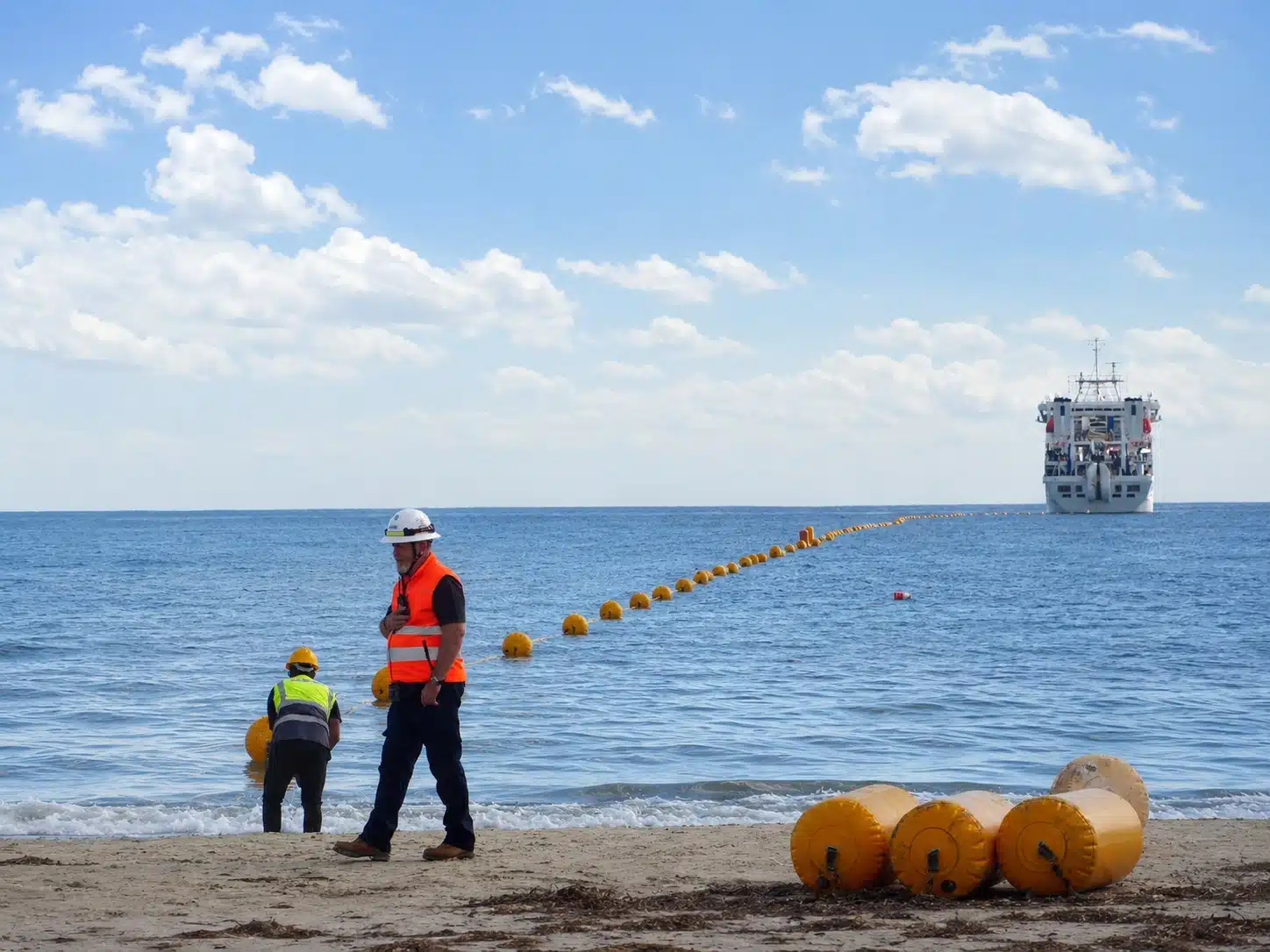


Telecoms giant, Orange has switched on a new subsea cable linking Marseille in France to Bizerte in Tunisia, opening a fresh high-capacity digital corridor between Europe and North Africa.
The 1,050-kilometre cable, known as ViaTunisia, is the first active segment of the Medusa Submarine Cable System, a larger undersea network being built across the Mediterranean. Orange serves as the landing party at both ends, and the cable connects directly into the telco’s infrastructure in Marseille through a fibre ring linking its data centres in the city.
The activation is not just about Tunisia getting another Internet link. It comes at a time when African countries, telecom operators, Big Tech companies, and development institutions are racing to build more subsea routes to improve capacity, reduce outages, and support growing demand from cloud services, artificial intelligence (AI), and digital businesses.
ViaTunisia is one segment of the larger Medusa Submarine Cable System, an 8,760km network owned by African infrastructure company AFR-IX Telecom. When complete, the system will reach up to 17 landing points across both coasts of the Mediterranean covering France, Spain, Italy, Portugal, Greece, Cyprus, and Malta in the north, and Tunisia, Morocco, Algeria, Libya, and Egypt in the south.
Medusa was designed as an open-access system, meaning any telecom provider in the region can connect to it. The European Union (EU) co-financed the ViaTunisia segment under its Connecting Europe Facility (CEF) Digital programme, covering 30% of the construction and management costs through a grant agreement signed in December 2022.
For Africa, the bigger story behind every new subsea cable is resilience.
In March 2024, Techpoint Africa reported how several African countries suffered Internet disruptions after four major undersea cables were damaged simultaneously near the Ivory Coast. The outage hit mobile networks, banks, and customers relying on everyday digital services in Nigeria and beyond.
A few months later, East Africa was hit by fresh disruptions after submarine cables connecting South Africa and Kenya went offline. This came on top of earlier damage caused by Houthi rebel attacks on cables in the Red Sea, which had already knocked out connectivity for parts of the continent.
These incidents showed how quickly a single cable failure can ripple across payments, banking, cloud services, and everyday communication. More cables mean more route options; more route options reduce how far a failure can spread. Orange cited exactly this logic in its ViaTunisia announcement, saying the cable was designed to minimise outages and multiply route options in an area prone to natural disasters.

Victoria Fakiya – Senior Writer
Techpoint Digest
Stop struggling to find your tech career path
Discover in-demand tech skills and build a standout portfolio in this FREE 5-day email course
A broader race underway
Medusa is entering a market that has seen significant activity over the past year.
Meta-backed 2Africa — at 45,000km, one of the largest subsea cable projects ever built — has already landed in Ghana and Nigeria through Bayobab, MTN Group’s wholesale infrastructure arm. The cable completed its core build in late 2025 and promises bandwidth at roughly half the price of legacy systems.
Google has also been expanding its Africa connectivity footprint. Its Equiano cable connects West Africa and Europe, with landing points in Nigeria, Namibia, and South Africa, among others. In September 2025, the company announced plans to build four new subsea cable hubs across Africa, saying the projects would serve at least 18 countries.
Landing the cable is only half the work
As Techpoint Africa has previously reported, getting a cable to Africa’s shores does not automatically improve internet access for businesses and everyday users. Countries still need terrestrial fibre, local data centres, and affordable last-mile infrastructure to carry that capacity inland. As one industry expert quoted in that piece put it, “We have hundreds of terabits offshore, but we struggle to get one terabit around Nigeria.”
Africa is getting more international bandwidth, and faster than at any point in its digital history. ViaTunisia going live is a real step forward — especially for North Africa, a region historically underserved by subsea capacity relative to the continent’s west and east coasts. Whether that capacity reaches the people and businesses that need it most remains the harder question.