


Over 2,400 African startups are building AI as of 2024, and the most important ones are solving problems that models like ChatGPT can’t understand.
Key takeaways
- AI could contribute up to $2.9 trillion to Africa’s economy by 2030, a 3% boost in annual GDP.
- Over 2,400 African companies are building AI capabilities, with 41% being startups and 63% still early-stage.
- InstaDeep’s $683 million acquisition by BioNTech in 2023 proved African AI can produce globally competitive outcomes.
- African AI startups are building under constraints, such as offline-first systems, TinyML, and small language models.
- Roughly 70% of funding comes from outside Africa, particularly for investment rounds over 10 million dollars.
What stands out about African AI startups solving local problems is that they’re not trying to outbuild Silicon Valley. Instead, they’re solving problems Silicon Valley never trained for.
From language models built for African dialects to cancer genomics trained on African tumour data, the continent’s most serious builders are starting from ground truth. That difference matters more than it sounds.
In this piece, I’ll break down the African AI startups that are actually making a difference across language, healthcare, agriculture, logistics, and climate, and explain why their design choices set them fundamentally apart from global AI companies.
African AI startups solving local problems
| Startup | Country | Problem | Funding | Key metric |
| Lelapa AI | South Africa | African language models | $2.5 million | InkubaLM supports 5 languages |
| Yemaachi Biotechnology | Ghana | Cancer genomics | $3 million | Backed by YC & Novartis |
| Amini | Kenya | Environmental data gap | $6 million | Climate intelligence across markets |
| Curacel | Nigeria | Insurance AI | $3 million | $100 million+ claims processed |
| Leta | Kenya | Logistics optimisation | $5 million | Backed by Google Fund |
1. Lelapa AI (building AI that speaks Africa)
Founded: 2022.
Founders: Pelonomi Moiloa, Jade Abbott.
Headquarters: Johannesburg, South Africa.
Funding: Raised $2.5 million from investors, including Google and Radical Ventures.
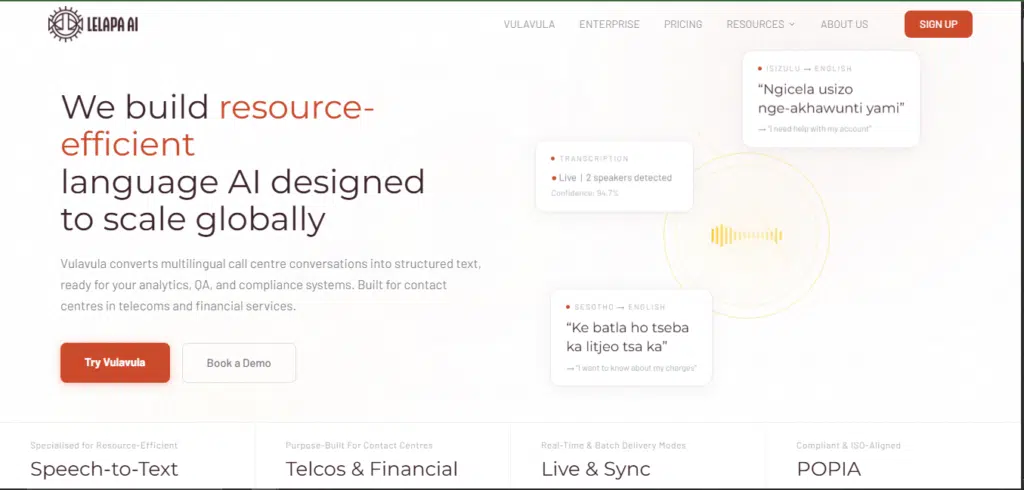
Lelapa AI is building language models trained natively on African languages, rather than adapting English-first systems. Its flagship model, InkubaLM, is designed to handle multilingual African contexts, including code-switching. The company also offers the Vulavula API for speech and language processing tasks.
What it solves
- AI systems that fail to understand African languages.
- Poor handling of code-switching, which is common across African communication.
- Limited access to AI tools for non-English speakers.
- Weak localization in global NLP systems.
Why it matters
If AI can’t understand how people actually speak, it excludes them. Lelapa is building that missing foundation.
2. Yemaachi Biotechnology (diagnosing what global AI ignored)
Founded: 2020.
Founders: Dr. Yaw Bediako, David Hutchful, Joyce Ngoi, Yaw Attua-Afari.
Headquarters: Accra, Ghana.
Funding: Secured $3 million with backing from Y Combinator and Novartis.
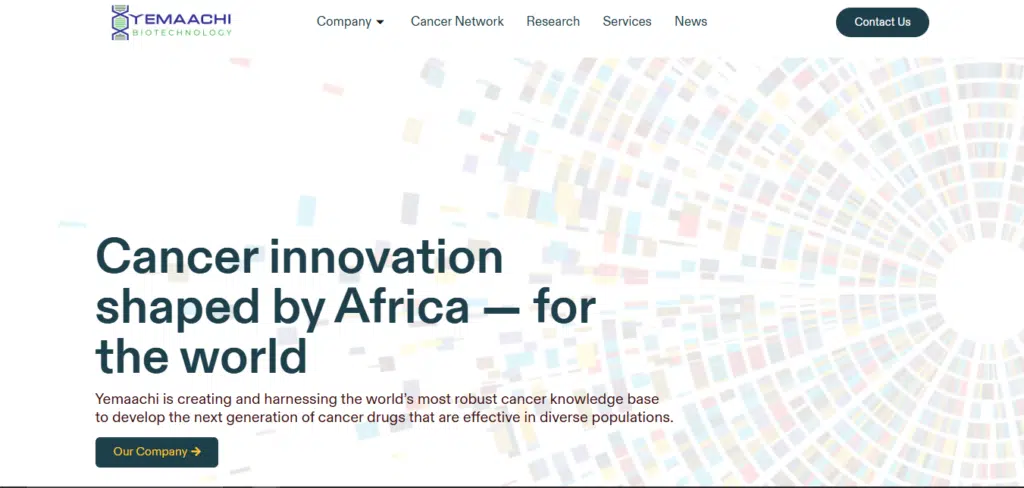
Yemaachi Biotechnology builds AI-driven cancer genomics models trained on African tumour data. Its work focuses on precision oncology for populations historically excluded from global medical datasets. Instead of adapting existing models, it is rebuilding the data layer from scratch.
What it solves
- Under-representation of African genomes in cancer research.
- Higher risk of misdiagnosis from Western-trained AI models.
- Lack of localized precision medicine tools.
- Limited datasets for oncology research in Africa.
Why it matters
If the data is biased, the diagnosis will be too. And Yemaachi is fixing the problem at its root.
3. Amini (feeding a continent with better data)
Founded: 2022.
Founder: Kate Kallot.
Headquarters: Nairobi, Kenya.
Funding: Raised $6 million across its funding rounds, including a $4 million seed round in 2023 led by Salesforce Ventures and Female Founders Fund.
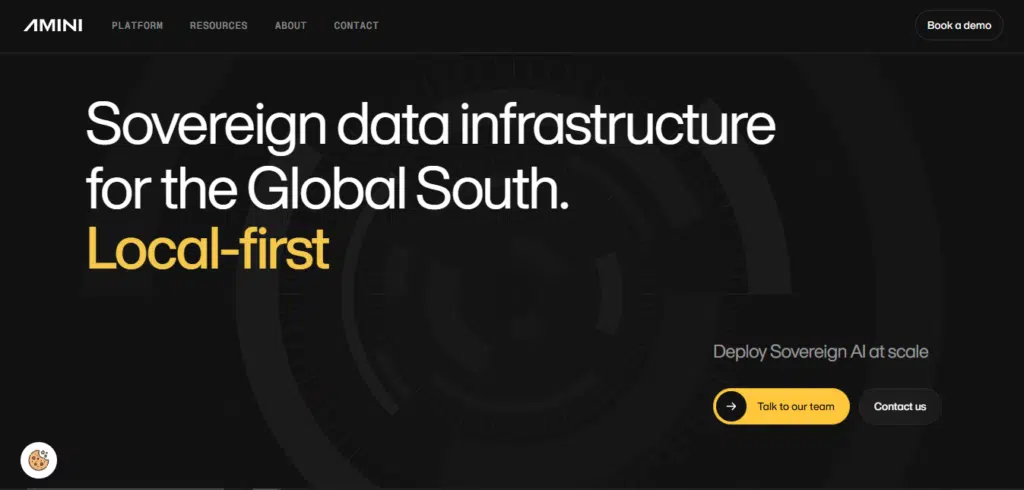
Amini builds AI-powered environmental data infrastructure using satellite imagery and machine learning. Its platform delivers high-resolution insights for agriculture, climate, and land use. The focus is on generating datasets that don’t currently exist at scale in Africa.
What it solves
- Lack of reliable environmental and agricultural data.
- Poor visibility into soil quality and crop health.
- Limited climate intelligence for farmers and agribusinesses.
- Weak data foundations for agricultural AI models.
Why it matters
Without accurate data, AI is guesswork. This is why Amini is building the layer on which everything else depends.
4. Curacel (fixing insurance through data)
Founded: 2019.
Founder: Henry Mascot.
Headquarters: Lagos, Nigeria.
Funding: Processed over $100 million in insurance claims; raised $3 million in seed funding.
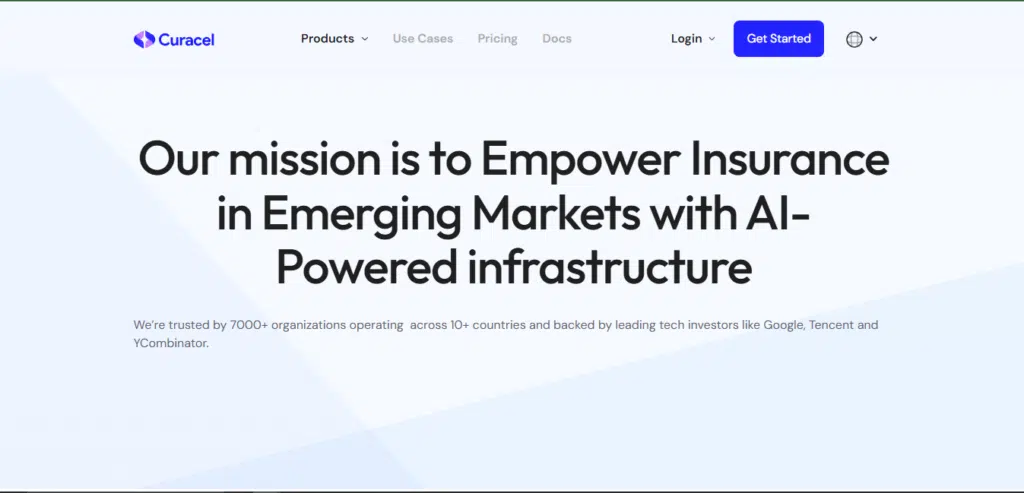
Curacel uses AI to automate insurance claims processing and fraud detection. Its platform helps insurers digitize workflows and reduce losses in a traditionally manual industry. The company operates across multiple African markets.
What it solves
- Slow, manual claims processing.
- High fraud rates in insurance systems.
- Operational inefficiencies across insurers.
- Low trust in insurance services.
Why it matters
By turning fraud and inefficiency into solvable data problems, Curacel is helping an entire sector function more reliably.
5. Leta (making logistics work in fragmented systems)
Founded: 2021.
Founder: Nick Joshi.
Headquarters: Nairobi, Kenya.
Funding: Raised $5 million seed from Speedinvest and Google Africa Investment Fund.
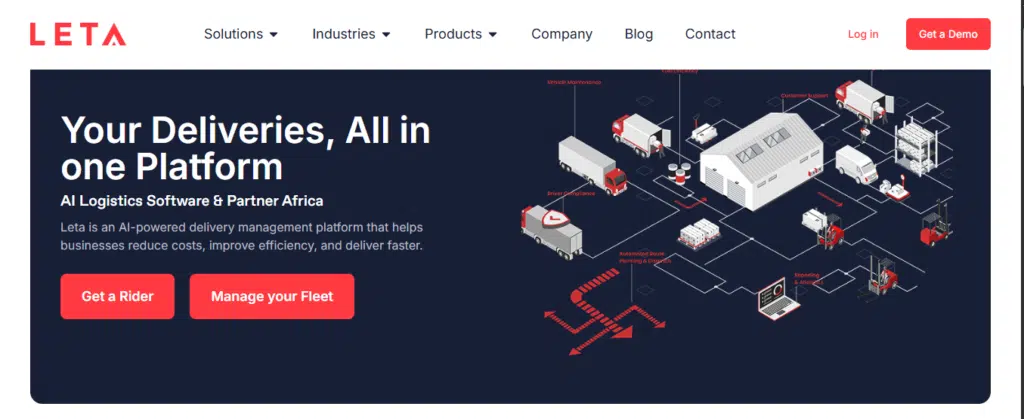
Leta develops AI-driven logistics optimization tools tailored for African supply chains. Its platform helps businesses plan routes, optimize loads, and dynamically reroute deliveries. It’s designed specifically for environments with inconsistent infrastructure.
What it solves
- Inefficient last-mile delivery routing.
- High fuel and logistics costs.
- Lack of real-time fleet optimization.
- Poor visibility across fragmented transport networks.
Why it matters
In markets like those in Africa, where infrastructure gaps are the norm, optimization like Leta’s makes commerce possible.
FAQs
What makes African AI startups different?
African AI startups build from local data, real constraints, and lived realities. That leads to systems that are more accurate in context and harder for global models to replicate.
Which countries lead in African AI?
The ecosystems in South Africa, Kenya, Nigeria, and Egypt dominate, accounting for a large share of funding and activity. But I’m also seeing strong momentum in emerging hubs like Ghana, Rwanda, and Senegal.
What is the biggest barrier to growth?
It’s infrastructure, I mean, both compute and data. Many startups still rely on overseas cloud systems and don’t have access to large, locally relevant datasets needed to train robust AI models.
Is African AI attracting real investment?
Yes. Global players like Google and Y Combinator are actively backing startups on the continent.
Conclusion
African AI startups solving local problems are building entirely different models rather than replicating global ones.
They’re designing for languages that global AI ignores, diseases that global datasets exclude, and infrastructure that global systems don’t understand.
Africa is catching up in AI. It’s that the continent is quietly building a version of AI that the rest of the world will eventually need.
Citations
- https://insights.techcabal.com/what-does-it-mean-to-be-an-ai-startup-in-africa/
- https://www.gsma.com/solutions-and-impact/connectivity-for-good/mobile-for-development/gsma_resources/ai-for-africa-use-cases-delivering-impact/#:~:text=Recent%20estimates%20suggest%20that%20AI,development%20impacts%20for%20the%20continent.
- https://insights.techcabal.com/what-does-it-mean-to-be-an-ai-startup-in-africa/
- https://techpoint.africa/news/instadeep-acquired-by-biontech/
- https://theconversation.com/too-little-too-concentrated-why-ai-start-up-funding-in-africa-needs-rethinking-276100#:~:text=An%20estimated%2060%25%2D70,in%20geographies%20perceived%20as%20peripheral.
- https://www.wired.com/story/one-startups-plan-to-help-africa-lure-back-its-ai-talent/
- https://www.venturecapitaljournal.com/yemaachi-biotech-fetches-3m-seed/
- https://nextbillion.net/news/nairobi-based-climate-tech-startup-amini-raises-4-million-seed-funding-round/#:~:text=2023-,Nairobi%2DBased%20Climate%20Tech%20Startup%20Amini%20Raises%20$4%20Million%20Seed,exclusively%20in%20female%2Dfounded%20companies.
- https://www.curacel.co/post/curacel-wrapped-2025
- https://www.curacel.co/press-release/curacel-secures-3m-seed-funding-for-insurance-expansion
- https://techpoint.africa/news/kenyas-leta-raises-5m/
Disclaimer!
This publication, review, or article (“Content”) is based on our independent evaluation and is subjective, reflecting our opinions, which may differ from others’ perspectives or experiences. We do not guarantee the accuracy or completeness of the content and disclaim responsibility for any errors or omissions it may contain.
The information provided is not investment advice and should not be treated as such, as products or services may change after publication. By engaging with our content, you acknowledge its subjective nature and agree not to hold us liable for any losses or damages arising from your reliance on the information provided.
Always conduct your research and consult professionals where necessary.