



For many African professionals, relocating abroad reveals a reality far more complex than they imagine. Years of experience can be lost overnight, forcing even the most accomplished individuals to restart, requalify, and rebuild from the ground up.
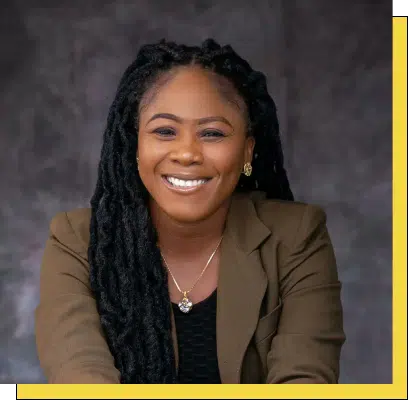
This was the reality for Abiodun Adetu, a Nigerian media and communications professional, who moved to Canada with over a decade of experience, only to find that expertise alone was not enough to unlock new opportunities.
Now she’s building Naija Market Day, to bring the energy and familiarity of Nigerian markets into cities across Canada. She’s also running her communications company and an African-themed magazine that documents African stories, food, and tourism.
In this edition of Techpoint Diaspora, Adetu shares her experiences, the challenges of moving to a new geographic location, and how her work contributes value to the continent.
The backstory
My first introduction to technology was in 1999. Back then, after secondary school, one of the first things people did was attend a computer college, and that was exactly what I did.
At the time, mobile phones were not common, but there was already some level of Internet access. I remember opening a Yahoo email account, which I still use today for personal communication. That moment felt significant.
From there, I went deeper into computer studies and later trained at Oracle, where I learned database analysis. That early exposure shaped how I think about technology today, not as something separate, but as something embedded in everyday work and life.
My career has always been rooted in media and communications. I started as a TV presenter, then moved into radio, magazine publishing, and eventually advertising. Over time, I became an integrated marketing communications strategist, working across different formats and industries.
I worked with several media houses and marketing agencies before eventually starting my own company, Babsomo Communications, where I handle advertising campaigns and communication strategies for different clients.

Victoria Fakiya – Senior Writer
Techpoint Digest
Stop struggling to find your tech career path
Discover in-demand tech skills and build a standout portfolio in this FREE 5-day email course
Even today, that foundation still defines my work. Whether in Nigeria or Canada, I’ve remained in the same space, telling stories, building brands, and helping organisations communicate effectively.
Moving from Nigeria to Canada
Relocating to Canada was a completely different experience, but not in the way many people expect.
A lot of people assume that moving abroad automatically means a better life, but I always say that everywhere is essentially the same. The successes you see in Nigeria exist here in Canada; the challenges also exist, they are just presented differently.
When I moved, I wasn’t expecting magic. I didn’t come with the mindset of greener pastures. I came with resources, experience, and strong professional networks from Nigeria. Naturally, I assumed I would be able to tap into similar opportunities here.
But that wasn’t the reality.
One of the biggest shocks was that my experience from Nigeria didn’t carry the same weight. Even if you’ve worked with well-known organisations back home, it doesn’t automatically translate. You may have the expertise, but the system requires you to revalidate yourself.
I had over 15 years of experience, yet I still had to take a digital marketing course in Canada, not because I needed the knowledge, but because I needed the certification. Interestingly, that short course opened doors that my extensive experience could not.
That’s the reality for many immigrants. You often have to start from scratch, sometimes setting yourself back 10 to 15 years in your career. Many professionals, including doctors and consultants, have to retrain, requalify, or even take on unrelated jobs just to survive.
It’s a difficult transition, especially for those who relocate with families. You take whatever job is available because bills need to be paid, and before you know it, you’re stuck trying to rebuild from the ground up.
Why I started Naija Market Day
Naija Market Day came from a very personal place. Living in Canada, I noticed a lack of community among Nigerians. Back home, markets are more than just places to buy things; they are social spaces filled with energy, connection, and culture.
But here, that sense of community was missing.
I remember being in a store one day and seeing an older African woman. Instinctively, I greeted her the way we would back home, but the interaction felt distant. It made me reflect on how much we had lost in terms of connection.
So I started thinking: what if we could recreate the Nigerian market experience here? I did some research and realised no one was doing anything like it across the country. That was how Naija Market Day was born.
We started in Winnipeg, Manitoba, then expanded to Brandon, and since then, we’ve grown to cover about 11 cities. In our next phase, we’re looking to reach up to 15 cities.
It’s a physical event, designed to feel like a real Nigerian market, from the interactions to the products. People come in, and for a moment, they feel like they’re back home.
Although Naija Market Day is a physical event, technology plays a huge role in how we operate. We use digital platforms for vendor registrations, virtual trainings, payments, and event coordination. Behind the scenes, we rely heavily on project management tools and digital systems to keep everything running smoothly.
We also collaborate with fintechs and remittance platforms that participate in the events, making transactions easier for both vendors and customers.
But beyond the technology, what truly drives the marketplace is community. It’s about creating a space where Nigerians and Africans can reconnect with their identities, cultures, and each other.
The African advantage in the diaspora
One of the biggest advantages I carry as an African is resilience. We are naturally tenacious people. No matter the challenges, we keep going. Even when people take on multiple jobs or face systemic barriers, there is still optimism and strength.
Another key strength is our sense of community, something that is often missing in many parts of the world.
That’s something I actively try to preserve and promote, not just through Naija Market Day but also through other initiatives like Kara Martin, a magazine that showcases African culture, stories, food, and tourism.
I’m also very intentional about how Africa is perceived. Too often, people reduce Africa to a single identity or even refer to it incorrectly. Part of my work is correcting those narratives and presenting a more accurate and dignified representation of the continent.
One of the biggest gaps I see in Africa is that we don’t place enough value on ourselves. The truth is, if we don’t respect our own systems, skills, and people, it becomes easier for others to undervalue us.
There’s also a tendency to blame leadership without taking individual responsibility. While leadership matters, real change starts with individuals. It’s in how we act, contribute, and hold systems accountable.
We also need more awareness. Many systems and opportunities already exist in Africa, but people either don’t know about them or don’t use them effectively.
Africa is full of untapped potential, not just in natural resources, but in human capital. We have the talent, the ideas, and the workforce, but we are still heavily dependent on external systems to develop our own resources.
One major gap is how we treat young people. In many parts of the world, people in their twenties are already leading and building. In Africa, they are often still seen as “too young.”
If we don’t empower younger generations, we slow down innovation and growth.
Looking ahead, I believe the future of tech in Africa is bright, but only if we focus on solving our own problems first. We don’t need to compete with the rest of the world. Instead, we need to identify our challenges and develop solutions using technology.
That includes investing in infrastructure such as electricity, funding local innovations, digitising systems, and supporting entrepreneurs through grants and policies. If we get those fundamentals right, the growth will follow naturally.
For me, everything comes back to building, be it communities, systems, and narratives. Whether through communications, Naija Market Day, or cultural projects, my goal is to create spaces where Africans can thrive, connect, and be properly represented, no matter where they are in the world.
Because at the end of the day, success isn’t just about where you are. It’s about what you build and how you carry your identity.