


From a subscriber’s perspective, making a phone call is a simple action. But after many years in the telecoms space, Ibikunle Peters understands just how critical calls are and the complex mechanics that make them possible.
He explains why connectivity must be up and running at all times. “Imagine the whole of the MTN network goes down, and people can’t make calls. A lot of panic will ensue across the country,” he says.
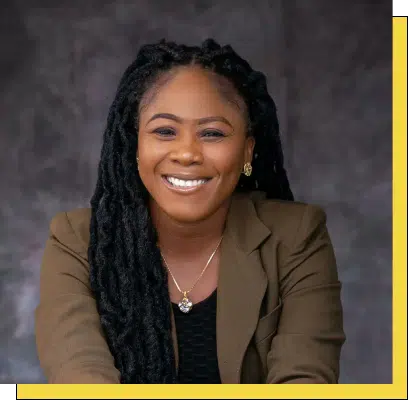
Peters has spent more than a decade as an IT and telecoms infrastructure expert working to ensure such panic does not occur.
What he describes simply as “keeping the lights on” is, in reality, a far more complex process. “When you pick up your phone to make a call, it is an entire value chain,” he says. Ensuring you have network coverage, good call quality, and that you are charged the correct amount all fall within his remit.
Much of Peters’s more than ten-year career was spent at Huawei, where he worked as a billing application engineer for over nine years. He has also worked at Airtel and 9Mobile (now T2 Mobile) over the years.
What happens behind the scenes when you make a phone call
Peters offers a crash course on telecoms infrastructure and how it works. “A lot happens when you pick up your phone and call someone. A key part of that process is the mast”
He explains that cell towers or masts — technically known as base transceiver stations (BTS) — play a vital role in the voice call process.
He likens them to Wi-Fi routers, strategically placed to serve people within a specific area. However, if you are too far from one, your signal weakens. Just like a router, the closer you are, the better your connection.
But these masts do not operate in isolation. They need to communicate with one another, which is where the base station controller (BSC) comes in.

Victoria Fakiya – Senior Writer
Techpoint Digest
Stop struggling to find your tech career path
Discover in-demand tech skills and build a standout portfolio in this FREE 5-day email course
Even then, connectivity alone does not guarantee a smooth call. While the masts may be connected and the signal strong, the system still needs to know who you are and who you are calling — a task handled by a system known as the home location register (HLR).
The HLR helps identify who is calling whom. “It is your database,” Peters explains. “It holds information about when you were registered, the base station serving your call, and the person you are trying to reach.”
Another key function of the HLR is determining whether a call is made within the same network or across different networks, for example, an MTN-to-MTN call versus an Airtel-to-MTN call.
According to Peters, the technical terms for these are on-net calls (within the same network) and interconnect calls (between different providers).
The HLR also performs number analysis. “It checks whether you are within or outside the country to determine the applicable call rate,” he says. This analysis applies to both the caller and the receiver. The receiver could be a toll-free number or even a number you are restricted from calling.
Beyond these, several other systems work together to ensure that something as simple as a phone call just works. Some of these systems also help telecom operators remain compliant, sharing required information with the Nigerian Communications Commission (NCC) and ensuring call rates are correctly applied.
How to get a job at a telecoms company
Peters did not initially plan to work in telecoms, but he was deliberate about learning as much as possible about technology. “I bought a book called The Dictionary of Computing,” he says. Although he studied chemistry at university, his interest in technology pushed him to keep learning beyond his formal education.
That commitment to self-learning paid off when he landed his first technical role at a telecoms company as a surveillance engineer, where he became skilled at identifying network issues and resolving them quickly.
As his career progressed, Peters realised he needed stronger database skills. “I had to learn SQL, database management, and Linux because most mission-critical applications run on Linux,” he explains.
Interestingly, his journey into Linux began by accident. During his NYSC year, Peters unknowingly bought a Linux-based laptop as his first computer. What initially felt like a costly mistake turned into a defining advantage.
“I was already used to Windows. When I opened the laptop, my excitement vanished. I couldn’t make head or tail of what was in front of me, and that was the reason I learned Linux,” he says.
Beyond technical expertise, Peters says people skills have been just as important to his career. Emotional intelligence became essential as he took on roles that required managing people, teams, and expectations.
That skill proved invaluable during one of the most defining moments of his career: the deployment of over 68,000 SIM cards to support Nigeria’s 2023 general elections.
BVAS and the 2023 general elections
In the build-up to Nigeria’s 2023 general elections, telecoms infrastructure quietly became one of the most critical enablers of the process.
The Bimodal Voter Accreditation System (BVAS), designed to accredit voters and transmit results, relied heavily on stable and reliable connectivity to function at scale.
Peters was part of the team responsible for deploying more than 68,000 SIM cards across polling units nationwide. The task went beyond simply provisioning SIMs; it involved ensuring each one was correctly configured, active, and capable of transmitting data in real time under intense pressure.
“It wasn’t just about technology,” Peters explains. “It was about people, coordination, and trust. You’re dealing with different stakeholders, tight timelines, and zero room for failure.”
The operation required close collaboration across teams, regulators, and field workers, as well as the ability to troubleshoot issues as they arose. For Peters, it was a moment where his technical expertise and people skills intersected fully — managing systems while also managing expectations.
In retrospect, the election deployment stands out as one of the most consequential moments of his career.
It reflected the scale at which telecoms infrastructure quietly supports national processes, and how years spent “keeping the lights on” culminated in a project that directly affected millions of Nigerians.
After more than a decade in telecoms, much of Peters’ work has remained behind the scenes. Yet whether it is ensuring a call connects, a network stays live, or an election system works as intended, his career underscores a simple truth: when telecoms infrastructure works, the country works too.
Looking ahead, Peters sees artificial intelligence adoption accelerating not only within telecoms but across multiple industries.
Already, operators such as MTN, Airtel, and Equinix are investing in infrastructure, including data centres, that will support AI growth in Nigeria and across the continent.
“I’ve picked up an interest in learning automation at enterprise scale, and I’m looking to pass that knowledge on in the coming year,” he says. “There’s more beyond prompting — you need to know how to truly leverage and partner with AI.”