





Nigeria has over 40 million micro, small, and medium enterprises, yet only a fraction of them are formally registered.
Key takeaways
- Nigeria hosts about 40 million MSMEs, according to data from the Small and Medium Enterprises Development Agency of Nigeria.
- The Corporate Affairs Commission (CAC) now processes many business registrations (up to 10,000 daily) in a few days through its online portal.
- Nigeria’s digital payments ecosystem has exploded, driven by fintech platforms such as Flutterwave, Paystack, and Moniepoint.
- The Federal Inland Revenue Service requires businesses to obtain a Tax Identification Number (TIN), even if they’re small or early-stage.
- Nigeria’s fintech and digital banking growth, supported by institutions such as the Central Bank of Nigeria (CBN), has made opening business accounts easier but more document-heavy.
Over the past few years, Nigeria’s business registration system has quietly undergone a major transformation. Processes that once required weeks of paperwork and multiple physical visits can now be completed online through the Corporate Affairs Commission portal within just a few days.
The real challenge now begins after the certificate arrives: setting up tax compliance, payment systems, banking, and operational infrastructure that allows the business to function optimally. In 2026, starting a business in Nigeria means building a digital-first operating system for the company from day one.
In this guide, I’ll walk you through the modern process of launching a business in Nigeria, from name reservation to payment gateway setup, highlighting the most common pitfalls founders encounter and why following outdated startup guides can slow you down.
The full process of starting a business in Nigeria at a glance
| Process step | Where it happens | Current timeline | Current cost | Responsible body | Most common failure point |
| Name reservation | Online via the CAC portal | Usually within 24–72 hours | Government filing fee | CAC | Proposed name already exists or violates naming rules |
| Business registration | Online submission | Several days, depending on documentation | Official registration fees | CAC | Incorrect forms or missing identification |
| TIN registration | Online linkage after registration | Often automatic, but may require verification | Free | Nigeria Revenue Service (NRS) | Delayed tax profile activation |
| VAT registration | Online through the NRS portal | A few days | Free | NRS | Founders unaware of the VAT thresholds |
| State business permit | Often physical or hybrid | Varies by state | State government fees | State government authorities | Confusion about required local permits |
| Nigeria Social Insurance Trust Fund (NSITF) registration | Hybrid process | Several days | Employer contribution required | Nigeria Social Insurance Trust Fund | Employer compliance gaps |
| Business bank account | Bank onboarding | Several days, depending on verification | Usually free to open | Commercial banks | Documentation mismatch |
| Payment gateway setup | Online via fintech platforms | Hours to a few days | Platform transaction fees | Payment platforms | Compliance checks or incomplete KYC |
The registration process: CAC, tax, and compliance step by step
Nigeria registers hundreds of thousands of new businesses every year, with the Corporate Affairs Commission reporting steady growth in company and business name registrations since the agency digitized much of its operations. This means the technical barrier to starting a business has dropped dramatically.
But speed doesn’t equal simplicity.
If you’re starting a business in Nigeria in 2026, registration now follows a multi-layered compliance sequence. In addition to registering a name, you also link tax identity, prepare for state-level permits, and ensure employer compliance if you plan to hire staff.
Let’s walk through it.
CAC business name reservation
Every formal business in Nigeria starts with a unique name.
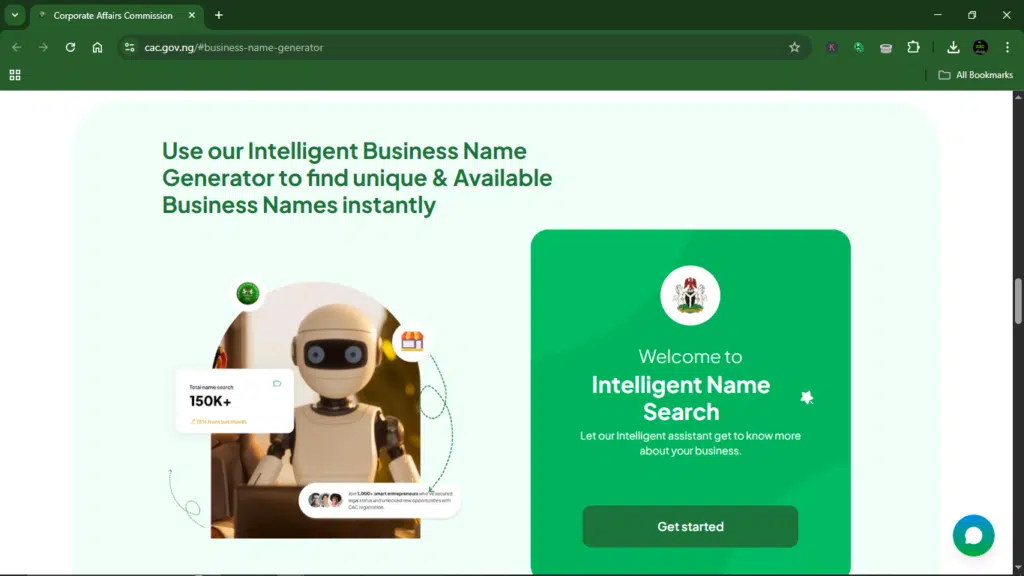
Before you can register a business or company, you must first confirm that your proposed name is available and complies with CAC naming guidelines.
Here’s how the process works in practice.
- First, you conduct a name search on the CAC portal to check whether the name already exists or closely resembles another registered entity.
- Once you submit the name reservation request, the CAC reviews it to ensure it doesn’t violate naming rules. For example, using restricted terms or creating confusion with existing brands.
- If approved, the name is reserved for your use for 60 days, giving you time to complete the registration process.
- The timeline is usually 24 to 72 hours, although approval can take longer during periods of high demand.
- In terms of cost, the reservation requires a small government filing fee, paid directly through the CAC portal.
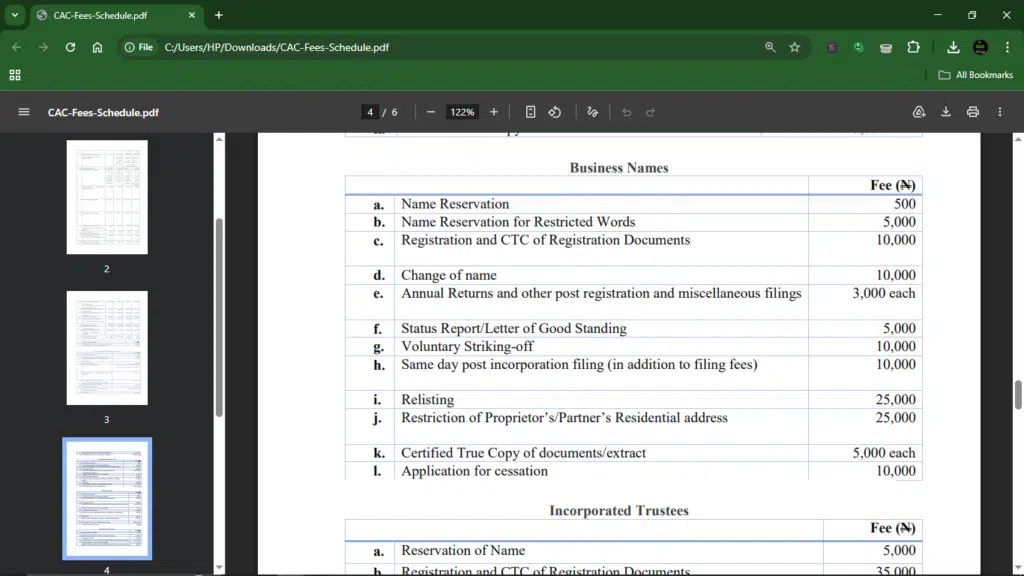
Applications fail most often because the name is already taken or it’s too similar to another registered entity. Because of this, experienced founders typically submit two or three alternative names to avoid delays.
Registering a business name vs. a limited liability company (LLC)
Once your name reservation is approved, the next decision is to register a business name or incorporate a limited liability company. Both options are valid, but they serve different purposes and carry different legal implications.
Registering a business name
A business name registration is the simplest option. It’s commonly used by freelancers, small traders, consultants, and early-stage entrepreneurs who want a legal identity without creating a separate corporate entity.
For a business name, you generally need:
- Identification documents for the proprietor or partners.
- Contact details and business address.
- A description of business activities.
Incorporating an LLC
A limited liability company (LLC), on the other hand, creates a legally distinct entity separate from its founders. This structure is typically preferred by startups, growth-stage businesses, and companies planning to raise external investment.
To incorporate a limited liability company, the requirements are more extensive. They often include:
- Details of directors and shareholders.
- Memorandum and Articles of Association.
- Share capital information.
- Identification and address verification for officers.
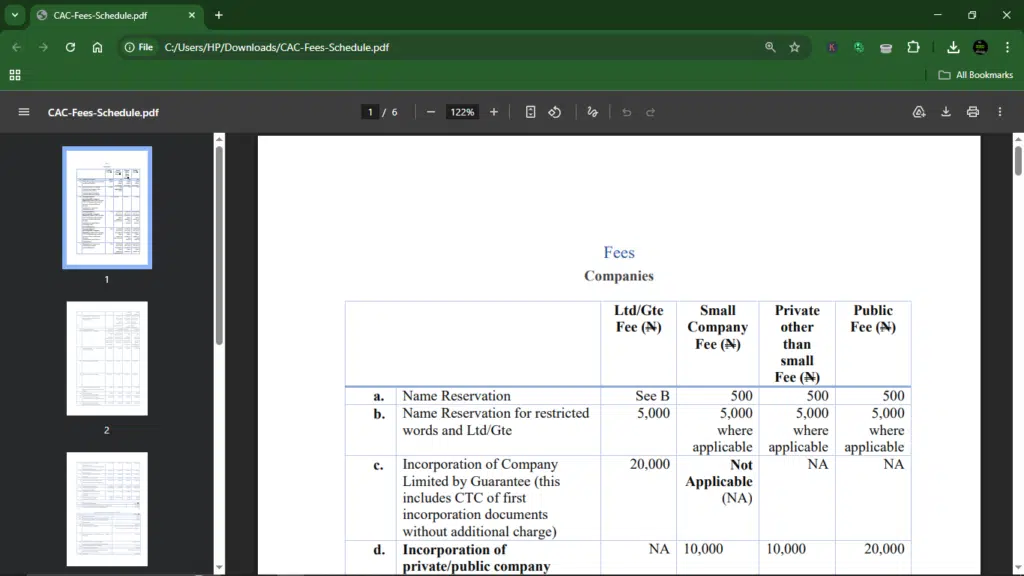
Many founders start with a business name and later upgrade to a company structure once the business begins to scale.
NRS (formerly FIRS) TIN registration
After completing CAC registration, the next critical step is obtaining a Tax Identification Number (TIN).
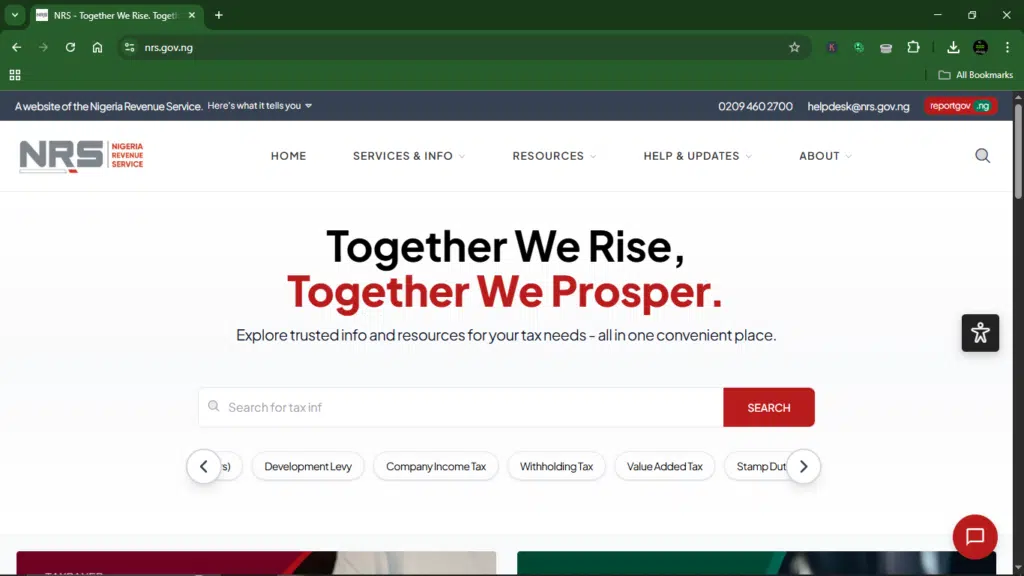
The TIN is issued by the Nigerian Revenue Service (NRS) and the Joint Revenue Board (JRB) in accordance with Nigerian tax laws for the purpose of identifying individuals and businesses for tax administration, compliance, and enforcement (the NRS replaced the FIRS in 2026).
Without it, your company can’t fully interact with Nigeria’s financial and regulatory systems.
The new Tax ID portal enables businesses to obtain a unique 13-digit number using their CAC registration numbers.
State-level business permits
After federal registration and tax identity are complete, many businesses must also deal with state-level permits and local operating licenses.
This step often surprises first-time founders because most online startup guides focus only on CAC registration.
In reality, operating in major commercial cities such as Lagos, Abuja, and Port Harcourt may require additional approvals depending on the nature of the business.
For example, businesses may encounter requirements such as:
- State business premises permits.
- Signage permits.
- Environmental compliance documentation.
- Local government operating levies.
These requirements vary widely depending on the state government and the industry involved. Confirm the exact permits required for your industry and location before launching operations.
NSITF employer compliance
If your business plans to hire employees, registration with the Nigeria Social Insurance Trust Fund is essential under the Employee Compensation Act, 2010.
The NSITF manages Nigeria’s Employee Compensation Scheme, which provides financial protection for workers who suffer job-related injuries, illness, or disability.
Employers with staff are required to register and contribute to the scheme.
The contributions fund employee benefits such as:
- Workplace injury compensation.
- Disability support.
- Death benefits for dependents.
The digital infrastructure layer: Banking, payments, and tools
After registration and compliance, the next step is the operational work to build the digital infrastructure that allows the business to actually receive money and operate day-to-day.
This infrastructure typically includes two core elements:
- Business bank account(s).
- Payment processing system(s).
Opening a Nigerian business bank account
Using a personal account for business operations can also create accounting and compliance problems later. Most payment gateways, fintech platforms, and financial tools require a verified business account before activation.
Banks in Nigeria have improved onboarding processes over the past few years, especially as fintech competition has forced traditional institutions to modernize their services.
To open a business account, banks typically request:
- CAC registration certificate.
- Tax Identification Number (TIN).
- Valid identification for directors or proprietors.
- Company address verification.
- Board resolution (for limited liability companies).
Some banks also request additional documentation depending on the business structure or transaction risk profile. Activation timelines vary by bank, but most accounts are opened within a few days once documentation is verified.
The most common delay founders encounter is documentation mismatches, such as inconsistencies between CAC records and submitted identification details. Preparing documents in advance can significantly speed up onboarding.
Setting up payment infrastructure
Modern Nigerian businesses rarely rely on cash alone. Customers expect to pay through bank transfers, debit cards, mobile wallets, or online checkout systems.
This is where fintech platforms come in. Some of the most widely used payment processors in Nigeria include Paystack, Flutterwave, and Moniepoint. Each platform offers tools for accepting payments online, through POS terminals, or via mobile applications.
Setting up a payment gateway typically involves:
- Creating a merchant account on the platform.
- Submitting business verification documents.
- Linking a verified business bank account.
- Completing compliance checks.
Documentation requirements usually include:
- CAC registration certificate.
- Business bank account details.
- Valid identification for company directors.
- Website or product description (for online businesses).
Approval timelines vary from a few hours to several days, depending on the platform and the complexity of the business model.
Fintech providers conduct these checks as part of anti-money laundering (AML) and financial compliance rules overseen by the Central Bank of Nigeria.
First-year compliance mistakes
The first year of running a business in Nigeria is when many founders unintentionally fall into compliance trouble.
- A common mistake is ignoring tax registration and VAT requirements until a bank, investor, or payment platform demands them. By that point, correcting the backlog can become stressful and time-consuming.
- Another frequent issue is failing to file mandatory tax returns, even when the business has not yet generated significant revenue. Once a company is registered with the Nigeria Revenue Service, certain filing obligations still apply.
- Founders also sometimes overlook annual returns filing with the Corporate Affairs Commission, which is required to keep a company in good standing.
Most of these mistakes are avoidable. The key is treating compliance as part of the business infrastructure, not an afterthought.
What has changed about starting a business in Nigeria in 2026
CAC digitization
For years, starting a business in Nigeria meant navigating paperwork, long queues, and weeks of bureaucratic back-and-forth. That reality has changed significantly. Today, much of the business formation process happens online through the digital portal of the CAC.
Tax reforms
Tax registration has also evolved. The Federal Inland Revenue Service (FIRS) has been transitioned into the Nigeria Revenue Service (NRS). Now, businesses can obtain their TIN using their CAC registration number (individuals through their NIN). Digital portals have also improved VAT registration and simplified certain compliance filings.
FAQs about business registration
How long does it take to start a business in Nigeria in 2026?
In many cases, you can complete the core registration process within a few days to about a week, provided your documentation is correct.
Do I need CAC registration before opening a business bank account?
Yes, in most cases you do. You should register your business before opening a dedicated bank account.
What taxes must a new Nigerian business pay?
The exact taxes depend on the size and structure of your business, but most companies encounter three primary obligations: Company Income Tax, Value Added Tax (VAT), and state-level levies or local permits.
Can diaspora founders register a Nigerian company remotely?
Yes, diaspora founders can register a Nigerian business.
Conclusion
Starting a business in Nigeria has become noticeably faster than it was just a few years ago. Digital reforms at the CAC have streamlined registration, while improvements at the NRS have made tax identification easier to obtain.
But registration alone no longer determines whether a business launches successfully. What increasingly separates successful startups from struggling ones is how quickly founders build the digital infrastructure around the business: banking and payment systems.
There are still bureaucratic frictions to navigate, especially around documentation and local compliance. Even so, Nigeria’s startup environment is becoming more digital, more structured, and gradually easier to enter for prepared founders.
Citations
- https://moniepoint.com/blog/nigeria-small-business-statistics#:~:text=SMEs%20in%20Nigeria-,At%20least%2C%2039%2C654%2C385%20micro%2C%20small%20and%20medium%20enterprises%20(MSMEs,count%20reached%20around%2014.8%20million.
- https://www.instagram.com/accounts/login/?next=https%3A%2F%2Fwww.instagram.com%2Fp%2FDUjFe3uioed%2F&is_from_rle
- https://innerkonsult.com/how-cacs-digital-revolution-is-transforming-business-operations/
- https://cac.gov.ng/#business-name-generator
- https://cac.gov.ng/api/download-fees
- https://cac.gov.ng/services/company-registration
- https://ecitizen.firs.gov.ng/en/signup
- https://www.jtb.gov.ng/
- https://www.vanguardngr.com/2025/12/from-firs-to-nrs-the-future-of-revenue-in-nigeria/
- https://www.jtb.gov.ng/media-center/taxpayers-hail-new-tax-id-portal
- https://ecsa.nsitf.gov.ng/Verification/index_nsitf.cfm
- https://admin.theiguides.org/Media/Documents/Employee%20Compensation%20Act.pdf
- https://www.cbn.gov.ng/supervision/AML-CFT/
- https://icrp.cac.gov.ng/
- https://techpoint.africa/insight/everything-you-need-to-know-about-nin-nigeria/
Disclaimer!
This publication, review, or article (“Content”) is based on our independent evaluation and is subjective, reflecting our opinions, which may differ from others’ perspectives or experiences. We do not guarantee the accuracy or completeness of the Content and disclaim responsibility for any errors or omissions it may contain.
The information provided is not investment advice and should not be treated as such, as products or services may change after publication. By engaging with our Content, you acknowledge its subjective nature and agree not to hold us liable for any losses or damages arising from your reliance on the information provided.
Always conduct your research and consult professionals where necessary.