
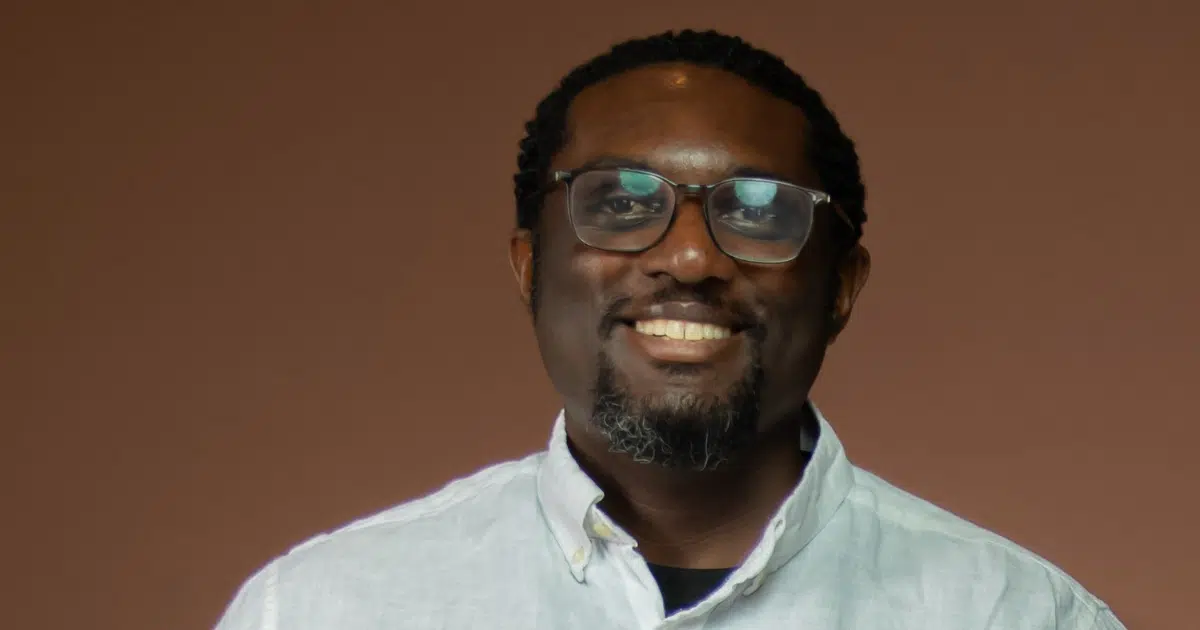

From pioneering early learning management systems for Nigerian banks in 2008 to processing billions of naira through his edtech venture, LearnFlo, Tolu Fagbola has spent over two decades bridging the gap between raw technical talent and market-ready solutions.
Now, alongside his brother, a US Army veteran and computer scientist, he is taking on the US healthcare system with Vimedra. By using voice AI and predictive algorithms to solve social needs, he aims to tackle one of healthcare’s most expensive problems: preventing emergencies among underserved populations.
In this edition of Techpoint Diaspora, Fagbola shares his journey from the UK telecommunications sector to building a self-funded tech empire that spans continents.
From Nigeria to the UK
I was born in London, but my roots are Nigerian. I had my primary and secondary school education in Nigeria, and even spent a year at the University of Ilorin. A university strike interrupted my studies, and I moved back to the UK at 18 to continue my education.
Before finding my path, I experimented academically. I started with Law but quickly realised I wasn’t going to be a lawyer. So, I switched to Communications, eventually completing my first degree in Communications and Visual Culture, followed by a Master’s in Communications Management, and later, another Master’s in Organisational Psychology and Behaviour.
My professional career began in Telecommunications around 2003. Working in training and development, I became fascinated by how technology impacts learning. Back then, I literally imagined robots standing in front of people, teaching. That curiosity led me to explore Learning Management Systems (LMS) long before digital learning became mainstream.
Building LearnFlo before EdTech was cool
In 2008, a friend of mine based in the US was building a learning management system. He would often stop over in London on his way to Nigeria, and so we decided to partner, merging his IT expertise with my training background.
We tried deploying the LMS to Nigerian banks, but it failed. Bandwidth limitations made it unusable at the time. That failure forced us to rethink everything.
I called my brother, who had studied IT at Babcock University, and asked him to find local developers who understood the Nigerian terrain. He connected us with some of the smartest guys in his class.

Victoria Fakiya – Senior Writer
Techpoint Digest
Stop struggling to find your tech career path
Discover in-demand tech skills and build a standout portfolio in this FREE 5-day email course
We rebuilt the solution, deployed it, and it worked. When clients asked for content, we pivoted again. We even used a friend with a polished American accent to do our first voiceovers. Interestingly, the content-production model we adopted back then is still widely used in the industry today.
The company still stands and continues delivering learning solutions.
Later in 2017, while living in London, I noticed that the Nigerian market had little or no professional certification industry. Most of the trainings were done by consultancies on the side.
To solve this, we built LearnFlo, a platform to help higher institutions and trainers go digital. It was hard work. We weren’t ready for digital learning pre-COVID, but by 2022, we pivoted to focus on higher institutions. Today, LearnFlo has over 30,000 users and has processed over ₦5 billion in fees, all grown organically without a dime of external funding.
The healthcare moment that changed everything
In 2023, my wife suffered a heart attack in London. She received care at one of the best cardiology hospitals there. At that exact time, I received a call that my father was critically ill in Nigeria.
When I arrived at the hospital in Osogbo, Nigeria, I cried for three days. The difference between what I had just experienced in London and what I saw in Nigeria was devastating. I had never stepped inside a Nigerian hospital before, so seeing my father helpless in an overstretched system where I couldn’t even easily reach a doctor was terrifying.
Even with privilege and connections, we had to build our own mini-system to coordinate his care. A few weeks later, we lost him.
Meanwhile, my brother, who lives in the US, was working as a tactical medic in the army. He had previously worked with Health Choice Network, one of the largest health centre-controlled networks in the US. He noticed that almost 90% of 911 emergency calls he responded to were preventable.
People were calling ambulances because they had no food, transport, shelter, or because the temperature dropped and they had no heat. We realised that the people costing the healthcare system the most are the ones least served.
Between my father’s death in Nigeria and my brother’s frontline experiences in the US, something clicked. The healthcare crisis wasn’t just an African thing; it was global.
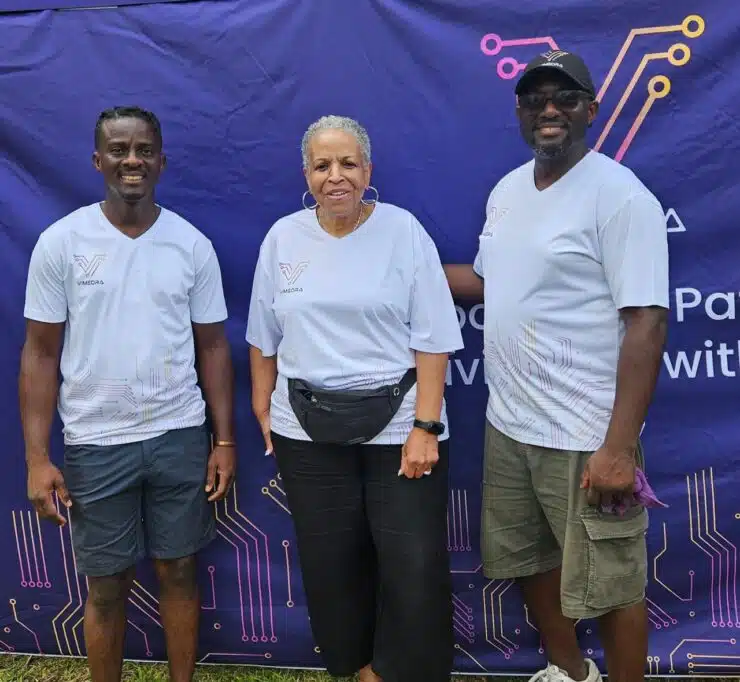
In 2024, my brother and I decided to solve this. We founded Vimedra. We debated getting into different sectors, even education technology, but healthcare kept pulling us back.
I knew we needed deep industry expertise, so we brought in my brother’s former boss as a co-founder.
Our hypothesis is simple: If we can predict which patients will incur high emergency costs and intervene early with relatively small social support, payers will choose prevention over expensive ER visits. Instead of a $40,000 emergency bill, maybe $3,000 in groceries and transport solves the issue.
We’ve developed a patent-pending algorithm that layers social information on top of medical data to create a dual-layered risk profile. We use Phoebe, our voice AI agent, to reach out to patients. She’s getting feedback and information that humans often struggle to get.
The pilot was done with a health centre in Alabama, and we’ve signed a health centre as our first client, partnered with a researcher at the University of Alabama, and secured $100,000 in AWS credits to build our risk model.
The diaspora advantage and the Nigerian identity
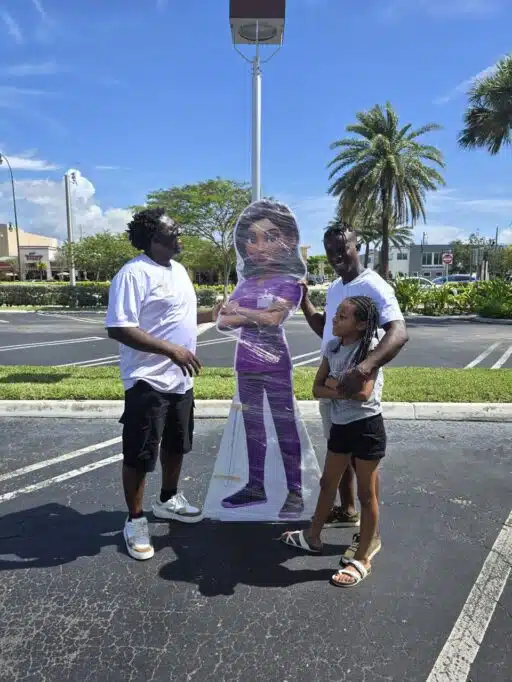
Living in the UK for 30 years while building in Nigeria and the US has given me a unique perspective. I’ve noticed that while the UK has a lower ceiling for entrepreneurial growth due to its single-payer system and heavy regulation, the US and Nigeria offer a much larger “sky.”
In Nigeria, there are fewer regulatory barriers, more creativity, and significantly more problems to solve. But quality is our biggest gap
My Nigerian identity is my greatest advantage. We have an inherent entrepreneurial spirit. It’s in my DNA. My mother was one of the first female Horologists in Africa; my uncle was a pioneer in Nigerian advertising and fintech.
I’m also passionate about the refinement of African talent. Our youth are our greatest natural resource, much like oil was in the 70s. But we must refine this talent locally. We shouldn’t just export raw talent; we should build the infrastructure here so that our engineers can build world-class products from Lagos for the rest of the world.
Technology, when structured properly, can fix what feels broken. I don’t write code; my team does that, but I build the systems. I assemble the right people. I understand product, structure, and scale. I call myself the orchestrator.
Whether it was deploying LMS in low-bandwidth environments, building digital platforms for universities, or now designing AI-driven healthcare risk models, I’ve always approached life with one question: how can technology make this better?