



Did venture capital fall out of love with fintech, or did it just find better returns in solar microgrid?
Key takeaways
- African VC funding is rotating from fintech to solar microgrids as risk-return profiles shift.
- Fintech markets are crowded, regulated, and increasingly margin-thin.
- Solar microgrids offer predictable cash flows and infrastructure-like stability.
- Blended finance makes energy startups more attractive to VCs than pure-play tech.
- Away from impact-only, energy is now a serious venture-backed asset class.
Between 2016 and 2021, fintech ruled African venture capital. From payments and lending to neobanks and insurtech, it raised money quickly if it moved money digitally. But between 2022 and 2025, investment in Africa declined and began to rotate. No, it didn’t disappear, far from it. Some of that investment began redirecting, and a growing share began flowing into solar microgrids.
Fintech fatigue has set in as markets have become crowded, customer acquisition costs have spiked, and regulators havetightened the screws. At the same time, over 600 million Africans still lack reliable electricity, and energy stopped being treated as a side show. In this article, I unpack why venture capitalists are redirecting funds from fintech to African solar microgrids.
Capital rotation at a glance
| Sector | 2018–2021 | 2022–2025 |
| Fintech | VC darling | Capital saturation |
| Climate/energy | Niche | Priority allocation |
In 2025, Kenya-based startups raised $984 million, the highest since 2022. Energy sector deals led the way: Sun King raised $40 million, Mawingu added $20 million. Meanwhile, fintech funding, though rebounding to $1 billion across Africa in H1 2025, now faces a much higher bar. Only 5% of African seed-funded startups reach Series A (85% below the global average), as investors demand profitability over growth-at-all-costs.
The fintech boom and why it’s slowing
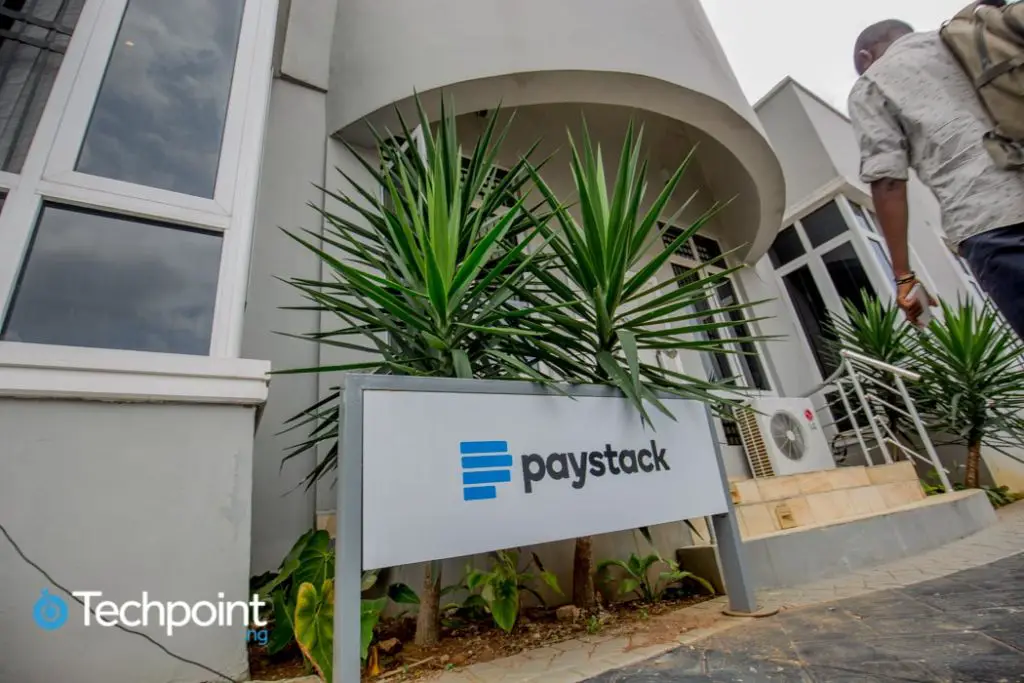
For African venture capital, fintech was the obvious first love. Mobile money adoption exploded (e.g., M-PESA), the unbanked population story was compelling, and user growth curves looked foreign investment–worthy. Payment apps like Flutterwave and Paystack scaled fast. Digital lenders such as M-KOPA and FairMoney onboarded millions of customers. Wallets, neobanks, and APIs promised SaaS-like multiples in frontier markets. For global investors seeking growth, fintech checked every box.
Then reality kicked in.
By 2022, funding slowed. Payments became a race to the bottom on fees. Lending platforms faced rising defaults and sophisticated fraud. Customer acquisition costs ballooned as every startup chased the same users with the same incentives. Margins thinned. Price wars became normal.
At the same time, regulators stepped in, tightening KYC requirements, enforcing capital requirements, and slowing the breakneck experimentation that once fueled growth.
Investors had to recalibrate as growth no longer equaled profitability. Many fintechs survived on subsidies, promotional spend, or soft capital. Exit timelines stretched, and IPO dreams cooled.
Now, this does not mean that fintech failed. The reality was that it matured. And once a market matures, venture capital stops chasing hype and starts demanding durable, predictable returns.
Why African solar microgrids suddenly make sense
Yes, solar is trendy now, but that’s not why the shift happened. It happened because the math, the infrastructure gaps, and investor psychology finally aligned.
Energy demand in Africa is growing
The reality is that more than 600 million Africans remain off-grid or under-electrified. For businesses, unreliable power is an inconvenience at best and an existential threat at worst. Shops shut earlier than they have to, SMEs burn margins on fuel, and factories stall mid-production.
Right now, electricity is no longer framed as a social good; it’s now a bare minimum requirement for economic survival. And governments, constrained by debt and slow grid expansion timelines, simply cannot close this gap alone. That leaves a vacuum for venture capitalists.
Solar microgrids offer a direct, scalable answer.
Diesel has become less attractive
For decades, diesel generators were the default backup plan. Today, they’re fast becoming a liability. Fuel prices are volatile, logistics are unreliable, and operating costs are brutal.
Solar microgrids, by contrast, offer stable pricing, predictable uptime, and cleaner economics over the long term. Once installed, the marginal cost of energy drops sharply. That stability is exactly what businesses and investors crave.
Technology has improved
Five years ago, solar in Africa still struggled with cost and reliability. That has changed.
- Solar panel prices have fallen dramatically.
- Battery storage is more efficient and longer-lasting.
- Remote monitoring reduces maintenance risk.
- Prepaid meters eliminate revenue leakage.
This significant progress has turned energy into software-like infrastructure, enabling it to be measured, monitored, and optimized at scale.
The revenue model is VC-friendly
Unlike fintech’s grow-now-figure-it-out-later phase, solar microgrids are built on boringly attractive fundamentals:
- Pay-as-you-go billing.
- Long-term energy contracts.
- Anchor customers like telecom towers and industrial SMEs.
- Dollar-linked or inflation-hedged pricing in some markets.
To investors, this translates into predictable cash flows instead of speculative growth, a crucial distinction in a risk-reset era.
Fintech’s slowdown accelerated the pivot
As fintech matured, major bottlenecks in the industry became harder to ignore. Rising customer acquisition cost CAC, thinning margins, ongoing fraud exposure, and regulatory drag. Returns suddenly weren’t so appealing, and exits were pushed, in most cases, indefinitely.
Solar, meanwhile, offered something fintech couldn’t anymore: an asset-backed growth with downside protection. Things were more predictable as panels don’t churn and kilowatt-hours don’t uninstall themselves.
It’s a compounding bet
Ironically, solar’s rise is built on fintech’s success. Mobile money enables micro-payments. Digital IDs enable customer onboarding. Telecom infrastructure supports monitoring and billing.
Energy unlocks digital adoption, and digital rails unlock energy monetization.
Climate capital sealed the deal
Add ESG mandates, climate finance, and patient capital into the mix, and solar microgrids become irresistible. They decarbonize, generate revenue, and strengthen local economies, all at once.
But the shift isn’t frictionless. Despite over $9 billion in concessional funding committed to mini-grids in the past five years, only 14% has been disbursed. For founders, this is the reality check: capital commitment and capital deployment are very different things. Execution (building, operating, and collecting payments reliably) is what separates funded startups from the rest.
Venture capital is now comfortable with infrastructure-tech
In the past, VCs in Africa treated asset-heavy businesses, such as microgrids, as second-rate opportunities. Capital preferred software because of the high margins, rapid scale, and short payback cycles. Physical infrastructure was slow, capital-intensive, and typically hard to exit.
So, what changed?
Blended finance fundamentally shifted the math. Development Finance Institutions (DFIs) now absorb early-stage risk, guaranteeing partial downside protection. Grants and concessional debt reduce the financial burden on startups, making capital deployment more predictable. By the time VCs step in, microgrid companies are often at the scale-up stage, with validated operations, paying customers, and proven cash flows.
Why microgrids match VC math
- Unit economics are transparent. Each kilowatt-hour sold generates measurable revenue.
- Dollar-linked contracts, often with telecom towers or industrial clients, hedge currency risk.
- Environmental, Social, and Governance (ESG) and impact reporting strengthen appeal to limited partners (LPs), demonstrating both financial returns and measurable development outcomes.
Essentially, microgrids offer the sweet spot for VCs.
Policy, carbon markets, and global capital pressure
Beyond pure economics, policy and global financial pressures play a major role in African solar microgrids’ newfound attractiveness.
Policy tailwinds
Governments across the continent are actively incentivizing solar deployment:
- Electrification mandates set ambitious off-grid targets.
- Import duty exemptions reduce the upfront cost of panels and batteries.
- Mini-grid licensing frameworks are becoming clearer and more investor-friendly.
Carbon and ESG pressure
Global LPs increasingly demand climate exposure. Renewable energy projects like microgrids tick boxes for carbon reduction, ESG compliance, and measurable social impact. Carbon credit markets create a secondary revenue stream, further strengthening the investment thesis.
Energy access, which used to be considered philanthropic, is now quantifiable impact, and that measurability aligns perfectly with institutional investor reporting requirements.
Combined, policy certainty, ESG incentives, and blended finance create a fertile environment where VCs can confidently back solar microgrids while meeting both financial and impact goals.
What this means for founders
For fintech founders
The bar is higher now, more than ever. Capital is still available, but it’s no longer forgiving. VCs now expect clear paths to profitability rather than the usual user growth charts. Burn-heavy models, endless incentives, and regulatory arbitrage will no longer cut it. Fintech founders will need to think more like infrastructure builders, enforcing tighter risk controls, predictable revenues, and durable margins.
For energy and climate founders
This is your time. Capital is actively looking for credible energy plays, but storytelling alone won’t cut it. Execution matters more than decks. Investors care about things like unit economics, uptime, collections, and operational resilience. Teams that can deploy, operate, and scale reliably, especially in difficult environments, are the ones getting funded.
FAQs
Is fintech dead in Africa?
No. It’s just no longer underpriced risk. Capital now demands proof, unlike years ago when promises would have been enough.
Why do VCs prefer microgrids over national grids?
Faster deployment, modular scaling, private revenue streams, and clearer ownership.
Are returns comparable to fintech?
Yes, but with longer timelines and significantly lower volatility.
Conclusion
This capital shift reflects a rebalancing toward fundamentals. As Africa’s digital economy matures, investors are backing what keeps it running: power, infrastructure, and resilience. Solar microgrids sit at the intersection of profit, policy, and impact, making them hard to ignore.
Disclaimer!
This publication, review, or article (“Content”) is based on our independent evaluation and is subjective, reflecting our opinions, which may differ from others’ perspectives or experiences. We do not guarantee the accuracy or completeness of the Content and disclaim responsibility for any errors or omissions it may contain.
The information provided is not investment advice and should not be treated as such, as products or services may change after publication. By engaging with our Content, you acknowledge its subjective nature and agree not to hold us liable for any losses or damages arising from your reliance on the information provided.
Always conduct your research and consult professionals where necessary.