




A question I hear constantly now: Did African tech stop growing fast, or did it just stop growing recklessly?
Key takeaways
- Blitzscaling defined African tech in the 2010s, but capital scarcity has forced a reset.
- Acquisition activity is rising while late-stage mega-rounds are thinning out.
- Startups are choosing earlier, strategic exits over prolonged cash-burning growth.
- Buyers are increasingly regional incumbents, not global Big Tech.
- This shift shows market maturity and smarter founder behavior.
For most of the 2010s, blitzscaling was treated like gospel. Grow fast. Burn capital. Worry about unit economics later. If Silicon Valley did it, African tech startups were expected to follow. We’ve all watched African founders try. Some succeeded. Many didn’t. The model was unforgiving in markets with limited capital buffers, fragile infrastructure, and regulators who don’t move at startup speed.
Now, the data is telling a different story. Instead of chasing endless funding rounds, more African tech startups are opting for strategic acquisitions. Fewer “growth at all costs” plays, an approach that Musty Mustapha, managing director of Kuda Microfinance Bank, advised startups to abandon in favour of scaling sustainably. More early exits. More acqui-hires, regional roll-ups, and quiet merger and acquisition (M&A) deals, which saw a 72% increase in 2025.
I’ll break down the numbers behind this shift in this article, from funding trends and exit data to real acquisition patterns shaping African tech today.
The blitzscaling era in Africa (2016–2021)
Between 2016 and 2021, blitzscaling became the default growth strategy for African tech startups. The playbook was to expand aggressively, subsidize users heavily, and worry about monetization later, if at all. Growth charts mattered more than balance sheets. Market share was the prize.
What blitzscaling looked like
Startups raced to launch in multiple countries at once, often before achieving product-market fit in their home market. Pricing was intentionally unsustainable. Ride-hailing apps burned cash on discounts. Fintechs paid users to transact and to refer others. The assumption was that these startups would scale first and fix economics later. As you know, not many survived.
Why was it so appealing?
On paper, at least, the approach made sense.
- Venture capital playbooks imported from Silicon Valley promised dominance through speed.
- Africa’s markets were massively underpenetrated, with millions of first-time internet and financial services users coming online.
- Early user acquisition was relatively cheap, reinforcing the illusion that growth could outpace cost forever.
Early success stories
Don’t get me wrong, there were some major wins. Pan-African fintechs like M-PESA proved that scale was possible. Payment giants like Flutterwave rode transaction growth into global relevance. eCommerce and mobility platforms followed similar paths.
Funding vs outcomes
The shift away from blitzscaling to strategic acquisition becomes clearer when you look at the capital flows.
Venture capital data snapshot
African tech funding peaked between 2021 and 2022, riding the global liquidity wave. The number of investors deploying funding exceeding $100,000 rose from 520 in 2024 to over 850 in 2021.
Mega-rounds ($100 million+) became more common, and late-stage capital briefly looked abundant. African startups raised between $4.5 billion and $5 billion in 2021. Funding peaked in 2022 before the downturn.
From late 2022 onward, three trends stood out:
- Mega rounds declined sharply.
- Late-stage funding thinned out.
- Follow-on capital became harder to secure.
Key metrics that changed
- Median Series B sizes fell year-on-year (36% in 2024), forcing startups to do more with less.
- The most telling shift in 2025 wasn’t just less equity funding but the surge in debt financing, which increased 65% year-on-year to $1.08 billion, indicating growing lender confidence in startups with predictable revenue streams. The Partech 2025 Africa Tech VC Report confirms this trend, recording 107 debt deals (a 40% increase year-on-year) as debt became a structural part of the funding stack rather than an exception
- Time-to-profitability shortened out of necessity.
- Shutdowns and downturns increased, especially among companies built on heavy subsidies.
Startups that depended on continuous capital infusion struggled the most. Blitzscaling, by design, assumes funding will always be available. When global risk appetite dropped, that assumption broke.
Blitzscaling is a growth and financing strategy. And once the financing environment shifted, the model stopped working for many African startups that hadn’t yet locked in strong unit economics.
Rise of strategic acquisitions: What the data shows
As venture funding slowed, acquisitions quietly stepped in as strategic outcomes.
M&A activity trends
Across Africa, deal activity is increasingly skewed toward:
- Acqui-hires (teams and tech, not just revenue).
- Regional roll-ups (market consolidation).
- Corporate-led acquisitions rather than VC-driven exits.
67 deals were closed across Africa in 2025, a 72% jump from the 39 in 2024. Instead of chasing unicorn status, many founders opted to integrate with larger platforms.
Typical deal sizes
The data shows a clear pattern:
- Sub-$50 million transactions dominate.
- Fewer splashy, headline-grabbing exits. More low-profile but highly strategic deals.
These shouldn’t be misinterpreted as panic sales, as they were deliberate choices made earlier in a startup’s lifecycle.
Who’s doing the buying
- African incumbents that are expanding digitally. For example, Flutterwave acquired the open banking startup Mono in early 2026 for a deal valued between $25 million and $40 million. Similarly, Nedbank acquired payments provider iKhokha in an all-cash deal for approximately $92.4 million in H2 2025.
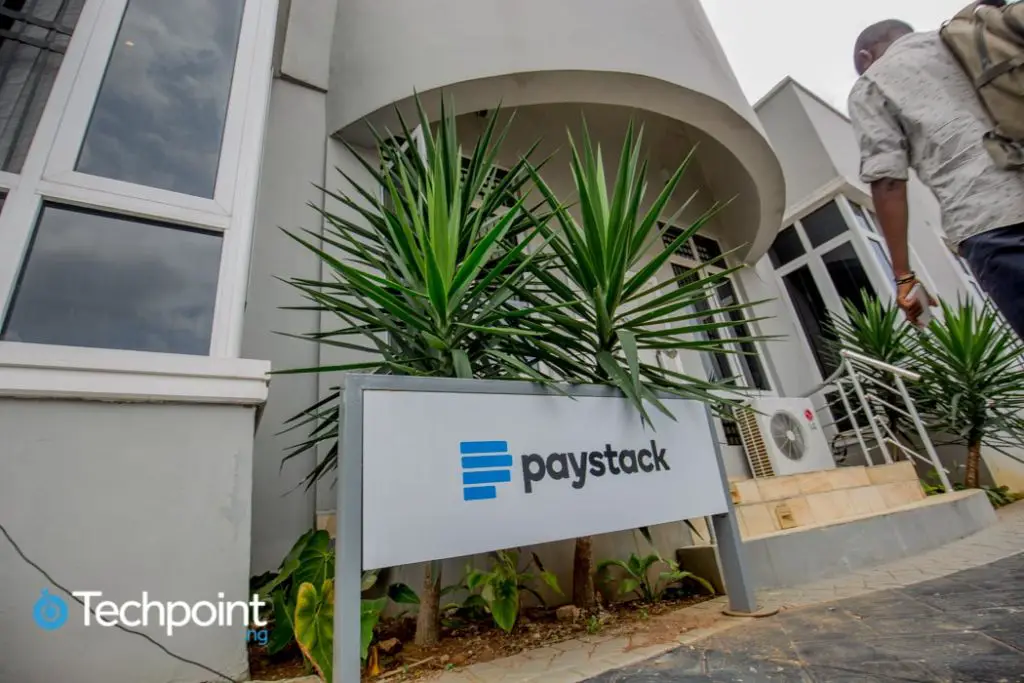
- Regional competitors are buying speed and capability. Perhaps the most telling trend in 2025 was acquisitions driven not by revenue, but by regulatory licenses. When Moniepoint acquired a 78% stake in Kenya’s Sumac Microfinance Bank, it was buying a banking license that allowed immediate entry into Kenya’s regulated banking sector. Similarly, Nigerian-founded cross-border payments company LemFi acquired Ireland’s Bureau Buttercrane in January 2025, securing Central Bank of Ireland approval and instant access to the entire European Economic Area. Paystack’s acquisition of Ladder Microfinance Bank, rebranded as Paystack Microfinance Bank, gave it control over the funds it processes and the ability to extend lending services directly.
- Telcos, banks, and platform companies are acquiring distribution, licenses, or tech.
In fact, acquisitions are no longer viewed as a last resort. In today’s market, they’re becoming a primary strategy: a faster, less capital-intensive way to scale impact, lock in exits, and survive tightening funding cycles.
A note on deals that didn’t happen
For every successful acquisition in 2025, there were several failures.
- Nigerian pharmaceutical supply chain startup Medsaf entered acquisition talks in late 2024 after running out of cash, but never closed a deal. It shut down in 2025.
- Edukoya, the Nigerian edtech startup, explored partnerships and merger talks but found no takers and shut down in February 2025.
- Okra, once seen as a key piece of Africa’s fintech infrastructure, ceased operations in July after raising over $16.5 million but failing to secure a buyer or follow-on funding.
These failures prove that the M&A surge isn’t a soft landing for every struggling startup. The market has become confident in saying no. Acquisitions now require clean governance, clear unit economics, and genuine strategic fit. Distress alone won’t close a deal.
Why blitzscaling is harder in African markets
Scaling at breakneck speed in Africa comes with structural and economic hurdles.
- Regulatory frameworks vary from country to country, making pan-African expansion complex.
- Currency volatility adds risk to cross-border operations, while lower ARPU (average revenue per user) limits the ability to subsidize rapid growth.
Unit economics also bite hard:
- High logistics costs.
- Fragmented infrastructure.
- The overhead of customer support means aggressive expansion magnifies inefficiencies rather than diluting them.
Startups burning cash to grow fast often find that building capabilities in-house is far more expensive than acquiring them.
All of this makes blitzscaling in African markets riskier and more capital-intensive than in mature markets, creating a natural incentive for founders to consider alternatives, such as strategic acquisitions.
Why strategic acquisitions make more sense now
Acquisitions provide an instant way to enter new markets with minimal risk. Startups can leverage existing customer bases, proven teams, and regulatory approvals without the trial-and-error costs of building from scratch.
| Strategy | Blitzscaling | Strategic acquisition |
| Spend | High burn | Controlled spend |
| Risk | Execution risk | De-risked assets |
| ROI | Long | Faster integration value |
In the current African funding and market environment, M&A is a capital-efficient growth strategy that allows founders to scale impact while managing risk.
Is blitzscaling dead (or just evolving)
Blitzscaling still works for payments infrastructure, developer platforms, and B2B SaaS with strong margins.
What has changed is the approach. Founders now scale slower, focus on profitability earlier, and use M&A as a core growth lever. In Africa, blitzscaling is now a strategic priority.
What this means for founders
If you’re building a startup in Africa today, thinking about strategic acquisitions should be part of your playbook.
Start by designing products and teams that integrate easily with potential acquirers. Maintain clean financials and document all intellectual property and regulatory compliance (these make your startup more attractive).
Lumi Mustapha, General Counsel of Pareto Mosca Elite Advisory, predicts that the next 18 months will see 8-12 acquisitions, 3-5 fintechs absorbing Series A/B companies valued at $50-200 million that can’t raise growth rounds.
Ask yourself key strategic questions:
- Who could realistically acquire us?
- What unique asset do we control (e.g., tech, market access, or talent)?
- Would an acquirer find it cheaper to buy than to compete with us?
FAQs
Are African startups exiting earlier than before?
Yes. Median exit timelines are shortening as IPOs remain rare.
Does this mean ambition is shrinking?
No. It means founders are scaling smarter, not necessarily smaller.
Is M&A safer than blitzscaling?
More predictable, yes. But not risk-free.
Conclusion
African tech is maturing. The era of reckless, burn-first growth is giving way to strategic, measured expansion powered by M&A. Founders who embrace this new reality can scale faster, de-risk execution, and unlock value without chasing headline-grabbing valuations.
Whether you’re in fintech, eCommerce, or mobility, consider acquisitions not as a fallback, but as a core growth lever. Map potential acquirers, strengthen your unit economics, and document key assets.
Disclaimer!
This publication, review, or article (“Content”) is based on our independent evaluation and is subjective, reflecting our opinions, which may differ from others’ perspectives or experiences. We do not guarantee the accuracy or completeness of the Content and disclaim responsibility for any errors or omissions it may contain.
The information provided is not investment advice and should not be treated as such, as products or services may change after publication. By engaging with our Content, you acknowledge its subjective nature and agree not to hold us liable for any losses or damages arising from your reliance on the information provided.
Always conduct your research and consult professionals where necessary.