


Developer relations is often described as one of tech’s most “borderless” careers. The work lives online: documentation, sample apps, community conversations, product feedback loops, and the public proof of shipping in the open. In theory, if you can build and communicate, your location shouldn’t matter.
In Africa, it still does
Not because African developers lack talent, but because DevRel is an infrastructure role. It depends on access: to companies that can hire for it, to products that already have developer ecosystems, to travel budgets and conference stages, and to networks that convert visibility into opportunity. It also depends on credibility signals that are unevenly distributed, brand names, proximity to decision-makers, and the assumption that “real” developer communities exist elsewhere.
That’s why many African DevRel careers don’t start with a job title. They start with unpaid community labour: answering questions in public forums, writing tutorials because the docs don’t exist, hosting meetups because nobody else will, translating global tooling into a local context, and doing the slow work of building trust. The irony is that this is the purest form of developer relations, long before a company puts it on a payroll.
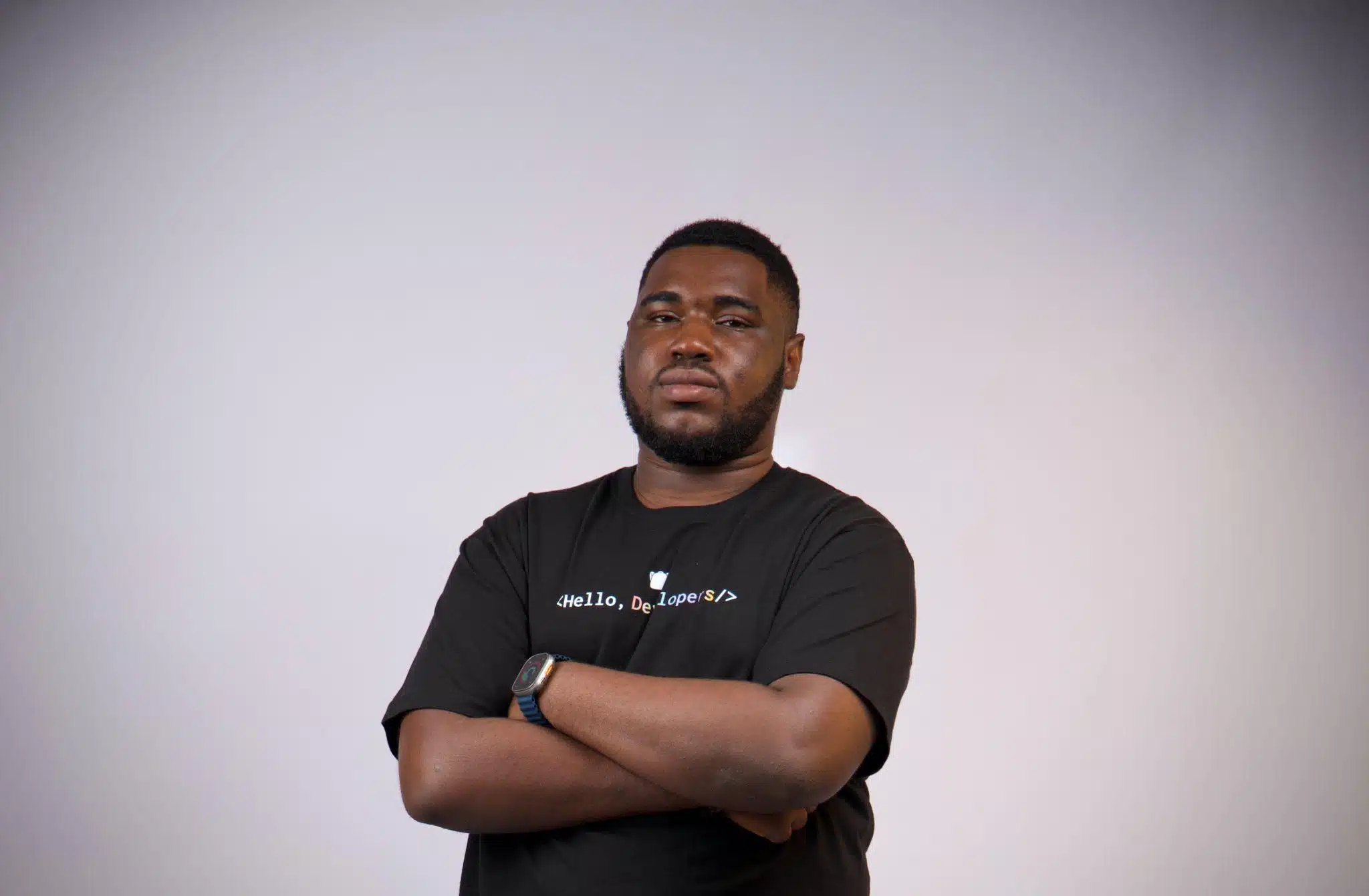
Favour Onuoha’s story is a counterpoint. Not because he “made it” from Africa in a feel-good way, but because his career is built on the actual mechanics of DevRel: learning in public, building trust in communities, and turning attention into systems that compound. The same habits that helped him survive self-teaching, patience, clarity, and relentless problem-solving later became the backbone of his professional advantage.
Onuoha’s entry into technology began early, at 13, when he was driven by an obsession with becoming the next Bill Gates and building solutions that change lives. Growing up in Africa, he did not have early access to technology, but he was captivated by what could be possible.
That curiosity pushed him to spend his teenage years learning programming, spending hours on YouTube tutorials, online courses, developer forums, and building small projects and improving with each one. What followed was not a smooth, clearly defined path, but years of self-teaching, shaped by limited access to learning resources.
“I had to figure things out by myself most of the time. If I were stuck, I’d go searching through forums or watch multiple videos until something clicked.”
Those early experiences influenced how he approaches technology today. Beyond writing code, he learnt how to ask better questions, engage with technical communities, and keep going even when answers weren’t obvious. These struggles are mostly invisible on his public profile, but they played a major role in shaping his career.

Victoria Fakiya – Senior Writer
Techpoint Digest
Stop struggling to find your tech career path
Discover in-demand tech skills and build a standout portfolio in this FREE 5-day email course
After years of coding, Onuoha began his professional journey as a software engineer. For a long time, that seemed like the natural ceiling.
The pandemic shift that turned “side work” into a career direction
The COVID-19 pandemic was a defining moment. As the world slowed down physically, online spaces became more active. Tech conversations moved heavily to Twitter (now X), and developers began sharing knowledge more openly.
“When everything moved online, I realised there was an opportunity to teach and share what I knew with a much wider audience.”
After the pandemic, he started writing technical content, mentoring junior developers across different countries, and hosting X spaces and virtual events. Over time, these activities grew beyond side interests into consistent responsibilities, with thousands of people joining these online events every month to learn about tech and the opportunities it offers.
“I didn’t even realise it at first. I was already doing DevRel work before I knew it was an actual role.”
However, the decision to fully transition into developer relations came with hesitation. Developer relations roles were scarce, and Onuoha questioned whether pursuing them from Africa was realistic.
“That was the point where I had to rethink how I approached my career and the people around me.”
Instead of focusing on surface-level networking, he began building deeper professional relationships, staying in touch with people, and understanding what they worked on. Those conversations eventually opened doors to global opportunities.
Today, Onuoha works as a Developer Relations Engineer at web3 company, Swing Finance, where he serves as the link between the product team and its developer users.
Building communities, shaping products, and learning to speak up
Onuoha’s work sits at the intersection of engineering, communication, and community building. Over the past four years, he has taken on roles that required not just technical depth but also the ability to influence how developers experience products.
One of his most defining achievements came during his time at Showwcase, where he led community growth efforts. In under a year, Showwcase onboarded over 100,000 developers organically, with less than $1,000 spent on marketing.
Rather than rely on heavy ad spending to drive growth, Onuoha instead focused on experimentation and distribution. He helped set up structured programmes, including a writers’ initiative and a university ambassadorship scheme that placed community leaders across countries such as Nigeria, India, and Bangladesh.
“We had community leads in different universities around the world, and I was responsible for structuring how everyone worked together.” He designed the system to encourage developers to contribute, share, and invite others. It was less about short-term spikes and more about sustained participation.
The work focused on creating clear incentives, giving contributors a reason to return, and building a system where developers didn’t just consume content but produced it, shared it, and pulled others in.
What it looks like to build DevRel from zero inside a company
Another milestone came at Swing Finance, where Onuoha currently works. When he joined, the company had no formal developer relations structure. Feedback from developers existed, but there was no organised system to capture and act on it.
“I was essentially the first developer relations engineer there.”
He overhauled documentation, created feedback loops between users and the internal team, and introduced strategies to improve the overall developer experience. Instead of building features based purely on assumptions, the team began building based on clearer developer input.
This is one of the least glamorous parts of DevRel, but also one of the most valuable: the ability to translate a messy stream of developer sentiment into something a product team can act on, then close the loop so developers feel heard.
The surprising project that signals range
Beyond community growth and documentation, there is a project that surprises many people when Onuoha mentions it. At one point in his career, he worked on a web3 project connected to American singer Chris Brown.
“I worked on his second NFT project called The Auracles.”
It sits within the broader web3 ecosystem he explored earlier in his career, combining his interest in finance and blockchain technologies. For Onuoha, the point isn’t celebrity proximity. Its range: building for very different audiences while keeping technical execution solid.
While his achievements are measurable in numbers and projects, Onuoha believes his strengths are more fundamental.
“I’m good at breaking down complex topics into something developers can easily digest.”
Years of coding sharpened his logical reasoning. That skill, combined with content creation, allows him to translate technical ideas between engineering teams and developer communities. He also describes adaptability as one of his core strengths.
“Everything is always changing, so I’m always learning something new.”
However, not all parts of his journey were comfortable. Earlier in his career, public speaking was a major challenge.
“At my first job, I would tremble when I had to speak in front of managers.”
The fear forced him to confront a gap in his skill set. He joined Toastmasters, attended sessions, and gradually became more confident in front of both small and large audiences.
“It wasn’t natural for me at first, but I knew it was necessary for the kind of work I wanted to do.”
Today, public speaking is part of his daily responsibilities, whether through community events, virtual sessions, or internal presentations. The weakness that once held him back has become part of the toolkit that supports his career.
How to become a developer relations engineer
For Onuoha, developer relations is not a role you jump into. It is something you grow into.
“The core foundation of developer relations is rooted in content writing. Being able to take technical details and break them down into understandable bits is important.”
However, beyond content, community matters. Developer relations professionals operate within communities because they are expected to represent the voice of developers inside a company. It means helping others solve problems, contributing to discussions, and staying active long enough for people to recognise your work.
Onuoha also recommends becoming an evangelist for a product you genuinely use and believe in. That was how he gained early traction in web3.
“I was building web3 products and open-sourcing them because I genuinely liked what I was doing.”
That visibility led to invitations to speak at events, join X Spaces, and engagement with more communities. Developer relations, he explains, is broad. It can involve documentation writing, developer advocacy, community management, building sample applications, and shaping product direction. Some companies split these responsibilities; others combine them into one role.
“Think about it as different moving parts working together; just focus on the fundamentals. Build technical depth, create consistently, and engage communities.”
From web3 to AI: The next influence bet
The next phase for Onuoah is less about titles and more about influence. He sees the AI sector as the next frontier. While web3 shaped an earlier phase of his career, AI now represents the space where he wants to deepen his footprint.
“I’ve already built some AI tools, and I’m working on open-sourcing them.”
For him, open source is more than a contribution model. It is proof of competence and a way to demonstrate thought leadership. Publishing work publicly forces clarity, invites feedback, and builds credibility across borders. Beyond building tools, he wants to play a larger role.
“I want to move into areas where I can better shape product direction and guide developer strategy on a larger scale.”
The ambition reflects the evolution of his career so far. From a self-taught teenager searching forums to a community builder to a DevRel lead structuring systems within companies.
For now, the approach remains consistent.
“I just have to keep building, keep sharing knowledge, and keep creating developer-educative content.”
If the first phase of Onuoha’s career was about proving that a DevRel path from Africa was possible, the next may be about proving that influence from Africa in AI is possible.