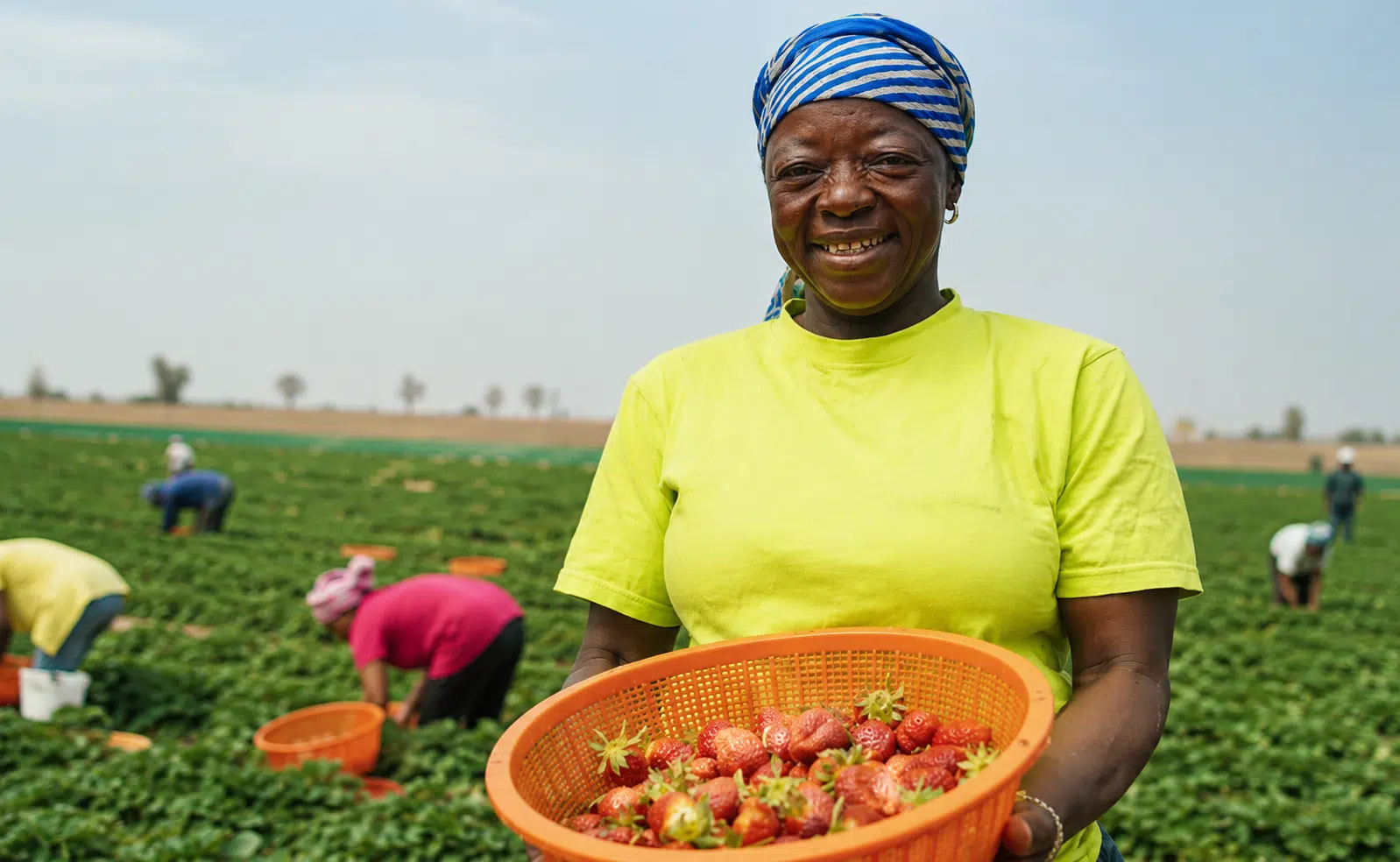





Zaidu, 67, has known no other occupation than farming since his teenage years. Yet he has very little to show for years of hard labour, cultivating lands with crude farm tools, and depending on rainfall to make his crops grow.
Whenever he harvests his crops, a large portion is wasted due to a lack of storage facilities, and the small quantity he manages to sell is bought for peanuts by middlemen who transport them to markets in other states. His farm yield has continued to decline over the years due to a lack of funds to buy fertiliser, and even when the government provides it, it is carted away by briefcase farmers.
Unfortunately, Zaidu is not alone in this struggle.
Per the FAO, over 70 per cent of Nigerians engaged in agriculture do so at a subsistence level. Despite contributing over 20% to GDP, the sector has lacked the requisite funding and willpower to transform the fortune of smallholder farmers who continue to carry the burden of food production for the nation on their frail shoulders.
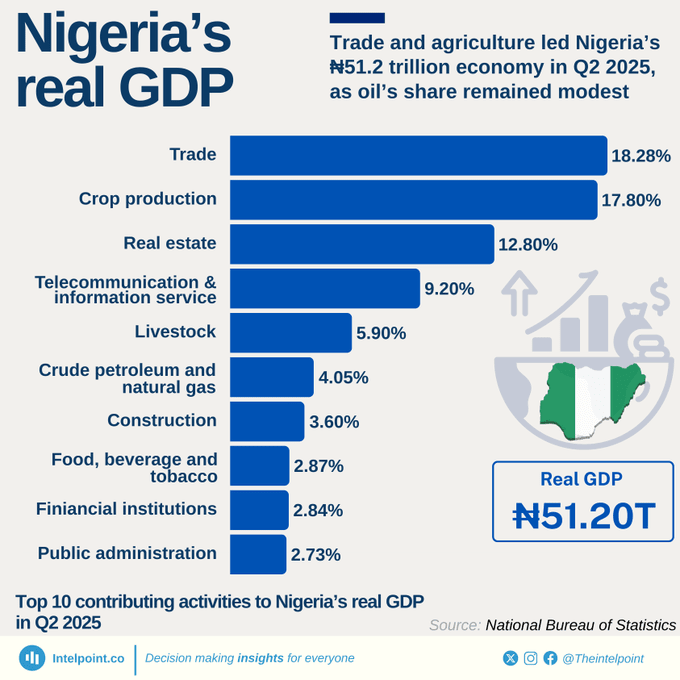
Ironically, in the early 1950s and 1960s, agriculture was the bedrock of Nigeria’s economy, until the oil boom era led to its abandonment, as the ‘easy money’ from petroleum revenue became the nation’s cash cow.
It is the plight of farmers like Zaidu that keeps Alexander Zanders, founder of UfarmX, awake at night.
“I was in my 20s, and my daughter was just born,” Zanders recalls of his 2015 pivot to agriculture. “Life was moving pretty fast. It was all about the money. Then something shifted. I started actually caring about what the world would look like after I’m gone because she would be living in that world.”
After his daughter’s birth, Zanders moved from New York to Maryland. And during that transition, his Nigerian friend, Charles, invited him to the Sunbelt Agricultural Expo in Moultrie, Georgia.
“He informed me that he had recently got into soybean production,” Zanders recalls. “I was looking for something more meaningful to do, and if he was involved, I knew there had to be some money involved. So it piqued my interest.” That experience opened Zanders eyes to the opportunities of food production – a recession-proof industry because people will always eat. And since then, he hasn’t looked back.
For his first venture into agriculture, Zanders chose Oyo State in Southwest Nigeria, known for its arable land and generous rainfall. During a Thanksgiving visit to Nigeria in November 2015, he shared his newfound interest with his grandmother, who gifted him a substantial sum to get started.
“When we went to visit the land, I noticed white powder lining the roadsides,” he recalls. “I learnt it was cassava. That’s when I decided to establish a processing plant there.”
However, things didn’t go as planned.
“I invested in a feasibility study and a bankable business proposal. And then shortly after we had an election in the country, we got a new administration and the economy went in a downward spiral. So things weren’t necessarily stable.”
Between 2016 and 2019, Zander recalls travelling across Africa, attending conferences, learning about farming on the continent, and identifying where he could add value rather than continue the production for export that’s commonplace in most African economies.
“You know, Africa has all the raw materials and resources in the world, but then it ends up exporting for pennies on the dollar to the Western world. And then we get process goods sold back to us at a premium.”
How UfarmX came about
The COVID-19 pandemic forced Zanders to think about his life’s journey. So he embarked on another adventure into food production when it hit him that he had yet to do anything meaningful.
“This was during President Trump’s first administration,” he recalls, “where there was a movement in the diaspora looking towards Africa for solutions.”
Zanders’ fiancée at the time put pressure on him to generate revenue from the land his grandma had gifted him, rather than letting it lie fallow.
His initial idea was to simply connect people in the diaspora to land-leasing and farm-management opportunities: sell off portions of the land his grandmother had gifted him. But because of infighting over the land, he took a step back, bought another 100 acres of land separate from the one he was gifted, and began farming himself.
It is always fascinating to see individuals without a background in agriculture always at the forefront of the cause to feed the nation, and Zanders understands why this is the case:
“Agriculture requires patience, so you’re not going to get paid overnight,” he explains, stressing that “we live in a day and age where the shiny objects are more attractive.”
He acknowledges that he enjoyed a bit of privilege and was able to bootstrap for four years, which enabled him to experiment and learn from his failure. One of his key learnings is a lesson most Western investors always learn: replicating Western playbooks in Africa does not work.
“My initial approach was from that flawed Western academic lens where you feel as though you’re going to be able to recreate a Western system without taking into account the reality on ground. And then the continent itself quickly humbles you.”
Agriculture in Nigeria and most African countries is an extreme sport— getting a bank loan is challenging, and even when you do, the terms are predatory, with ridiculous interest rates. Farmers often struggle to pay back, and this continues to discourage youth participation in agriculture.
Biting inflation has caused food prices to skyrocket; rural-urban migration has also seen young individuals move to the cities in search of better opportunities, leaving the burden of food production on the older generations, who continue to face challenges like insurgencies, crude farm tools, and a lack of access to viable seeds and credit facilities.
These gaps and the challenge of making farming interesting to young people are among the issues Zanders is trying to fix with his Agritech startup, UfarmX.
The technology behind UfarmX
UfarmX uses a proprietary algorithm that evaluates everyday farming data, such as geospatial and socioeconomic data, to generate reliable credit scores.
Think of it like a pinpoint GPS location that tells your proximity to certain roadways and marketplaces. It also takes into account family size, smartphone status, farm size, crop type, and your projected yield/output. With this information, it can successfully generate reliable credit scores. Using these credit scores, UfarmX maintains a default rate below 10% by providing collateral-free loans to farmers in the form of inputs.
Not only that, the startup aggregates produce from farmers and sells on their behalf. So they secure purchase orders and invoices for the sales and then essentially provide market linkages to the farmers.
UfarmX operates a B2B model, where they deploy their technology
In return, UfarmX provides a guarantee to retailers, and in the event of a failed repayment, the company steps in to repay the retailer on the farmer’s behalf. Zanders says this is possible because of a reliable credit scoring system and an insurance partner that covers 80% of the risk.
Major challenges in running UfarmX
Navigating local and cultural nuances and different belief systems, and recruiting community leaders to help establish trust within local communities, are among the challenges UfarmX faces.
Logistics is another headache due to a lack of foundational infrastructure, but while governance hasn’t been a burden, Zanders opines that inconsistency in government policy can be challenging.
UfarmX business model
UfarmX makes money through processing, transaction, and platform fees. The company also receives interest spreads on the loans with the B2B approach. Previously, UfarmX made money on the margins from loans and inputs.
One very important piece of information collected: the farmer’s pinpoint GPS location helps determine proximity to certain roadways and marketplaces, and it factors in projected yield based on weather patterns.
Farmers get onboarded through three major routes: agents, a co-operative society they partner with, and through a retailer within the UfarmX network.
UfarmX traction and success stories
UfarmX is operational in Nigeria and Senegal and has helped thousands of farmers access credit and market for their produce. For Zanders, there are numerous stories that continue to motivate him to do what he does.
“I’ve actually spoken to farmers directly who have been able to step up and invest in irrigation systems for their farm So instead of farming, you know once or twice a year, they’re able to farm year-round.”
After securing credit for a women’s farmers’ group, Zanders also received some donations to help them build post-harvest storage facilities.
“We provided 20-40ft containers that were refrigerated and fitted with solar panels,” he says. “With this, the farmers were able to self-sustain.”
In Senegal, farmers lose between 20-45% of their harvest due to a lack of post-harvest storage facilities, but with his intervention, Zanders has solved a major problem for the local farmers.
“With the refrigerated containers, yields tripled, and revenues also more than doubled. And that was even after we were able to make a profit ourselves.”
Future plans for UfarmX
Zanders dreams of his startup one day becoming the foundational credit tool to facilitate successful farmer lending across Africa. Even though that might involve traditional banking institutions adopting UfarmX’s credit analysis and software to process their loan applications, he hopes to attain the same status as credit bureaus like Experian and Equifax in the Western world.
“Africa, with nearly 70% of the arable land, has 600 million farmers, and they spend only $8 billion on seeds and fertilisers annually, in contrast with the United States, with only three million farmers, but they spend over $100 billion annually on seeds and fertilisers.”
Zanders believes that the challenges in Africa are not due to a lack of demand; rather, farmers lack access to upfront capital.
If this unfortunate trend continues unabated, Zanders fears there will be starvation, as the onus is on the continent of Africa to feed the world.
“The United States loses over 500,000 acres of farmland every year due to urbanisation. Europe is shrinking, and Asia is maxed out. So it behooves not only Africans but the world that African farmers gain access to capital to maximise their productivity.”
While all of these challenges persist, Zanders maintains he won’t criticise the government. He believes that, policy-wise, the governments in Nigeria and Senegal are interested in supporting farmers to increase agricultural production, which is a step in the right direction.