

With Bitcoin flashing a Death Cross and slipping toward multi-month lows, traders are eyeing altcoins for stability and upside. Ethereum’s steadier price outlook and Pepenode’s accelerating GameFi momentum are emerging as standout opportunities.
Bitcoin’s latest dip below $94,000 has intensified market anxiety, particularly after a Death Cross formed on November 16. This chart pattern – when Bitcoin’s 50-day moving average falls beneath the 200-day MA – is historically tied to periods of downward pressure and uncertainty. The world’s largest cryptocurrency now trades around $93,646, notching its weakest levels since early May as investors brace for either a long-awaited local bottom or a deeper drawdown.
Sentiment has deteriorated sharply. The Fear & Greed Index sits at 10, signalling extreme fear, while whales and ETF investors have accelerated outflows. After a year dominated by large institutional inflows, the absence of consistent spot ETF buying has magnified every downward move. Analysts note that much of the pressure has been self-reinforcing, as concerns of a bigger drop have kept buyers sidelined.
Still, the presence of a Death Cross does not automatically dictate Bitcoin’s path. Historical data from multiple cycles between 2014 and 2025 show mixed short-term outcomes. While one-to-three-week periods after past Death Cross events have produced roughly even odds of gains or losses, the medium-term picture is more constructive.
Two to three months after a Death Cross, Bitcoin has historically recorded gains of 15–26%. Even more strikingly, several cycles have seen major rallies in the following year, with upside in some cases surpassing 80%.
Market commentators, including Benjamin Cowen, argue that these patterns often appear at local lows, not tops. The first week after the cross is considered critical; failure to rebound could open the door to deeper support around the $60,000–$70,000 region, while an early bounce could indicate that the wider bull cycle remains intact.
Yet, for altcoin traders, periods of Bitcoin weakness often mark the beginning of sector rotation – particularly when certain narratives show relative strength. That brings the focus to Ethereum price prediction models and how capital may shift if Bitcoin enters a consolidation phase.
Ethereum Price Prediction: Stability Could Steer Capital Into GameFi
While Bitcoin grapples with technical deterioration, Ethereum’s outlook appears comparatively stable. Analysts expect 2025 ETH pricing to remain within a $3,900 to $4,200 band, with an average forecast of roughly $4,202.
More granular month-by-month projections reflect a similar theme. November 2025 estimates place potential Ethereum pricing between $3,488 and $4,202, while December models narrow expectations to between $3,888 and $3,933.
These forecasts matter because they illustrate a scenario where Ethereum experiences steadier, more predictable price action than Bitcoin. The result may be a rotation from unpredictable large-cap volatility into higher-beta sectors built atop Ethereum.
Traders frequently pursue this pattern when macro uncertainty spikes. If Ethereum holds a comparatively stable trendline, the platform’s ecosystem tokens – especially those with early-stage traction – often capture speculative momentum.
This is where GameFi narratives re-enter the conversation. These assets, while volatile, tend to attract trader attention whenever market participants seek outsized upside at discounted levels. With Ethereum price prediction models signalling moderate recovery potential, GameFi ecosystems become plausible targets for renewed interest.
One emerging project positioned at this intersection of meme culture, GameFi demand, and Ethereum infrastructure is Pepenode.
Pepenode: A New Blend of Meme Energy and GameFi Mechanics
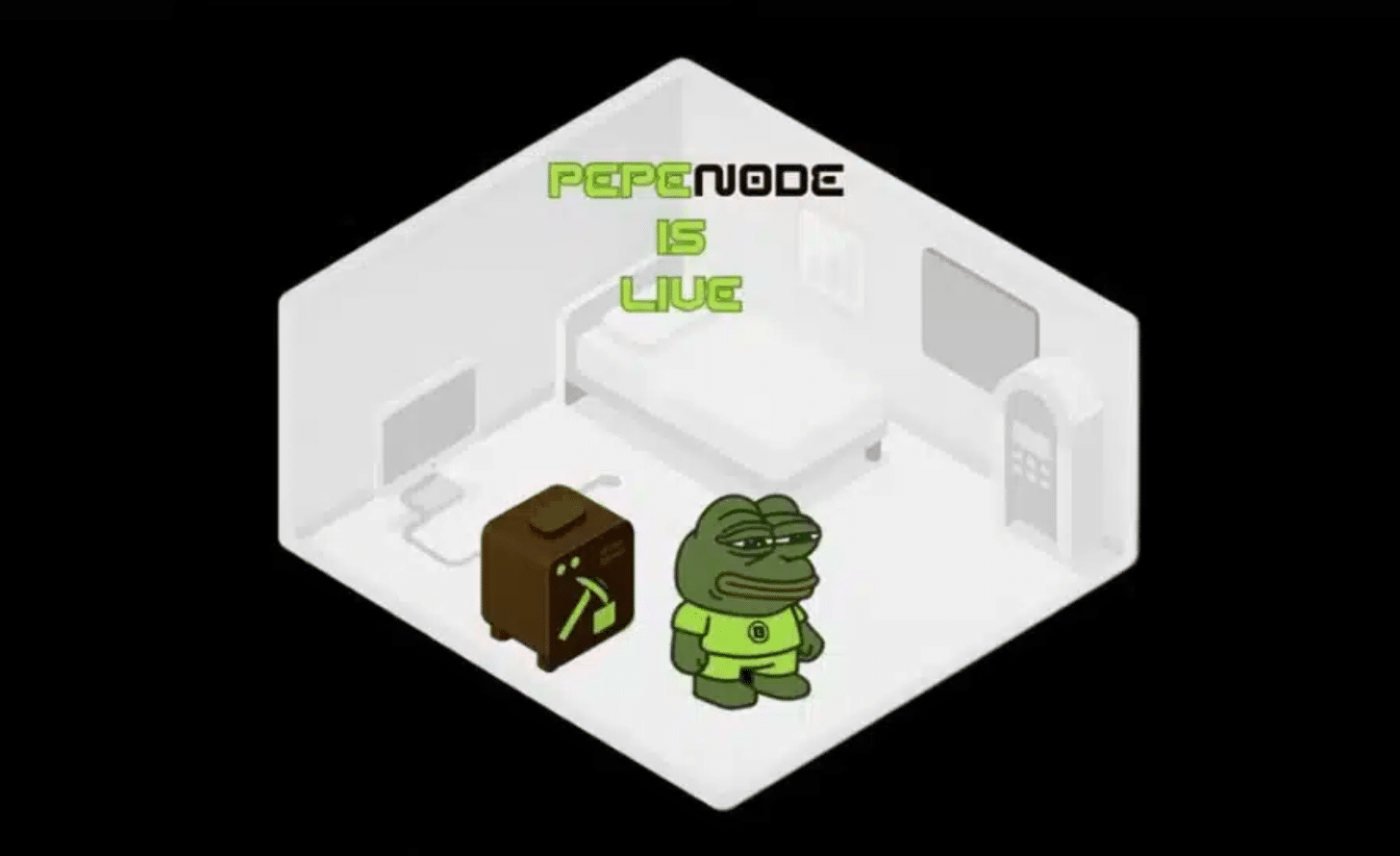
While Bitcoin’s Death Cross has created widespread caution, Pepenode has quietly gathered momentum by tapping into two of the retail market’s most durable themes: meme coins and gamified earning. Pepenode markets itself as the first “Mine-to-Earn” meme token, a mechanism that borrows from early Play-to-Earn concepts but updates them through a mining-simulation model designed to keep users engaged.
At the core of the system are Miner Nodes, digital assets that players acquire using Pepenode tokens. These nodes produce simulated mining power, which determines a player’s ability to earn rewards.
Unlike traditional GameFi systems that rely heavily on emissions, Pepenode is attempting to balance reward generation with deflationary pressure. Seventy per cent of tokens spent inside the in-game economy are permanently burned, reducing overall supply while funnelling liquidity into a tightening pool.
This supply burn, alongside reward pathways that include not only Pepenode tokens but also popular meme coins such as PEPE and Fartcoin, supports a reward structure intended to maintain long-term engagement. The project’s presale has already raised $2.1 million, indicating early traction even as broader market sentiment falters.
The model’s appeal aligns with current trends in GameFi: reduced complexity, visual dashboards, predictable in-game loops, and an earning structure tied to performance metrics rather than static staking alone. Players can enter and exit Miner Nodes freely, turning them into flexible, tradable positions.
For developers seeking integrations, Pepenode emphasises low-fee, fast-settlement infrastructure that could support DeFi-style experiments or future social features.
Connecting Bitcoin’s Weakness and Pepenode’s Opportunity
Bitcoin’s recent weakness has created two simultaneous market effects. First, traders have become more cautious, reducing exposure to high-risk assets. Second, and more importantly for emerging altcoins, some investors begin searching for early-stage opportunities while prices are subdued.
Historically, some of the strongest altcoin rallies have started in periods when Bitcoin lingers at local lows or consolidates after a sharp downturn.
Ethereum price prediction frameworks also reinforce this environment. As ETH stabilises and Bitcoin’s short-term outlook remains uncertain, capital often shifts toward ecosystem plays built on Ethereum rails. GameFi projects, meme coins, and hybrid models tend to be the beneficiaries.
Pepenode fits squarely into this space. Its Mine-to-Earn design ties rewards to user participation rather than external liquidity; its deflationary structure appeals to supply-focused investors; and its branding keeps it aligned with meme-driven market culture.
During prolonged Bitcoin hesitation, traders often look for narratives that can rally independently, and Pepenode’s rising presale totals suggest it is beginning to enter that conversation.
Is Pepenode Really a Candidate to Hit $1?
Predicting a $1 price tag for any early-stage token requires caution, especially in a GameFi-leaning sector. Still, Pepenode’s supporters argue that its combination of low initial supply, deflationary burns, and on-chain utility gives it a higher ceiling than typical meme tokens.
Hitting $1 would require substantial adoption, strong secondary-market liquidity, and consistent delivery on its roadmap. However, the early engagement metrics and rising presale indicate that traders believe Pepenode could break out if broader market conditions stabilise.
The interplay between Ethereum’s moderate price outlook and Bitcoin’s ongoing weakness shapes this possibility. When traders rotate out of Bitcoin but avoid the most speculative sectors, mid-cap emerging narratives such as Pepenode often see an uptick in attention.
JOIN THE PEPENODE GAMEFI REVOLUTION NOW
Bitcoin’s Death Cross has cast a shadow across the market at a time when investors were already uneasy. Yet these moments frequently reshape opportunity. As Bitcoin tests lower levels and analysts publish fresh Ethereum price prediction models pointing to moderate recovery, altcoins with clear utility layers can outperform.
Pepenode’s Mine-to-Earn framework positions it uniquely at the intersection of meme culture and GameFi. With its presale passing $2.1 million and its deflationary design gaining attention, the project is emerging as one of the more distinctive new entrants in the Ethereum ecosystem.
For traders looking beyond Bitcoin’s immediate weakness, Pepenode is becoming a candidate worth watching – perhaps even one with long-term potential if GameFi narratives regain momentum.
Disclaimer: Cryptocurrencies are volatile and high-risk. This content is for informational purposes only and is not financial advice.